
Dolmens of Antequera
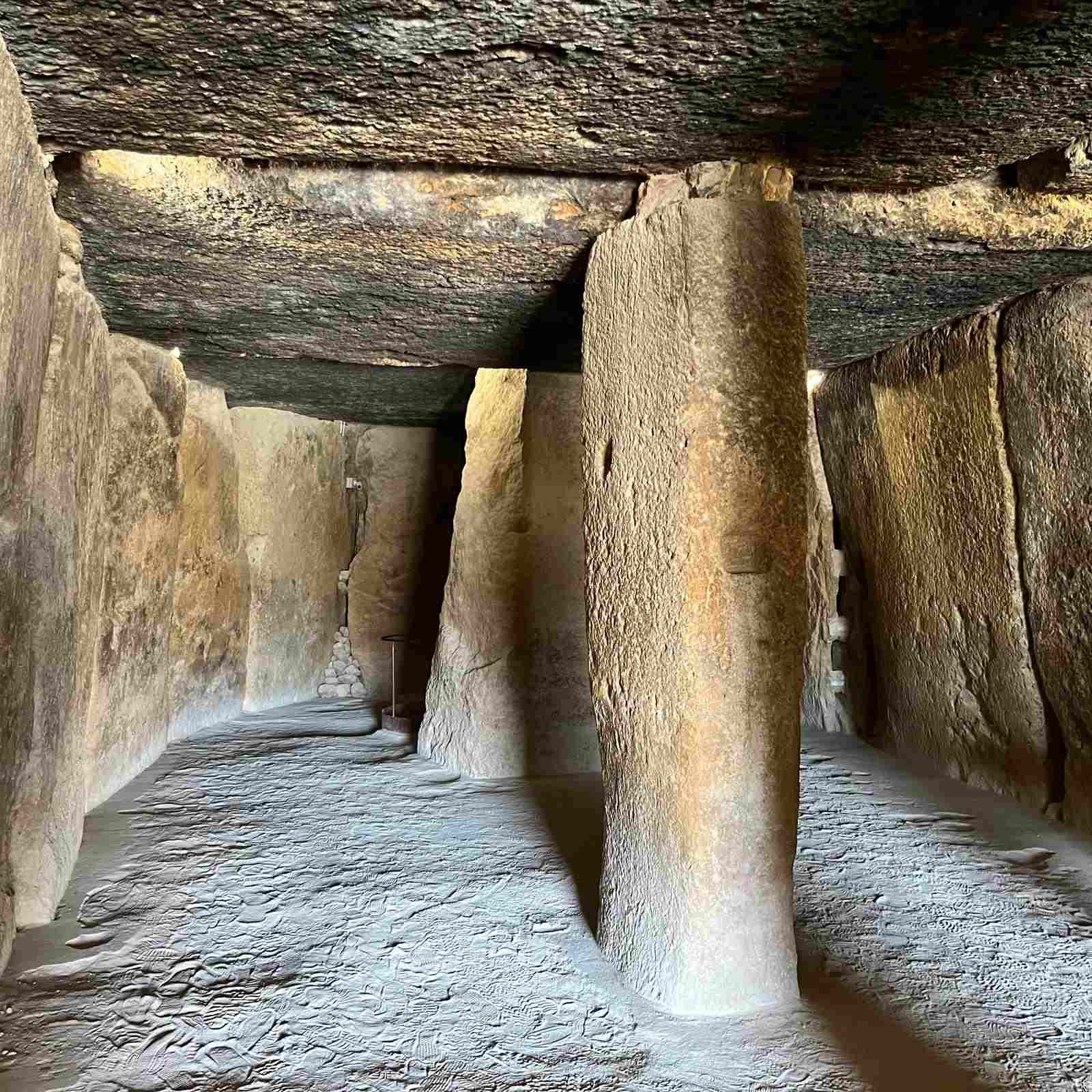
Antequera’s dolmens are an outstanding example of megalithic culture, and one of the most important prehistoric monuments anywhere in Spain. The word megalith means “great stone”, and megalithic cultures used huge rocks to create burial chambers and religious or ceremonial structures. They can be found all over the world, but megaliths are particularly common in Western Europe. A dolmen is a particular type of megalith – a tomb consisting of at least two upright stones with a “capstone” resting on top of them.
There are three separate dolmens at Antequera: Menga, Viera and Romeral. In 2016, they were declared a UNESCO World Heritage Site, thanks to their age, state of conservation and unique orientation. There is an excellent interpretation centre on the same site as the Menga and Viera dolmens. It has a video showing how the dolmens may have been built, and it explains the orientation of the dolmens.
Menga
Menga is the oldest and largest of the three dolmens: it was built almost 6,000 years ago, and it is 27.5 metres long. The biggest individual stone is estimated to weigh around 150 tonnes, which gives you an idea of how many people must have been involved in the construction process.
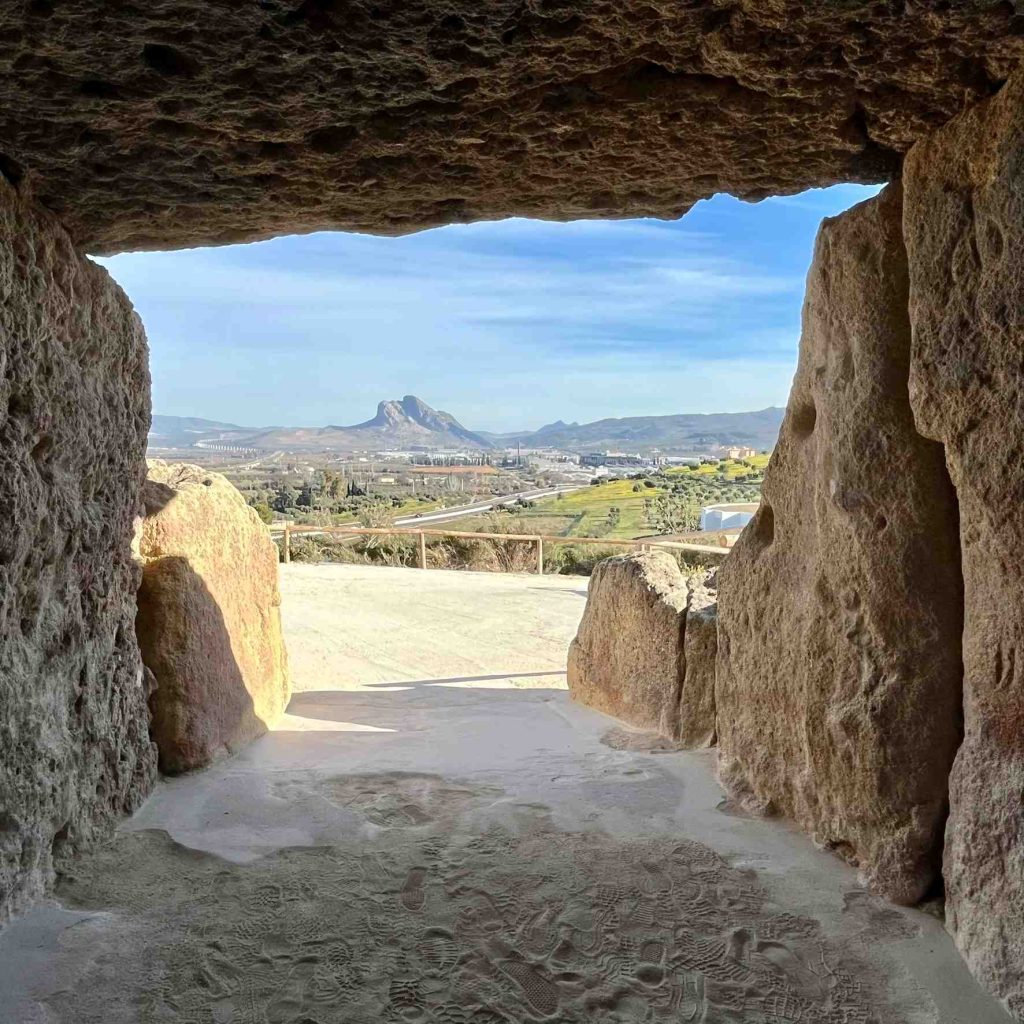
Dolmens generally face the place where the sun rises on a particular day – for example the winter solstice or the equinoxes. However, Menga is unique is being orientated towards a landform: the Peña de los Enamorados (“Lovers’ Rock”), a mountain which looks like the upturned face of a person.
Viera
The Dolmen of Viera, which is right next to Menga, is perhaps 5,500 years old. Unlike Menga, it is lined up with sunrise at the spring and autumn equinoxes. On those days, as the sun’s rays penetrate the tunnel of the dolmen, they reach exactly as far the start of the burial chamber itself. The intention may have been to create a symbolic boundary between the areas occupied by the living and the dead.
Romeral
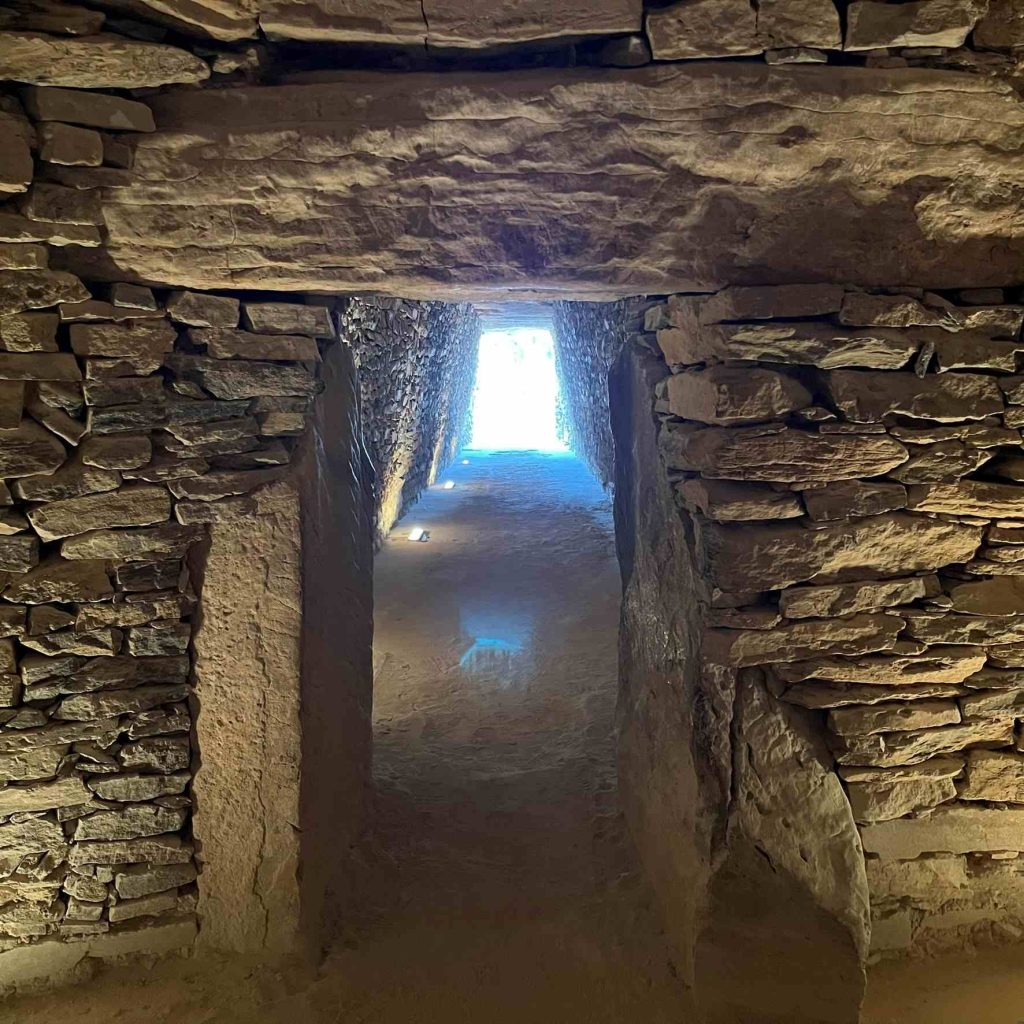
A few kilometres away from Menga and Viera lies the dome-shaped “tholos” of Romeral, which is significantly more recent than both Menga and Viera. It is one of the very few dolmens in Spain that face towards the western half of the sky, and again it appears to be oriented towards a landform. But whereas Menga faces the Lovers’ Rock, Romeral points towards the striking limestone formations of El Torcal.
Information about the dolmens on the UNESCO website: https://whc.unesco.org/en/list/1501/

Questions and answers
The Dolmen of Menga was built almost 6,000 years ago.
The Dolmen of Menga, which was built almost 6,000 years ago, is the oldest of the three dolmens at Antequera.
No, you don’t need to book in advance for the Antequera dolmens, and entrance is free of charge.
It’s personal preference whether you prefer to hire a guide for the dolmens, but bear in mind that the Interpretation Centre is excellent, with the information given in several languages. The staff at each of the dolmens are also very knowledgeable and happy to answer questions, although their English might not be perfect.
Yes, it’s about a 20-minute walk from the town centre to the Menga and Viera dolmens and the Interpretation Centre. The Romeral dolmen is a bit further away, but you can still reach it on foot.
Yes, there’s a free car park for the Menga and Viera dolmens and the Interpretation Centre. It’s easily accessible on the edge of Antequera. The Romeral dolmen on a separate site down some side streets also has a small car park.