
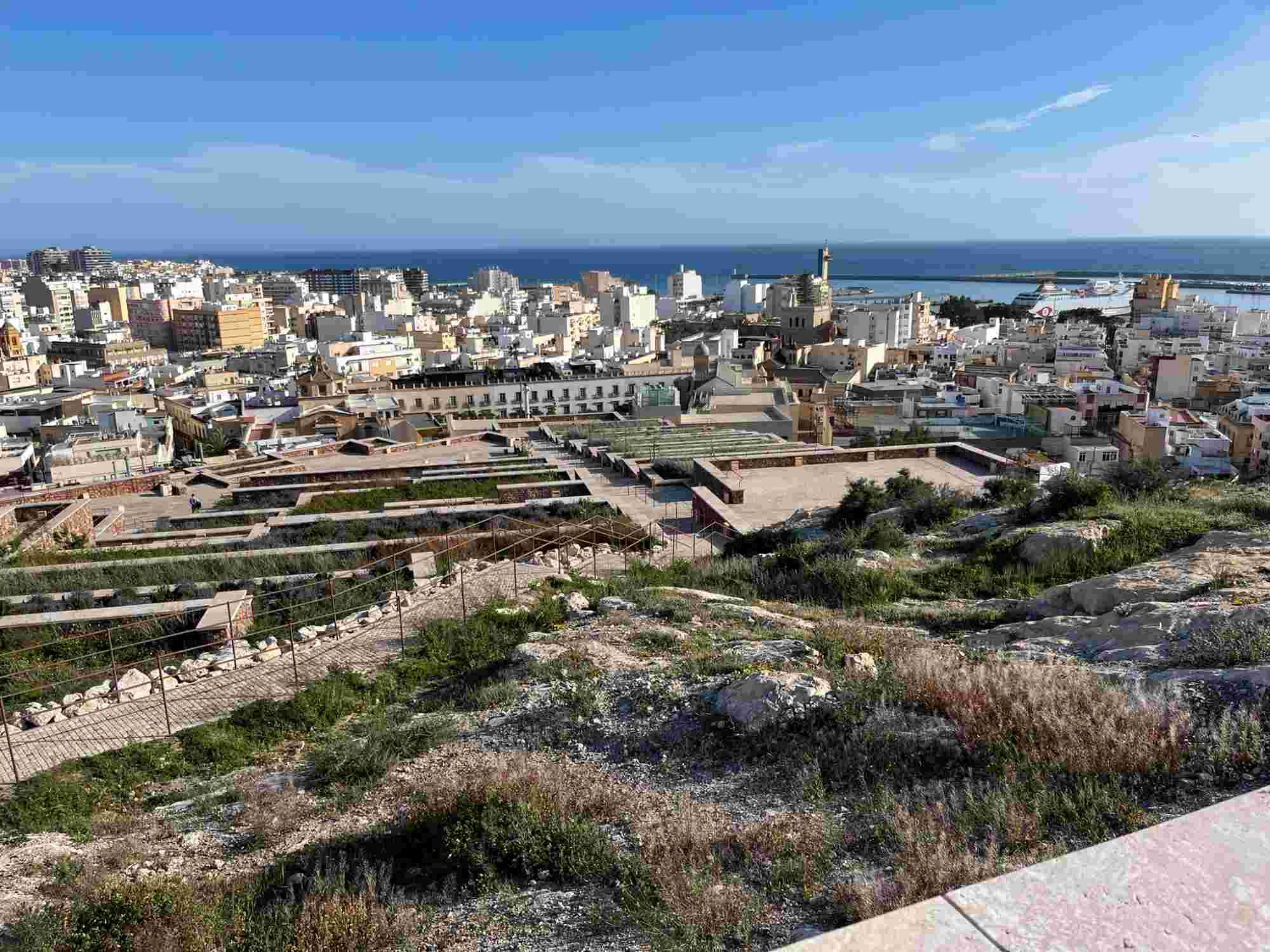
Almería
2 nights / 3 days
Almería tends to be seen as the poor cousin of busier Andalucian coastal cities like Málaga and Cádiz, but it’s watched over by a Moorish Alcazaba – second in size only to the Alhambra – and it’s full of elegant neoclassical mansions. What’s more, it’s currently undergoing a bit of a renaissance with the pedestrianisation of the Paseo de Almería, renovation of historic buildings and squares, redevelopment of the port and several new or revamped museums.
With over 320 sunny days a year and a beachfront promenade that goes on for miles, it’s a great place to visit. This two-night itinerary gives you time to discover Almería, its museums … and its tapas bars.
Day 1
When you arrive, you may want to head straight for the Paseo Marítimo for a stroll or a swim, but if you’re after a bit of culture, the cathedral is worth visiting.
Cathedral
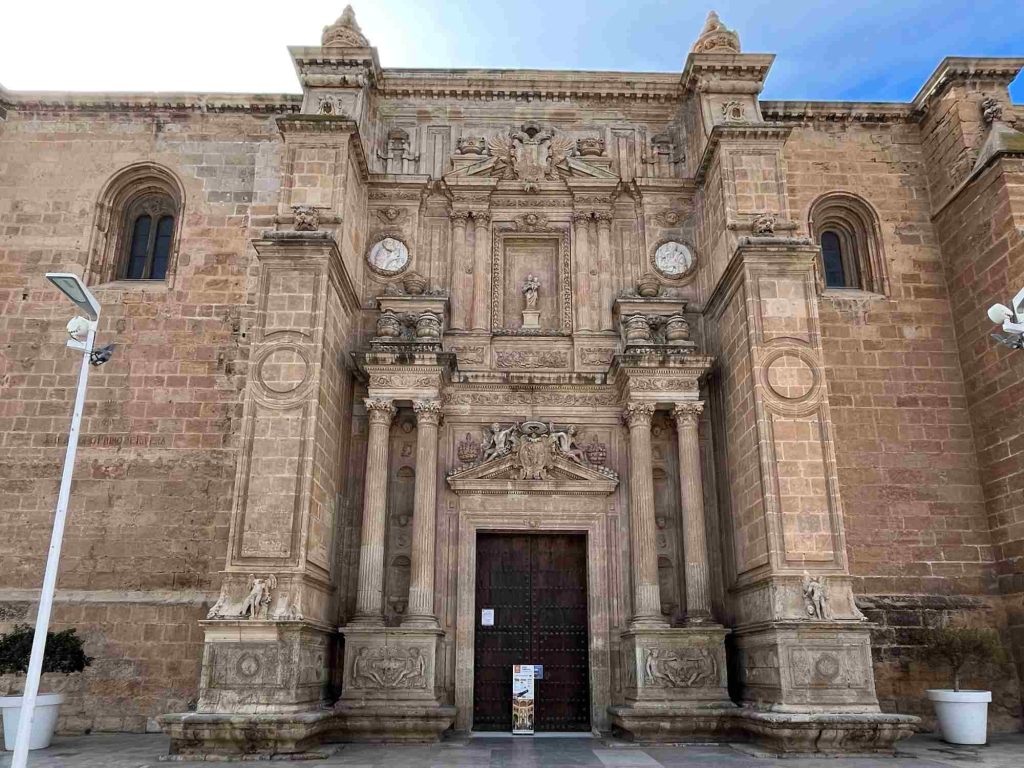
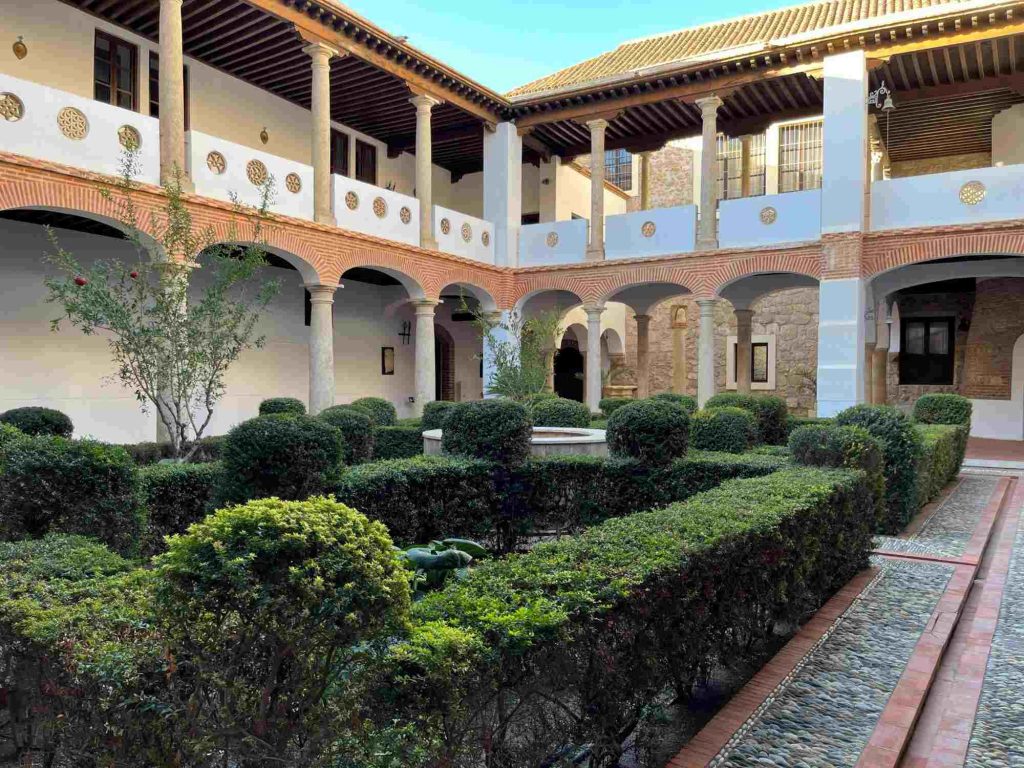
Almería’s cathedral was built to withstand bombardment by Barbary pirates, which explains its robust design. Nevertheless, it features a beautiful Renaissance doorway designed by Juan de Orea, and there’s lots to see inside: a Renaissance choir and sacristy, Baroque side chapels and a neoclassical cloister.
If you’re interested in religious architecture, you can get a joint ticket for the Cathedral and the nearby Puras Convent, which is the oldest in Almería. Inside you can see a nun’s cell, the cloister, the refectory and the church, including the upper and lower choir.
Other churches of note include Iglesia de la Virgen del Mar, dedicated to Almería’s patron, and Iglesia de Santiago.
Cable Inglés and Paseo Marítimo
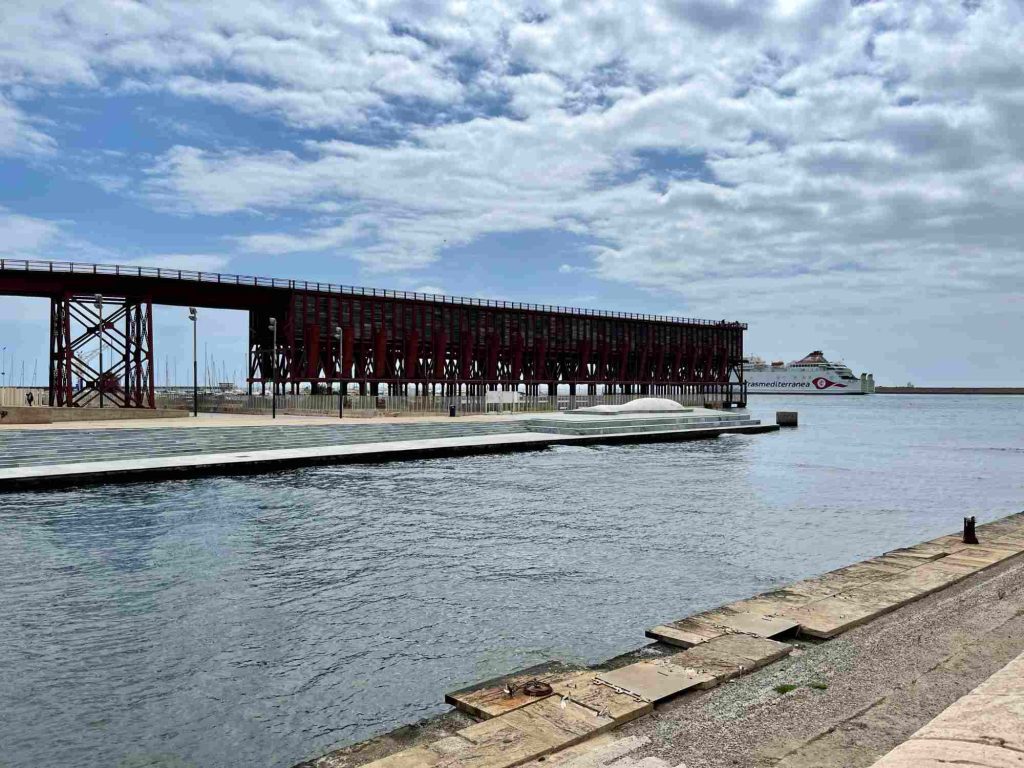
The Cable Inglés is a huge iron structure, built to convey iron ore from the railway station to ships waiting in the port. You can walk out onto it for views across the port – a great spot for sunset.
The Paseo Marítimo (seafront promenade) runs east from the Cable Inglés. Just go for a stroll, ice-cream in hand, or relax on the beach.
Evening
There are plenty of restaurants along the Paseo Marítimo, although they vary a bit in quality. There’s great seafood on offer, or if you fancy Italian food, there are some good options to choose from, including Restaurante IL Capo Mangia and AMOЯ Gastronomía.
Day 2
In the morning, before it gets too hot, explore the historic centre, including the Almedina – the former Muslim city – and the Alcazaba. Our VoiceMap audio tour Almería: Sun, Sultans and Sheriffs in Andalucía’s Wild East traces Almería’s history from its origins as the main port for the Caliphate of Córdoba, through its chapters as a powerful Muslim taifa and as a mining hub, to its cameo as a production centre for Spaghetti Westerns.
In the afternoon, take refuge in one of Almería’s museums or a Civil War air raid shelter*. There are several very interesting museums to choose from, covering art, archaeology and guitar making.
* Closed for refurbishment until mid-2026.
Morning
Almedina and Historic Centre
The Almedina on the hill up towards the Alcazaba retains its traditional Muslim street layout, in stark contrast to the area around Puerta de Purchena and Paseo de Almería, which has wide boulevards with a clear French influence laid out at the end of the 1800s.
Don’t miss the free Heritage Interpretation Centre on Plaza de la Constitución for a great overview of the city’s history and excellent 360° views from its rooftop terrace.

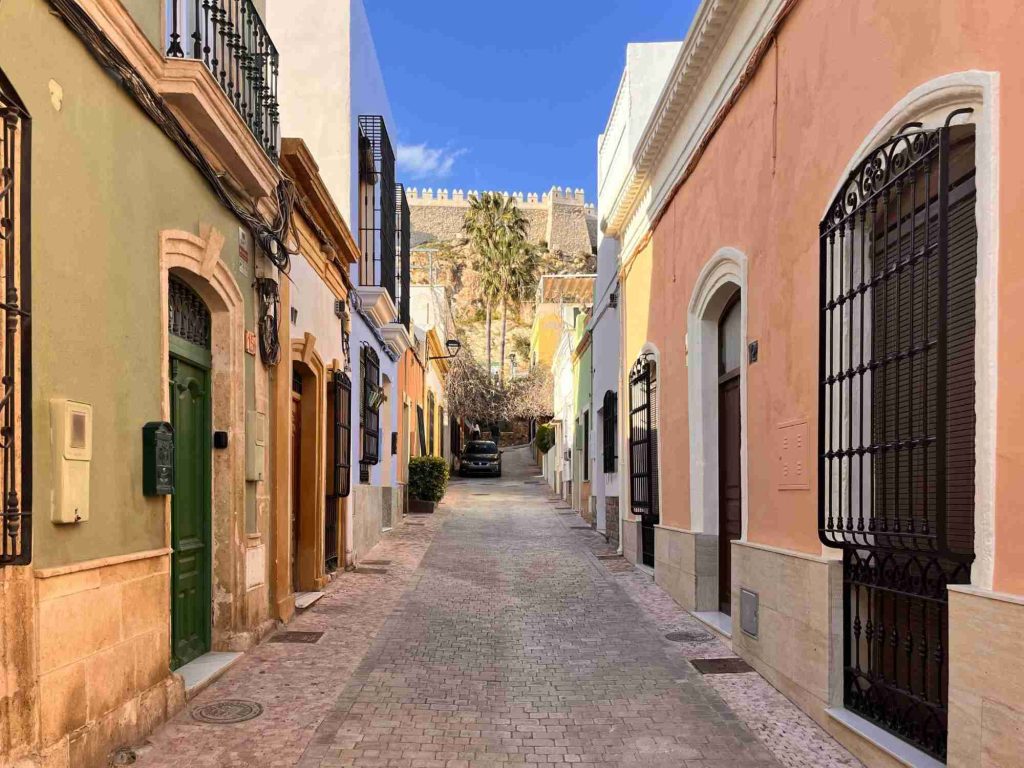
Alcazaba
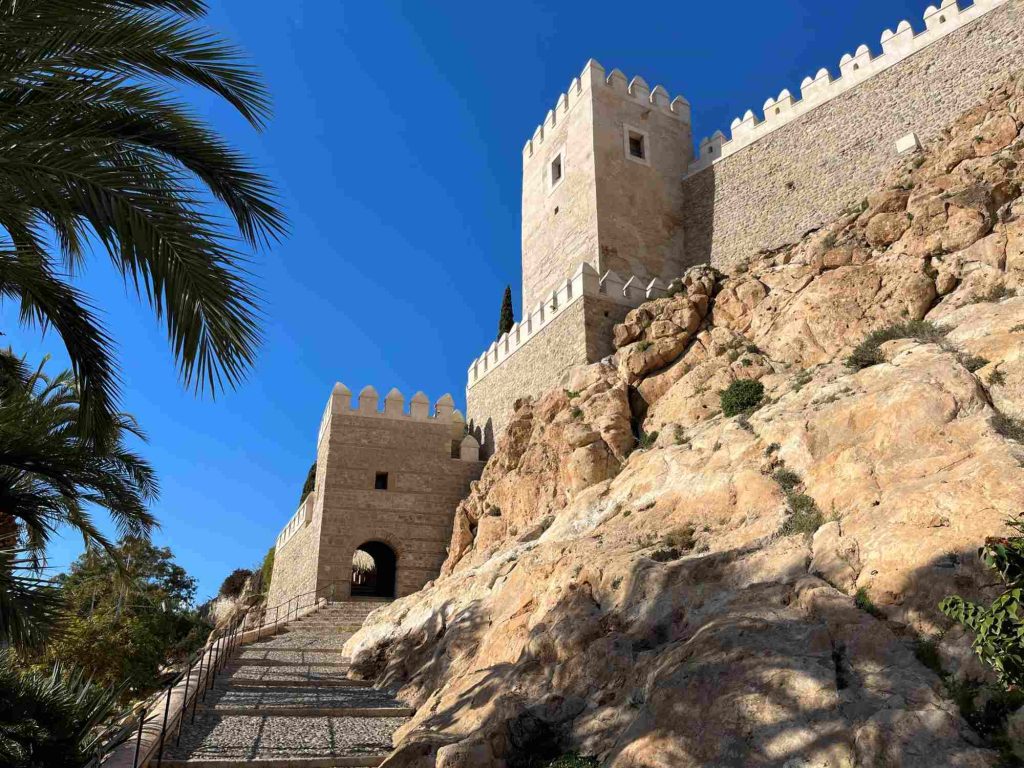
Almería’s Alcazaba (fortress) covers the entire hilltop above the oldest part of the city, and dates back to the 900s. Although it’s much less well preserved than the Alhambra, you can see Muslim palaces with baths, along with the Christian-era keep and parade ground. From the ramparts you get wonderful views of the city and the shimmering Mediterranean.
There is a nominal entry fee – and it’s free for EU residents.
Lunch
Almería prides itself on its tapas. There’s a wide variety on offer, from fresh fish and seafood to hearty stews. Be sure to try a chérigan – toast spread with aioli and a topping. Just like in Granada and Jaén, you get a tapa included with each drink, but you can supplement this with tapas extra, medias or raciones.
Some of the best tapas bars are on Calle Jovellanos – try El Jurelico, El Quincho or Jovellanos 16. You can also sit down for a snack inside the Central Market.
Afternoon
Art Museums
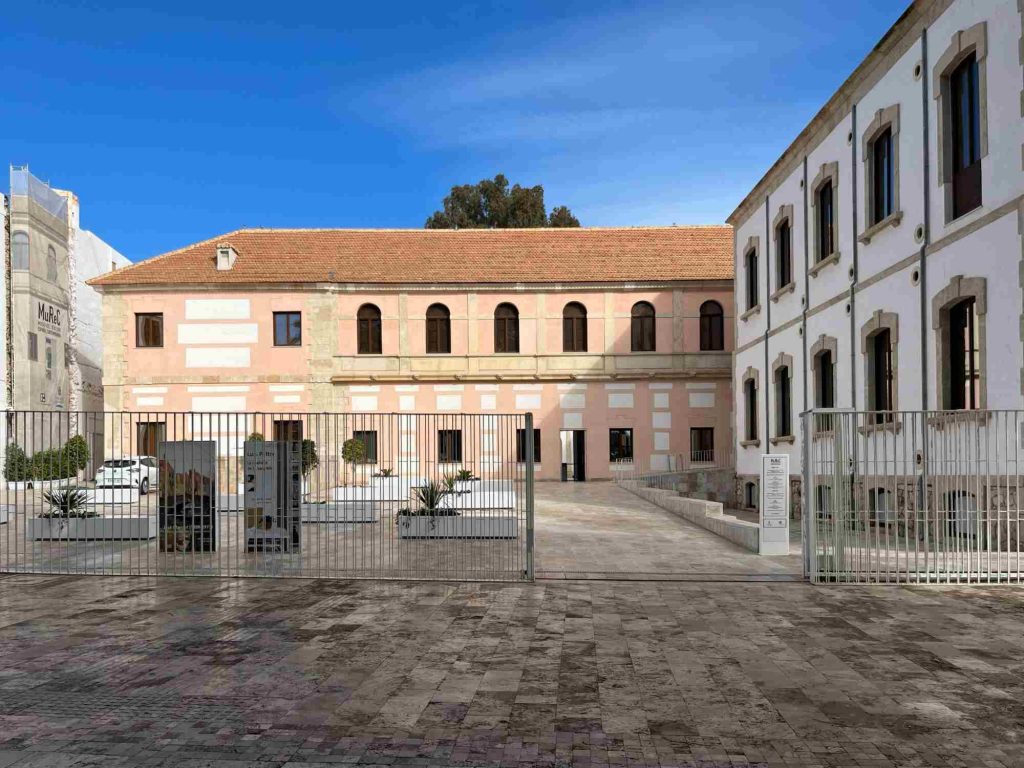
The Museum of Contemporary Spanish Realism ($) is a very nicely laid out and well-curated art museum housed in a beautifully restored former hospital dating from the 1500s. Most of the works on display are by 20th century Spanish artists. As well as the permanent collection, they usually have temporary exhibitions.
The Doña Pakyta art museum presents works by local artists, including the Indaliano movement from the 1940s and 50s. We were particularly struck by their paintings of Almerian villages with their box-like, flat-roofed houses.
Museo de Almería
The province of Almería has been inhabited for thousands of years, dating back to the Copper Age Los Millares and Bronze Age El Argar societies. The dry climate means many sites are extremely well preserved, so it’s a paradise for archaeologists. The Museo de Almería has excellent displays which showcase these discoveries and put them in context. It also has good sections on Roman and Muslim Almería.
There is a nominal entry fee – and it’s free for EU residents.
Guitar Museum
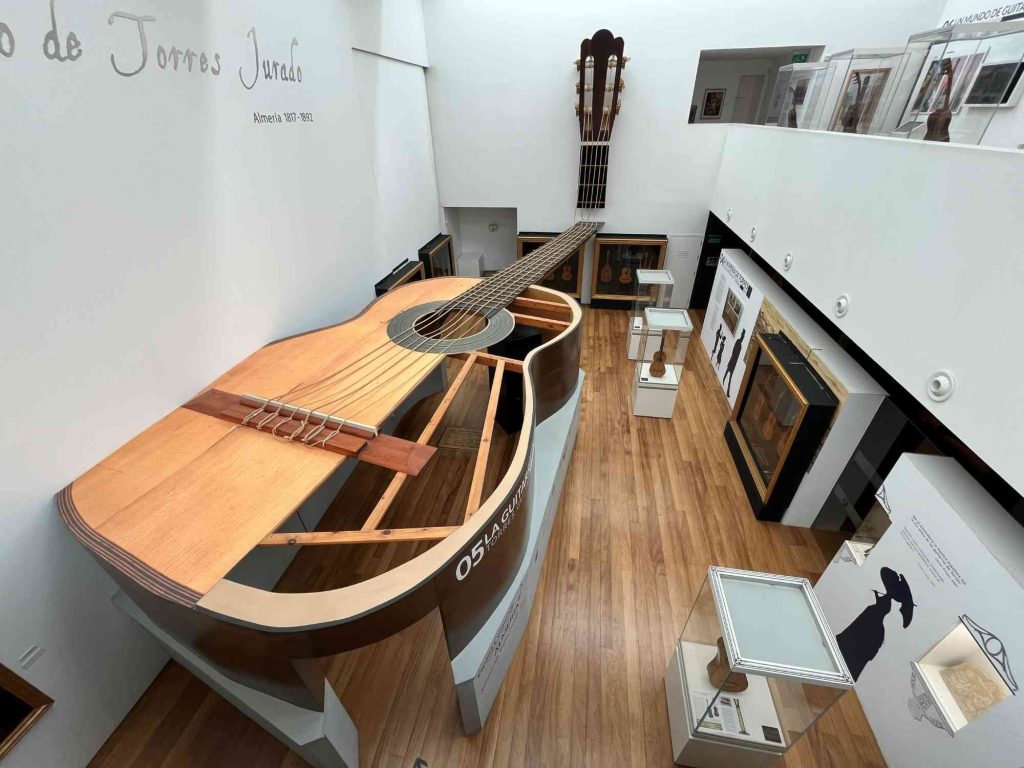
The guitar museum is dedicated to Antonio de Torres, a local master guitar maker who was instrumental(!) in developing the Spanish classical guitar. There are lots of beautiful old guitars on display, alongside other related string instruments.
Pit stop
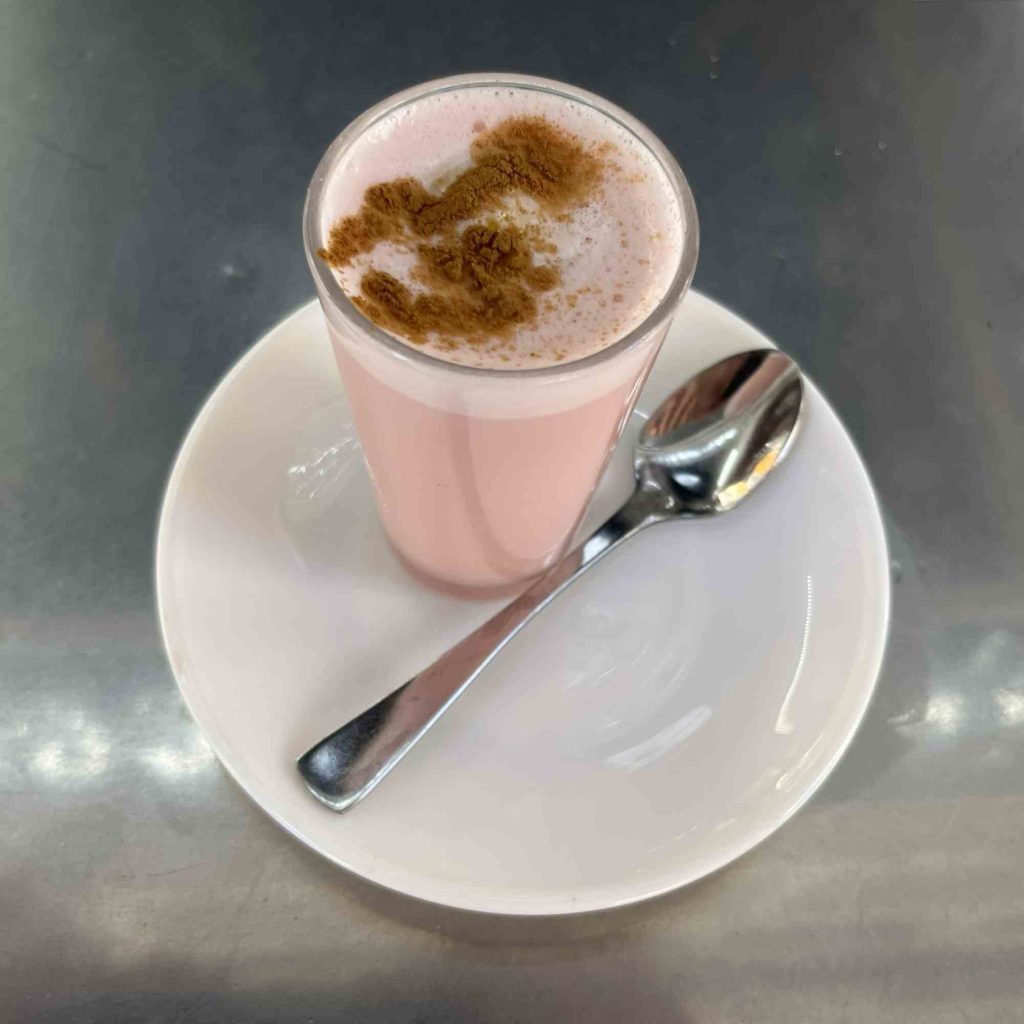
The Almerian Americano was invented in the 70s when an American movie actor made an order at the Amalia kiosk near Puerta de Purchena. Maybe something was lost in translation… the eclectic mix was hot milk, coca cream liqueur, lemon juice and cinnamon… but it’s really quite tasty! Amalia is still the best place to try one. They serve them hot or cold, and they also have coffees and other drinks.
Alternatively, there are plenty of pleasant spots to sit down for a tea or coffee on Paseo de Almería.
Air Raid Shelters*
* Closed for refurbishment until mid-2026
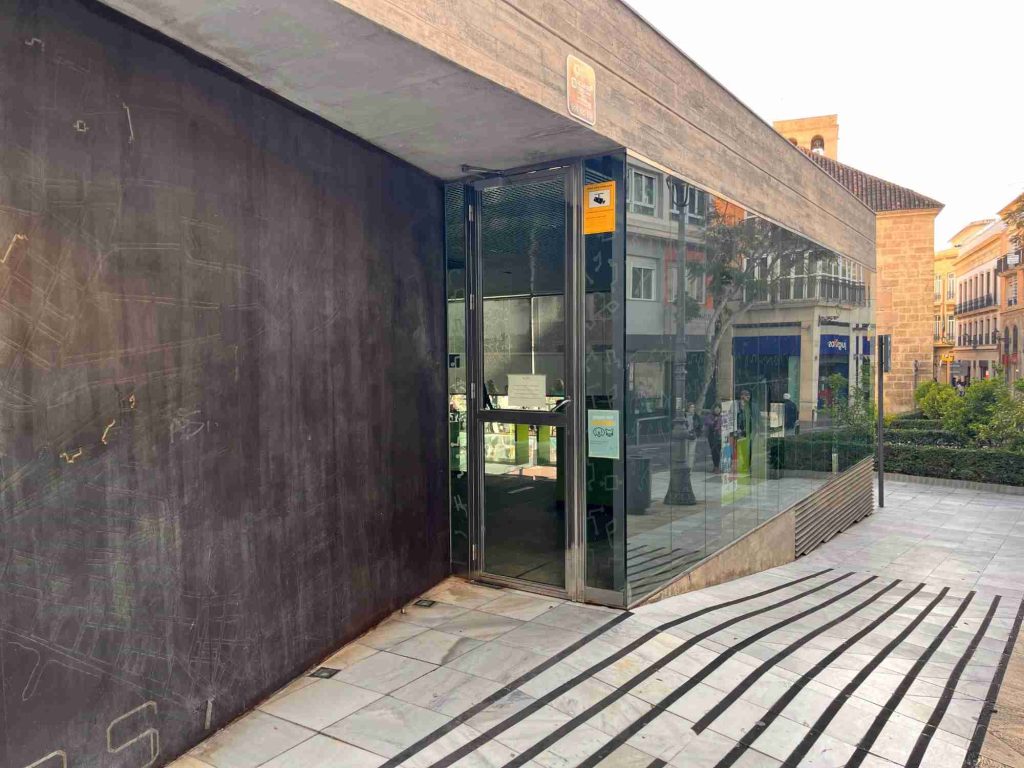
Almería suffered heavy aerial bombardment during the Civil War in the 1930s. It is fascinating to visit the extensive network of underground tunnels and shelters.
Evening
Restaurante Cuatro Hojas offers fine dining based on a fusion of Spanish, Argentinian and other world cuisine in an elegant setting on Plaza de la Constitución. Restaurante La Encina is another decent choice nearby.
Day 3
Get up early (particularly in the hotter months) to climb up to the Cerro de San Cristobal viewpoint. If you have time, the Casa del Cine is well worth a visit.
Morning
Cerro de San Cristobal
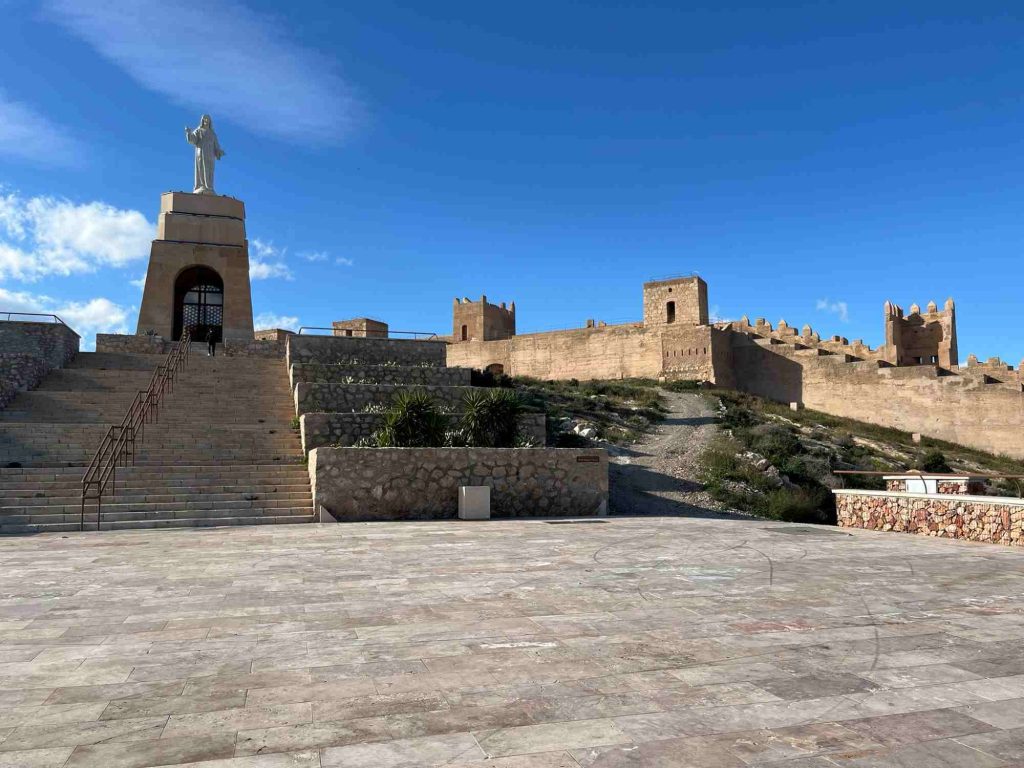
You’re sure to have seen the statue of Christ looming above the city, just inside the old city walls. The views are spectacular, so it’s worth making your way up through the beautiful terraced gardens.
Casa del Cine
In the 1960s, the Casa del Cine was in the countryside, but the city has engulfed it. It hosted visiting actors and filmmakers – and John Lennon, who was inspired to write Strawberry Fields Forever during his stay there. It’s been turned into a fascinating little museum about the movies that were made here and the stars who passed through. It’s quite far from the centre, so if you don’t have your own car, you may need to take a taxi.
If you have time…
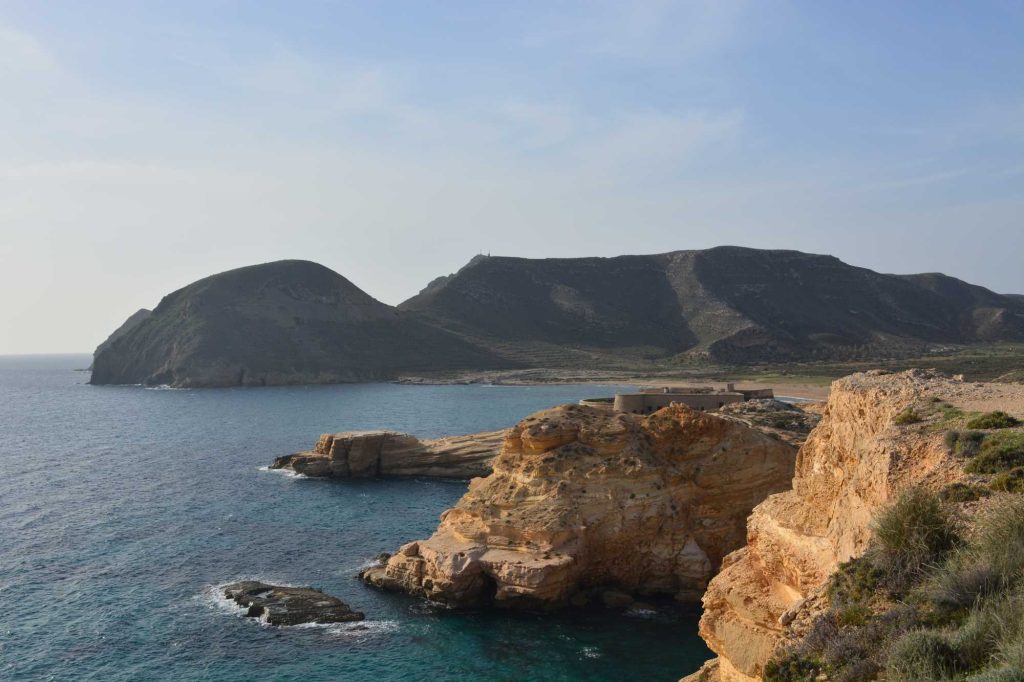
If you have more time in the area, Cabo de Gata natural park offers unspoilt beaches and quaint villages amidst striking scenery, as well as the chance of a boat trip or renting a kayak. Head to San José, Agua Amarga or Rodalquilar – which also features the mines where they filmed Indiana Jones and the Last Crusade. The best beaches include Los Genoveses and Mónsul accessed from San José, and El Playazo near Rodalquilar.
The village called Cabo de Gata is less interesting, although there’s a little wetland nearby where you can spot flamingos, and you can continue as far as the lighthouse for the views.
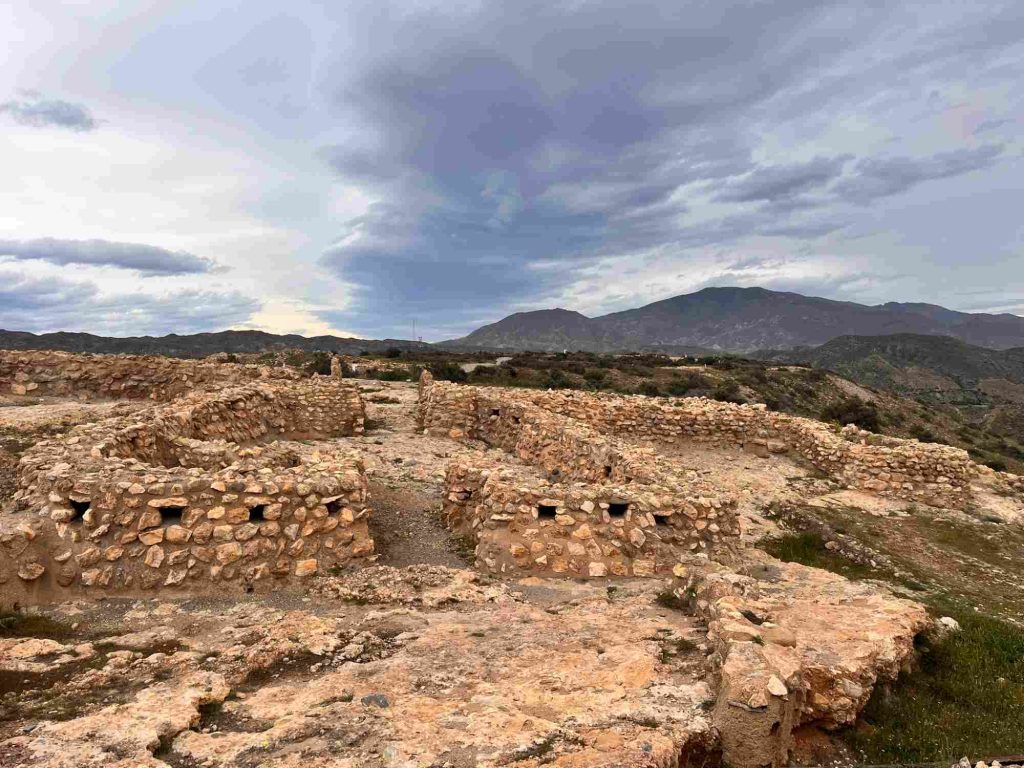
Other interesting places to visit nearby include Los Millares Copper Age archaeological site and the Mini Hollywood theme park.
Related audio tours
Questions and answers
Yes! Almería has 320 sunny days a year and a beachfront promenade that goes on for miles. There’s a Moorish Alcazaba and elegant squares and boulevards lined with neoclassical mansions. It’s currently undergoing a bit of renaissance with the pedestrianisation of the Paseo de Almería, renovation of historic buildings and squares, redevelopment of the port and several new or revamped museums.
Yes. Buses to Almería take 3-3 ½ hours from Málaga, or 2 hours from Granada. There are also trains from Granada, which take about 3 hours.
Almería’s Alcazaba is definitely worth a visit, especially since it only has a nominal entry fee (free for EU residents). Of Spain’s Muslim monuments, it’s second in size only to the Alhambra, and you can visit the Muslim palaces and Christian-era keep and parade ground, as well as a pond that was used in filming Game of Thrones. From the ramparts you get stunning views of the city and the Mediterranean.
Almería has a few art museums, including the Museum of Contemporary Spanish Realism in a beautiful former hospital dating from the 1500s. The Museo de Almería (archaeological museum) gives a great overview of the area’s long history, including the Copper Age Los Millares and Bronze Age El Argar societies. There’s also a small guitar museum.
Almería has an extensive network of underground air raid shelters and tunnels built during the Civil War. It is currently closed for refurbishment, but should reopen to visitors in mid-2026.