
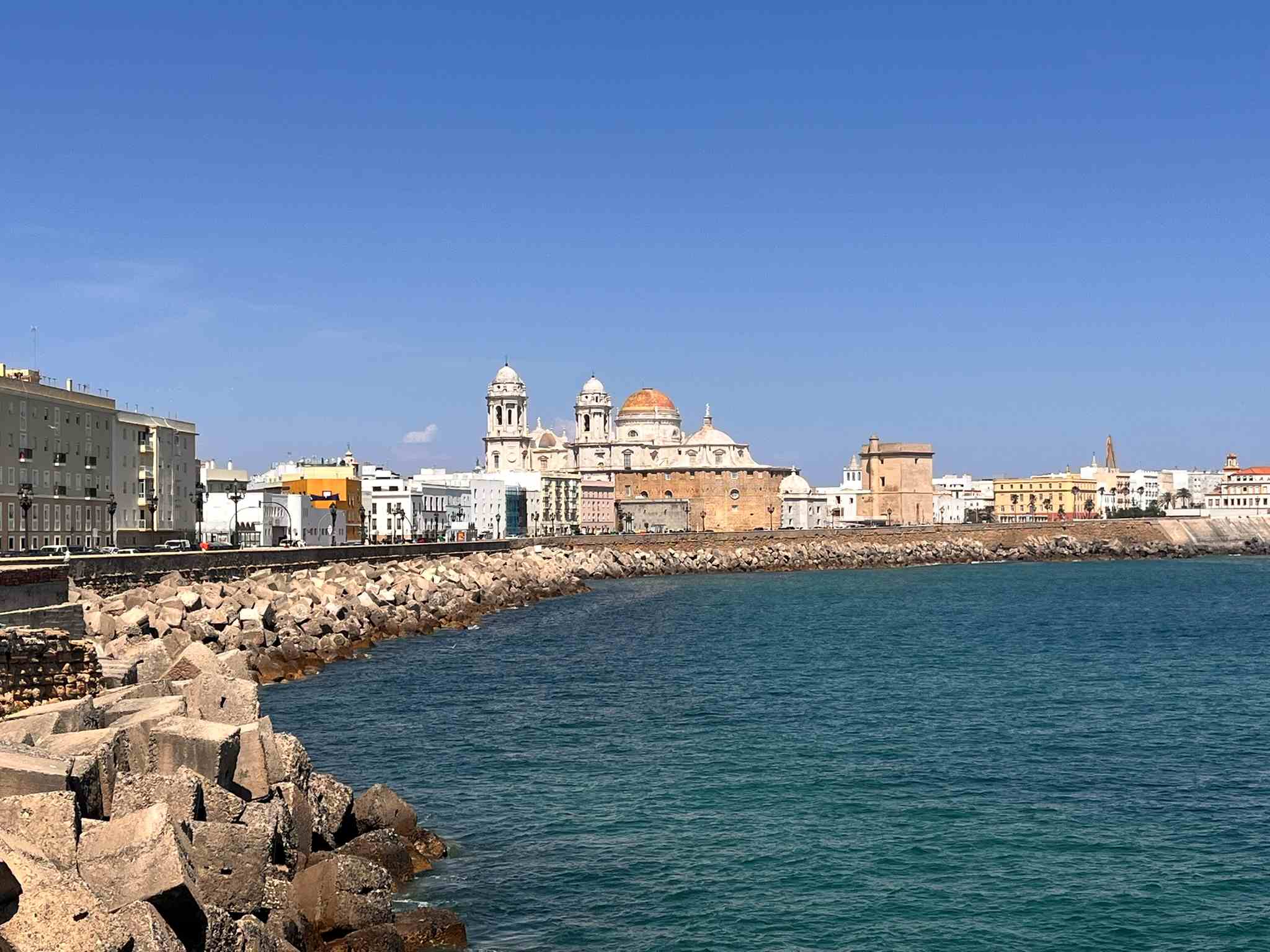
Cádiz
Founded by the Phoenicians as a trading colony, Cádiz remained an important port city under the Romans. Though its influence waned during the Muslim period, it came to the fore again in 1717, when the monopoly on trade with the Americas was transferred to Cádiz from Seville. Its coastal defences and watchtowers are testaments to its maritime heritage and strategic location.
The train from Seville to Cádiz takes about 1 hour 45 minutes, so it makes a good day trip. It’s also easily accessible from Jerez de la Frontera, beach resorts on the Costa de la Luz or one of the white villages in Cádiz province.
Morning
Historic centre of Cádiz
Get a real feel for Cádiz by strolling around the old city. Make sure you take in the monument to the 1812 Constitution in Plaza de España, Parque Genovés with its fine collection of exotic trees, La Caleta beach and Cádiz’s two castles (Santa Catalina and San Sebastián). It’s worth admiring the Cathedral’s domes from the Paseo del Vendaval.
Clive Muir’s VoiceMap audio tour, The Ancient City By the Sea: A Guide to Charming Cádiz, weaves around the historic centre, taking you past the main points of interest while you find out about Cádiz’s history, legends and culture.


Torre Tavira
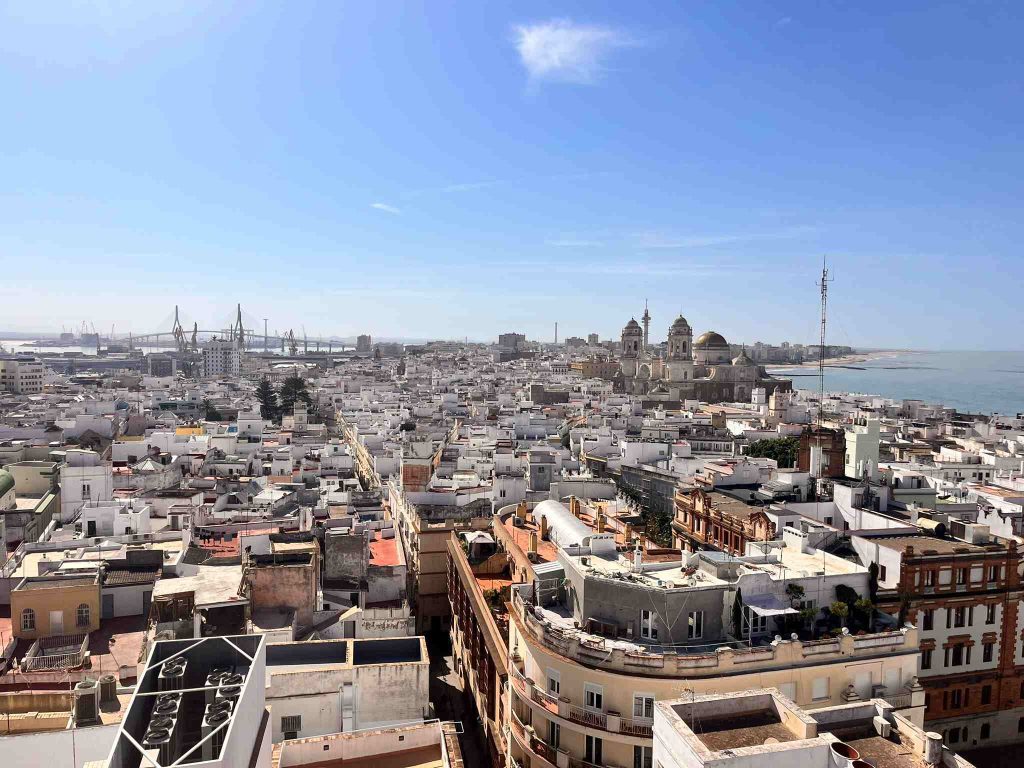
Cádiz’s merchants built watchtowers on their townhouses to keep track of the ships coming and going. Over 100 of them remain, but most are privately owned. The Torre Tavira in the centre of the old town is the tallest of them all, and fortunately it is open to the public. It has great views from the roof, but the highlight of the visit is the Camera Obscura. It gives you a birds-eye view of the city, zooming in and out of its main monuments, along with a guided explanation of what you’re seeing.
We recommend booking your timeslot for the Camera Obscura online in advance.
Official website: https://torretavira.com/en
Roman remains
FREE
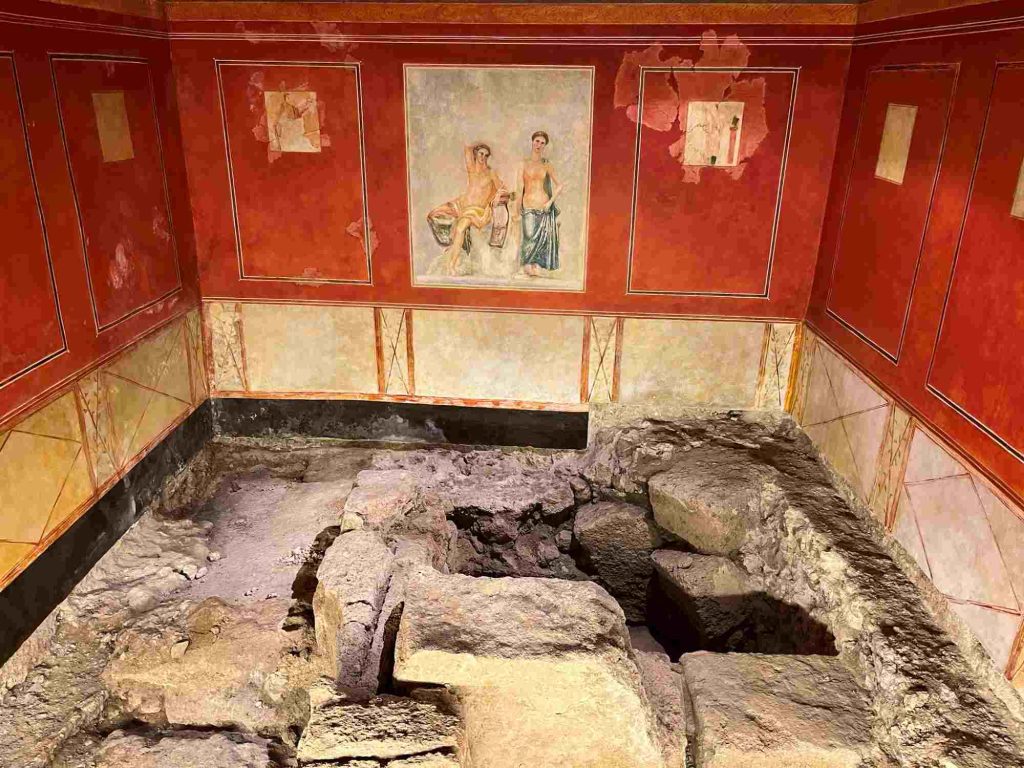
Although the Roman theatre can’t be visited during the ongoing renovation, Cádiz’s Roman past is just beneath your feet. It’s worth going down into the Garum factory (Factoría romana de Salazones) and the Bishop’s Palace archaeological site. Both are free and quick to visit.
Lunch
Don’t leave Cádiz without trying a tortillita de camarones – a prawn fritter. Other specialities include all kinds of fried, grilled and conserved fish and seafood, especially tuna. And we mustn’t forget the delicious local Payoyo cheese, made of sheeps’ and goats’ milk.
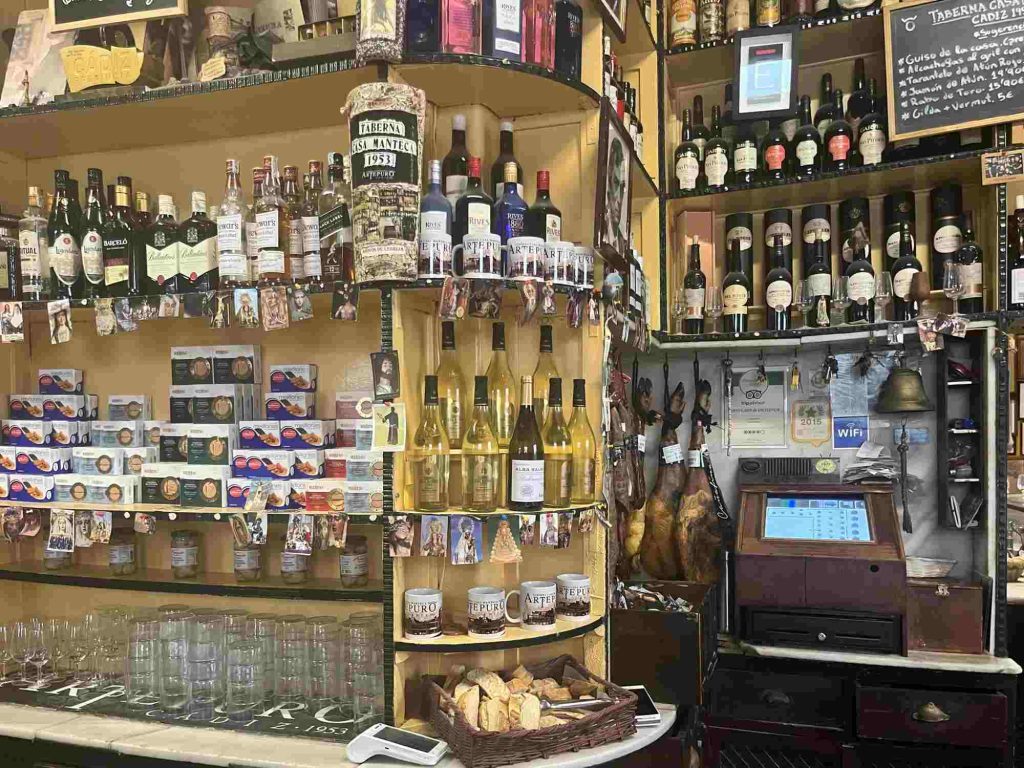
Taberna Casa Manteca is a great traditional tapas bar, but it definitely isn’t a “hidden gem”. You’ll likely be there with a lot of other tourists, and there’s no booking, so if you want to make sure you get in, it’s best to arrive a bit before they open at 12:30 and join the queue outside. Despite the crowds, it manages to maintain its atmosphere, and they serve a fabulous range of tapas.
The seafood bar and restaurant El Faro de Cádiz is another institution nearby. You can book a table in the formal restaurant, but not in the tapas bar, so again it’s a case of turning up and hoping to get a spot. El Faro opens at 13:30 and it’s bigger than Casa Manteca, so your chances are higher.
If you don’t want the stress of queuing, there are many other good tapas bars in Cádiz, including in the central market. We enjoyed Bar Bulavi, which is quite near the port.

Afternoon
Cádiz Cathedral
Cádiz’s marble-faced domed cathedral displays a mix of Baroque and Neoclassical styles. The entry ticket includes the magnificent cathedral itself, as well as the treasury in an adjacent building and climbing the tower. As you’d expect, the views from the top are stunning.

Phoenician remains
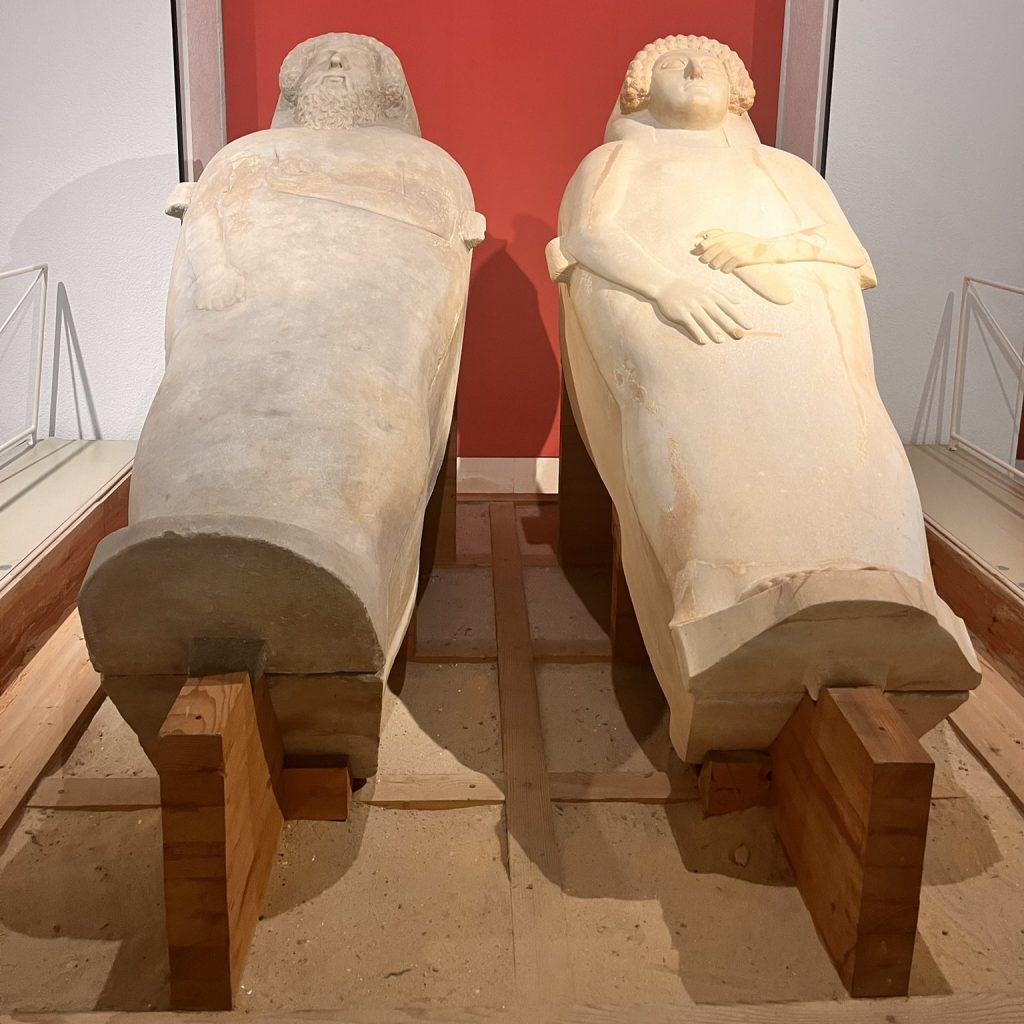
There’s an excellent collection of Phoenician artefacts in the Museum of Cádiz, including beautiful jewellery and a pair of huge sarcophagi. Entry is free for EU citizens and residents, and there’s a nominal fee for others.
In the Yacimiento Arqueológico Gadir you can see how the Phoenician city developed with an interactive tour. It’s free, with timed visits on the hour.
Related audio tours
Questions and answers
Cádiz’s historic centre is relatively compact, making it a good option for a day trip. From Seville, it takes about 1 hour 30 minutes by car or 1 hour 45 minutes by train. You could also do a day trip from Jerez de la Frontera, beach resorts on the Costa de la Luz or one of the white villages in Cádiz province.
Yes, there are regular trains to Cádiz from Seville (about 1 hour 45 minutes) and Jerez (half an hour). Other nearby destinations are accessible by bus or cercanías (local train). El Puerto de Santa María is just a short ferry ride away.
The main sights in Cádiz include the cathedral and Torre Tavira, which offers great views and a fascinating perspective on the city from the camera obscura. There are also various small archaeological sites showcasing Cádiz’s Phoenician and Roman heritage. Cádiz is known for its beaches, including Caleta beach in the heart of the old city.
The camera obscura at Torre Tavira has limited capacity, so we recommend booking your timeslot in advance, particularly in high season and if there are visiting cruise ships.