
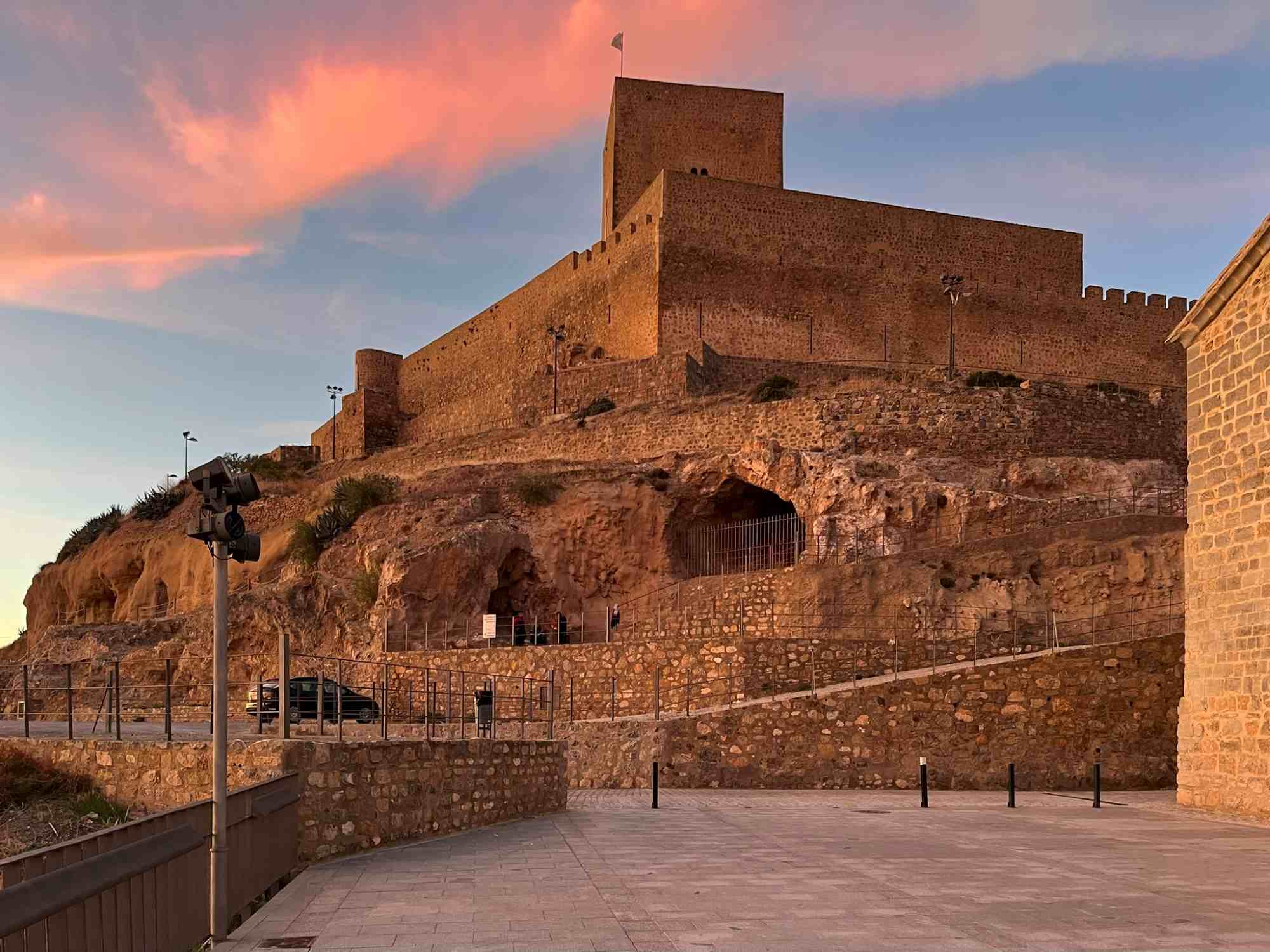
Driving route: Córdoba to Granada
If you ask for a driving route from Córdoba to Granada, your Sat-Nav will probably advise you to take the A-45 and A-92 dual carriageways, which is a very long way round, and you miss out on one of our favourite road trips, which follows the N-432.
This driving route takes you through frontier country – between the Christian Kingdom of Castile and the Muslim Kingdom of Granada. After they took Córdoba in 1236, the Christians consolidated their hold on the Guadalquivir valley, but the mountainous area towards Granada was contested for hundreds of years, which explains why there are so many castles along the route.
Much more recently, the area was sadly back on the front line during the Spanish Civil War in the 1930s. The road we’ll take on this itinerary was roughly the dividing line between Nationalist Rebels’ territory to the right of the road and the Republican positions to our left.
Along the way, we’ll get some stunning views of medieval fortresses set against a backdrop of olive groves and mountain ridges stretching in all directions, including the mighty Sierra Nevada.
Our VoiceMap driving tour Castles of Castile and Al-Andalus: A Drive from Córdoba to Granada describes how the mountainous landscape has helped to shape the history of the area over many centuries. You’ll also find out about hiking, olive cultivation and where to sample local cheeses and Montilla-Moriles wines.
Plan your journey
Half day
You can drive the route in half a day. You’ll mostly enjoy the scenery from the road, but try to make time for a few short stops to take in the views:
- Robert Capa monument in Espejo
- Zuheros
- Moclín
Full day
If you have a full day, you’ll have time to make some longer stops along the way, but decide in advance what you want to prioritise because you won’t have time for everything:
- Zuheros and Moclín are picturesque villages amid mountain scenery.
- Alcaudete Castle and the Fortaleza de la Mota in Alcalá la Real are the most impressive castles. Allow at least an hour and half to visit either of them. Take the opening hours into account when deciding which one.
- The Robert Capa monument in Espejo is a worthwhile short stop with great views.
- We’ve suggested possible lunch stops in Zuheros and Estación de Luque. There are also plenty of restaurants in Alcaudete and Alcalá la Real.
Overnight
If you want to take your time, we recommend staying the night in the lovely village of Zuheros.
- See our Zuheros and Luque day trip itinerary for things to do the first day.
- On the second day, visit Alcaudete Castle and/or Fortaleza de la Mota in Alcalá la Real on your way to Granada.
STAGE 1: Córdoba to Espejo (Robert Capa monument)
From Córdoba, take the N-432 southbound. Drive 32 km (about 25 minutes) until you reach Espejo.
As you drive past Espejo you’ll pass underneath a blue footbridge with a kid’s play area below it on your right. Turn right straight after the bridge and then stop after 200 m where you see some wooden walking signs. You should be able to park on the side of the road.
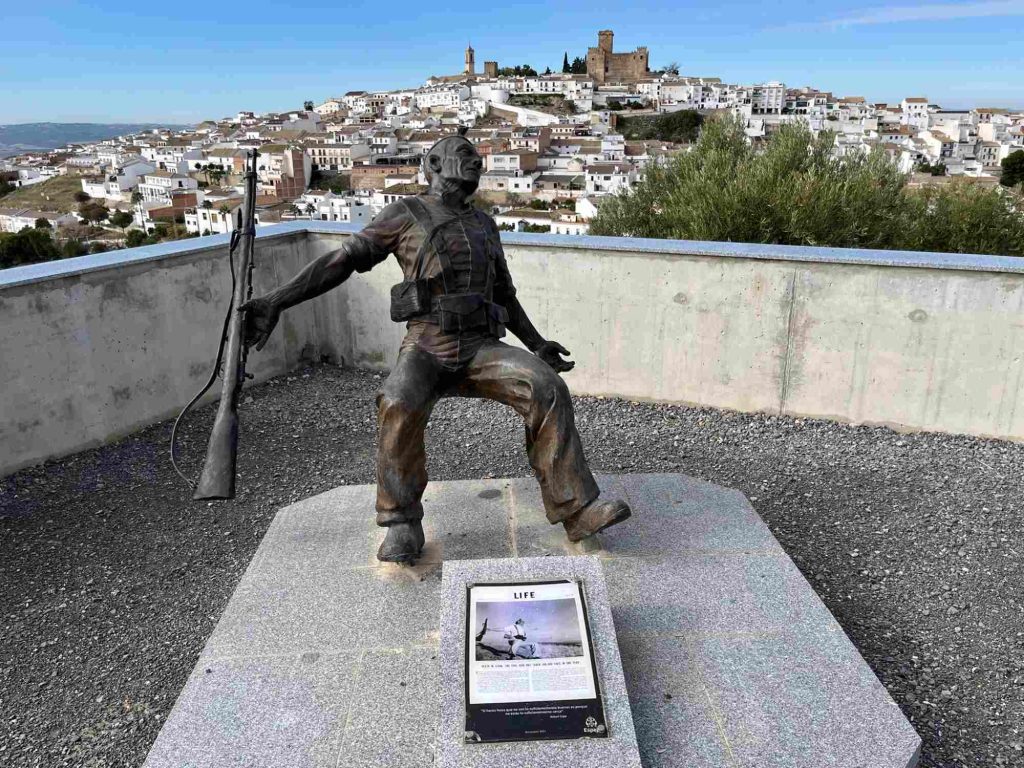
Robert Capa monument at Espejo
Walk up the track to the left of the road, until you reach the monument. It commemorates The Falling Soldier (also titled Death of a Loyalist Militiaman) by Robert Capa, perhaps the most iconic photograph taken during the Civil War, for which Capa was described as “the best war photographer in the world”. Investigators have determined that the photograph was actually taken here in Espejo. Capa’s later work includes very famous shots of the D-Day landings. In 1954, he stepped on a landmine and was killed while covering the First Indochina War.
It’s also a great spot for views of Espejo’s castle and the mountains of the Subbética in the opposite direction. Note: Espejo’s castle looks great from a distance, but it’s only open for visits at weekends if booked in advance. But don’t worry, we’ll be passing several more interesting castles that you can visit.
STAGE 2: Espejo to Luque
Continue along the N-432 for 34 km (25 minutes), then take the A-318 towards Doña Mencia and Cabra. Follow signs towards Luque.
Luque castle
For centuries, Luque has been a frontier town. Its Moorish castle dating from the 9th century has been lovingly restored and is well worth a visit. Allow about 45 minutes to have time to park and walk up to the castle.
Opening hours: Wed-Thurs 12:00-14:00; Fri-Sun: 10:00-14:00 and 17:00-20:00.
STAGE 3: Luque to Zuheros
From Luque, follow signs to Zuheros (about 10 minutes).
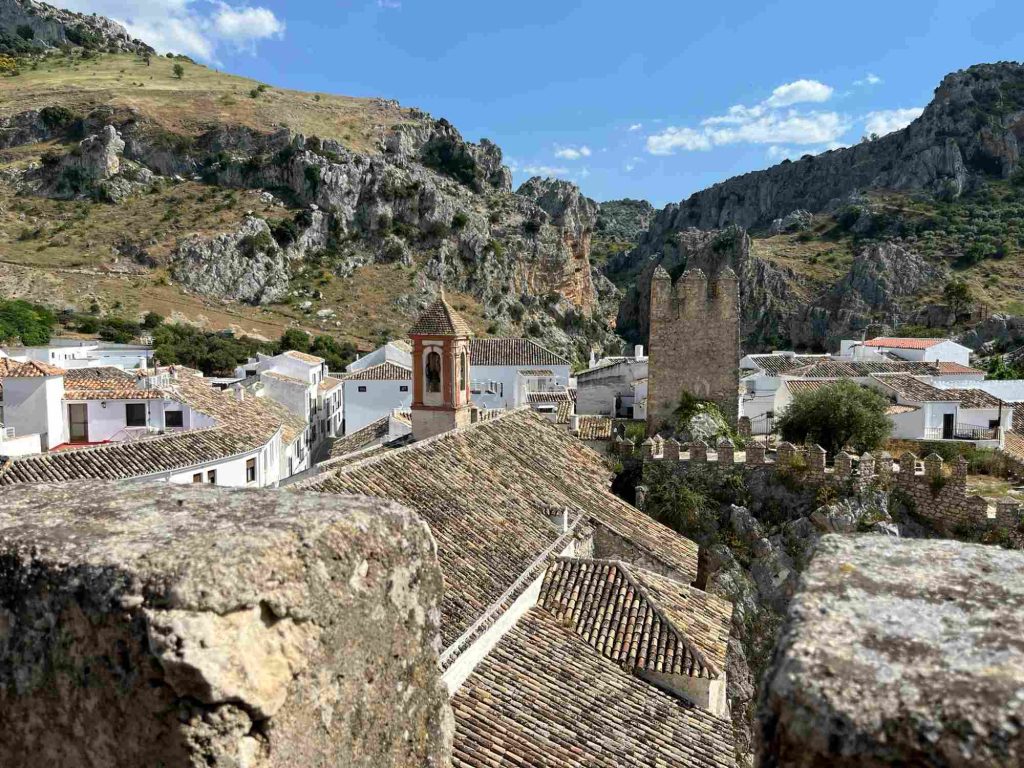
Zuheros
Zuheros is a picture-postcard white village with a romantic castle. Even if you don’t have time to stop in the village, it’s worth a detour for a view of its castle perched on a craggy rock. You can visit the castle ($), although there’s much less to see than at other castles in the area. You get the key from the small archaeological museum ($) across the square. There’s also an ethnographic museum ($) in the village that you could pop into. A combined ticket allows you to visit all three sights on the same day.
Lunch: Option 1 Zuheros
GuisoTeo is a good spot for lunch on the village square in Zuheros. On the menu you’ll find a delicious selection of goats’ cheeses from local producer Los Balanchares, which is just outside the village on the A-318. You can also stop at their shop to stock up on cheese and other local products such as olive oil on your way out of the village, but bear in mind that it closes at 3 pm.
STAGE 4: Zuheros to Estación de Luque
From Zuheros, return to the N-432 at the same junction where we left it. This involves taking the A-318 back in the other direction.
Lunch: Option 2 Estación de Luque
Just after you rejoin the N-432, you’ll pass Estación de Luque, where there used to be a train station. The long-closed railway line has been turned into a so-called Vía Verde reserved for walking and cycling. There are a few roadside restaurants, including the former station building itself – which also houses a shop and a small museum of olive oil production and railway memorabilia.
STAGE 5: Estación de Luque to Alcaudete
Continue on the N-432 for about 20 km (15-20 minutes). After a while the castle of Alcaudete will appear ahead of you.
To visit the castle, turn off onto the N-432a towards Alcaudete. On entering the town, turn left at the roundabout and follow signs for “Castillo”.
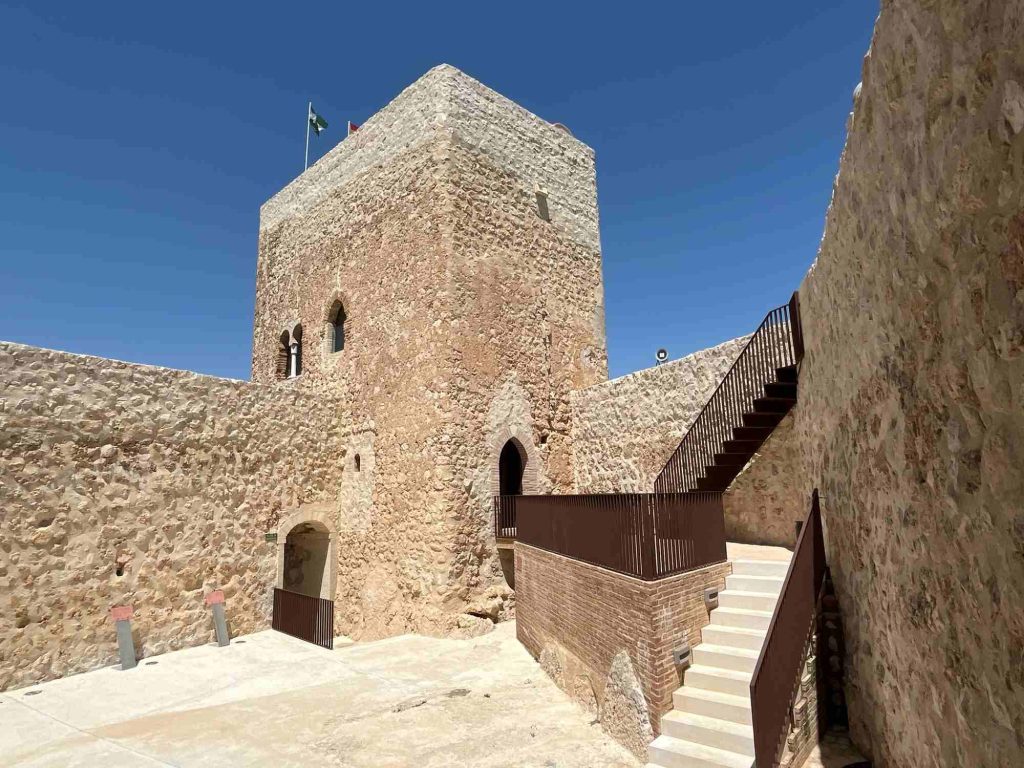
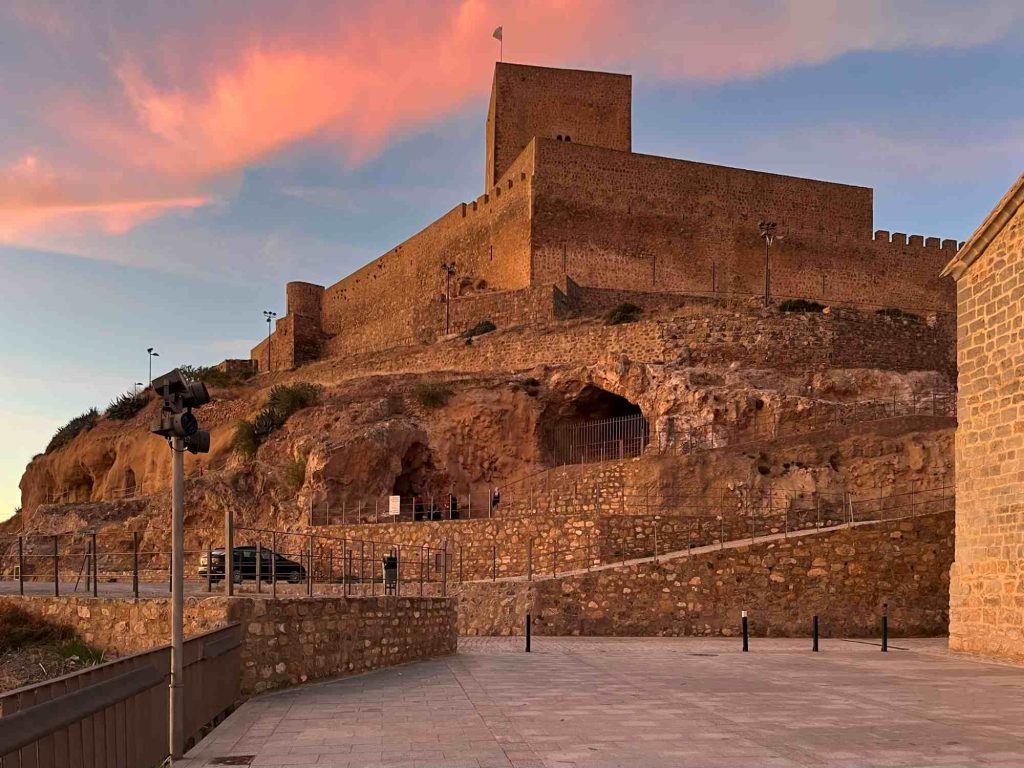
Alcaudete castle
By far the most interesting thing to see in Alcaudete is its imposing castle that looms high above the town. Most of the castle you can see today was built by the Christians, who reinforced and extended the earlier Muslim fortifications. Alcaudete was right on the frontier between Christians and Muslims, changing hands several times even after it was taken by Ferdinand III in 1246 and handed to the Order of Calatrava, a religious order of knights who were very influential in Spain in the Middle Ages. In more peaceful times, it was eventually converted into a Renaissance palace.
There’s a lot to see inside, including the main keep, stables and refectory, as well as various medieval siege weapons. The audio guide included with the entry ticket gives a good explanation of the castle’s construction and history, as well as the Order of Calatrava.
Opening hours: Wed-Sun 10:30-13:30 and 16:00-19:00 (Nov-Jan); 17:00-20:00 (Feb-June and Sept-Oct); 18:30-21:30 (July-Aug).
Information (in Spanish): https://alcaudeteturismo.com/castillo-de-alcaudete/historia-castillo/
STAGE 6: Alcaudete to Alcalá la Real
From Alcaudete, continue on the N-432 for 25 km (25 minutes) to Alcalá la Real.
To visit the castle, take the exit towards Montefrío/Alcalá la Real/Castillo de la Mota/Iznalloz, then turn left towards Alcalá. At the first roundabout, turn left and follow signs towards Fortaleza de la Mota.
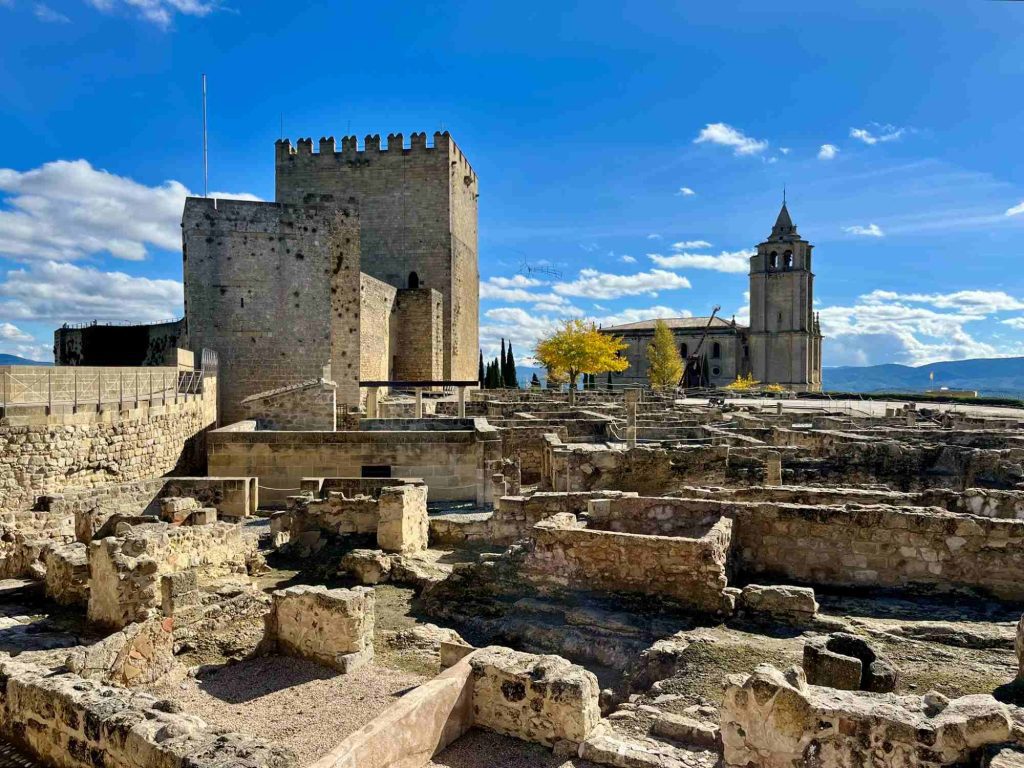
Alcalá la Real – Fortaleza de la Mota
The first thing you see as you approach Alcalá la Real is the Fortaleza de la Mota standing high on a plateau above the town. Originally a Muslim fortress, it developed into an important frontier town, which exchanged hands several times in the 13th century, before being finally taken by the Christians in 1341. The castle itself is much smaller than the one at Alcaudete, but it is surrounded by the well-preserved ruins of a medieval town, including the market square, roads, houses set around courtyards and wine cellars. There’s also a church and town hall from the Christian era.
It’s a fascinating place to visit, and the good audio guide gives you a sense of what life in a fortified medieval town was like. The views of the surrounding countryside from the top of the keep and from the city walls are fantastic.
Opening hours: 10:00-18:00 in winter; 10:00-19:00 in summer. You should allow at least an hour and a half for your visit, although it’s easy to spend longer.
Information: https://fortalezadelamota.com/
STAGE 7: Alcalá la Real to Moclín
Return to the N-432 and continue to Puerto Lope (25 km, about 20 minutes). Then turn left towards Moclín. Follow the road until you reach the village of Moclín. Drive carefully after you leave the N-432, as the road to Moclín is not in great condition.
Note: if you’re running short of time, you can skip the detour to Moclín and stay on the N-432 towards Granada.
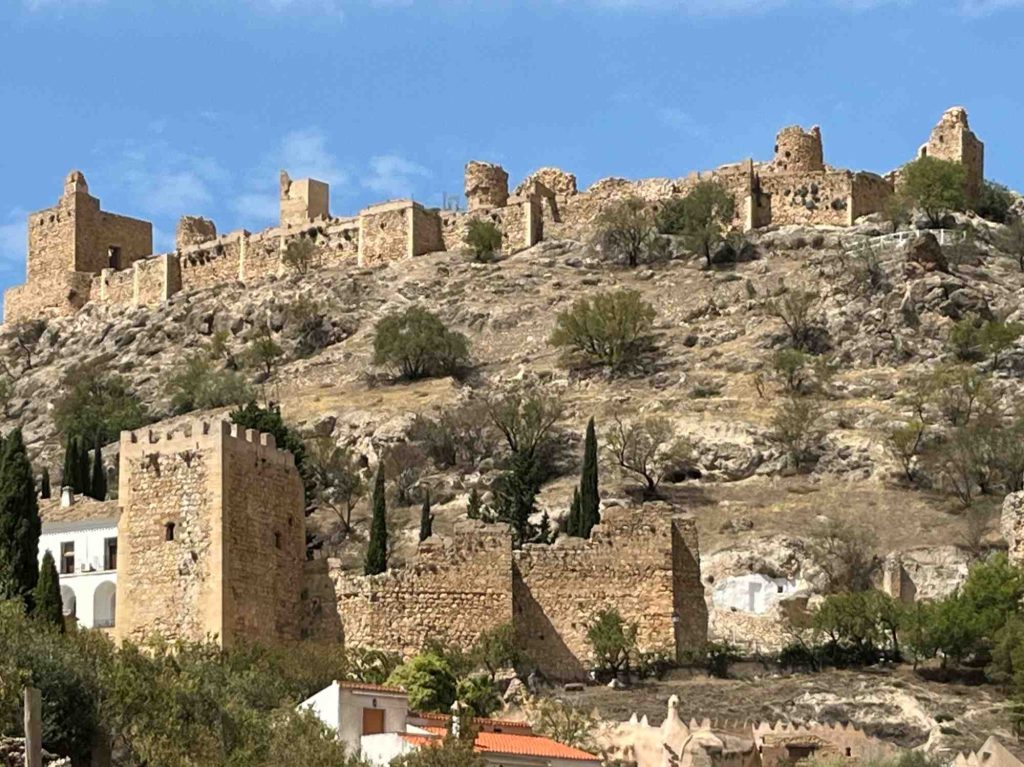
Moclín
Moclín is another very pretty village overlooked by (you’ve guessed it) a romantic castle. The main fortifications at Moclín were built by the Nasrid dynasty to shore up the frontier after the Christians took Alcalá la Real. It was taken in 1486 by Isabella and Ferdinand, and it became an important staging post in the final advance on Granada.
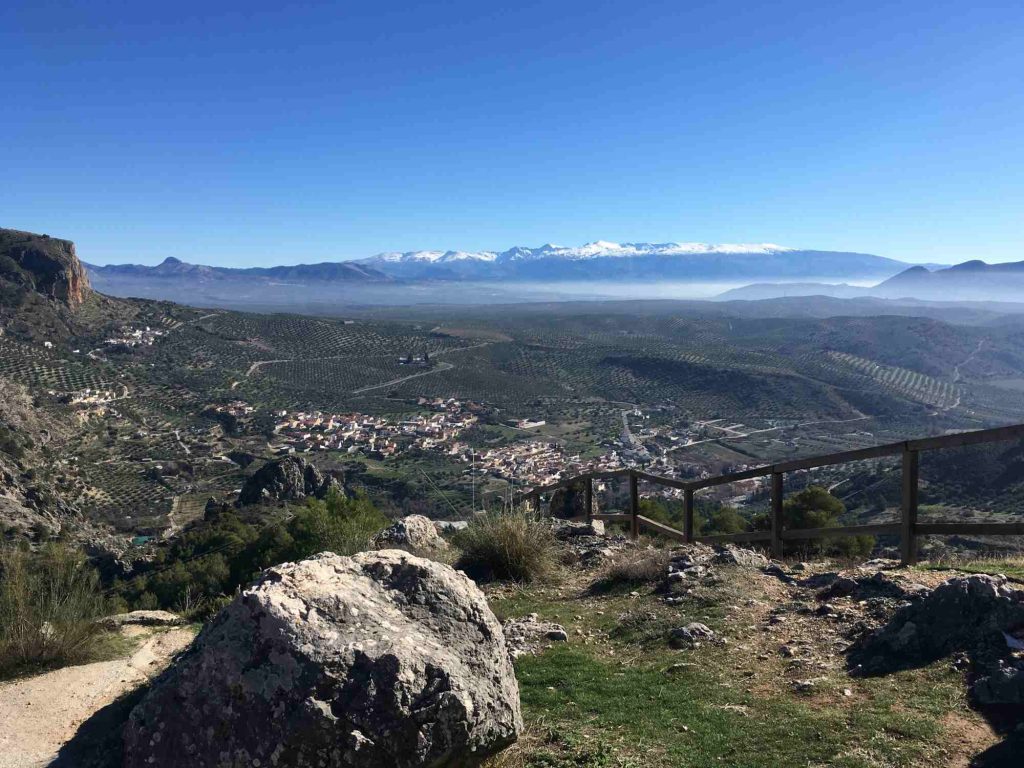
This castle was severely damaged in the Civil War and is in need of restoration, so it isn’t the best one to visit, but it certainly looks the part from the outside. Moclín is the starting point for the Gollizno hiking route down into a dramatic gorge and there are some fabulous views towards the Sierra Nevada mountains.
It’s worth stopping briefly and getting out to enjoy the views.
STAGE 8: Moclín to Granada
Keep on the main road around Moclín. There are a few more viewpoints along the road where you may want to stop briefly – first to look back at the castle and then for views towards the Sierra Nevada.
Take the GR-3408 through Tiena. On the other side of Tiena you need to turn right to keep on the same road. This stretch gives you some stunning views of the Sierra Nevada.
When you reach Pinos Puente, rejoin the N-432 or alternatively the GR-43 towards Granada. At this point it’s worth putting your exact destination into your Sat-Nav, as the best routing will depend on where in Granada you’re heading.
Related audio tours
Questions and answers
The quickest route from Córdoba to Granada is usually to take the A-45 and A-92 dual carriageways, which is a very long way round. The N-432 is a more scenic alternative that doesn’t take too much longer as it’s much more direct.
If you take the N-432 from Córdoba to Granada, you’ll pass the impressive Alcaudete Castle and Fortaleza de la Mota in Alcalá la Real, as well as numerous smaller castles, including Espejo and Luque. These medieval fortresses are set against a backdrop of olive groves and mountain ridges stretching in all directions, including the mighty Sierra Nevada. The scenic mountain villages of Zuheros and Moclín are both short detours off the main route.
Fast chargers are few and far between on the N-432 between Córdoba and Granada. The best options are at Espejo (Enel/Endesa, 150kW) and Alcalá la Real (Shell petrol station, 140kW).