
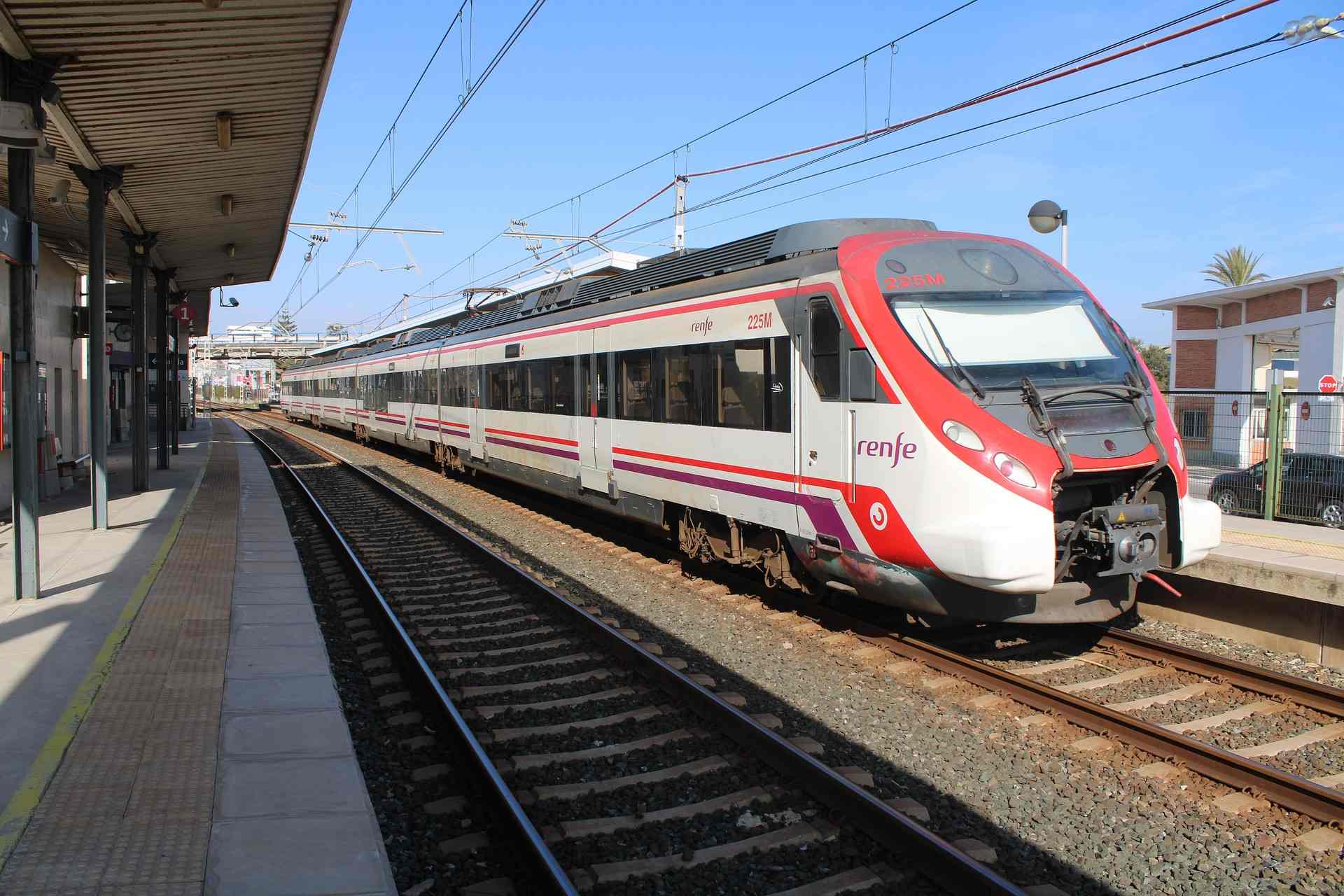
Trains in Andalucía
Train is a popular way to get around Andalucía, but many visitors find it a headache to navigate the system and buy tickets. This guide covers the basics, so you know what to look out for.
Types of train
Several different types of train services operate in Andalucía under various names, which can get confusing. These are the main types:
AVE: Long-distance high-speed trains, run by the national rail operator RENFE. These connect cities in Andalucía with Madrid and Barcelona. The main routes are:
- Madrid/Barcelona – Córdoba – Sevilla
- Madrid/Barcelona – Córdoba – Puente Genil – Antequera Santa Ana – Málaga
- Madrid/Barcelona – Córdoba – Puente Genil – Antequera Santa Ana – Antequera – Granada
AVLO: A low-cost* version of an AVE, run by the national rail operator RENFE. There are two routes serving Andalucía:
- Madrid – Córdoba – Sevilla
- Madrid – Córdoba – Antequera Santa Ana – Málaga
OUIGO (owned by the French rail operator SNCF) and iryo (a Spanish/Italian consortium): Both companies operate low-cost*, high-speed trains in competition with RENFE. They only offer the busiest routes:
- Madrid – Córdoba – Sevilla
- Madrid – Córdoba – Málaga
* the pricing of all the services is dynamic, so the “low-cost” operators may not always be cheaper in practice – it’s always worth doing a comparison, including any extras like luggage
Avant: Medium-distance trains using the high-speed rail lines. Trains are similar to AVEs. Operated by RENFE.
- Málaga – Córdoba – Sevilla
- Granada – Córdoba – Sevilla
- Málaga – Antequera – Loja – Granada
Medium Distance (MD) and Long Distance (LD): Trains that operate on conventional tracks, i.e. not high-speed. They generally have more stops, serving smaller towns. These are the main services of interest to visitors:
- Sevilla – Málaga: also serves Osuna, Antequera Santa Ana, El Chorro Caminito del Rey and Álora
- Antequera – Algeciras: also serves Ronda, Jimena de la Frontera
- Jaén – Córdoba*: also serves Andújar
- Córdoba – Sevilla*: also serves Palma del Río, Peñaflor and Lora del Río
- Sevilla – Cádiz*: also serves Utrera, Jerez de la Frontera, Jerez Airport, Puerto de Santa María, San Fernando
- Sevilla – Huelva
- Granada – Almería: also serves Guadix
* Many of the services run right through from Jaén to Cádiz, stopping at Córdoba, Sevilla and other intermediate stations.
Alvia: Trains that use both high-speed and conventional tracks. This allows faster services to stations that aren’t yet connected to the high-speed network. Operated by RENFE. Routes include:
- Madrid – Córdoba – Sevilla – Jerez de la Frontera – Puerto de Santa María – San Fernando – Cádiz
- Madrid – Córdoba – Sevilla – Huelva
- Madrid – Granada – Guadix – Almería
Torre del Oro: A special long-distance train service that links Barcelona, Valencia, Albacete, Linares-Baeza, Córdoba, Sevilla, Jerez de la Frontera, Puerto de Santa María, San Fernando and Cádiz. Operated by RENFE.
Cercanías: Shorter-distance commuter trains around major cities. These are the most useful routes:
- Cercanías Cádiz: Line C1 links Cádiz with San Fernando, Puerto de Santa María, Jerez de la Frontera and Jerez Airport.
- Cercanías Málaga: Line C1 links the city centre with the bus/AVE station, airport, Plaza Mayor shopping centre, Torremolios, Benalmádena and Fuengirola
- Cercanías Sevilla: There are five lines that are probably more of interest to commuters than tourists, unless you’re staying in the outskirts or one of the satellite towns.
This article provides more details of what the seating in each type of train looks like: https://support.happyrail.com/article/651-what-are-trains-in-spain-like
Network maps
Maps of the rail network can be found on the RENFE website:
- Map of AVE and Long Distance routes
- Map of Medium Distance lines
- Cercanías Cádiz
- Cercanías Málaga
- Cercanías Sevilla
Buying rail tickets
The process for buying train tickets in Spain isn’t as straightforward as it could be, so people quite often run into issues. Hopefully we can help you avoid some of the pitfalls.
Release of tickets
The late release of seats is one of the biggest issues people have when trying to book train tickets. Regardless of which website/channel you choose to buy your ticket (see below), you have to wait for the operator to release the seats for sale.
The exact timing depends on the type of train you’re booking.
AVE/AVLO/Alvia/OUIGO/iryo tickets are normally released several months in advance. AVE tickets should certainly be available 90 days before travel, and often earlier. Having said that, RENFE are a law unto themselves, and if you see very few services being offered for your dates it’s most likely because they haven’t all been released yet.
Avant and Medium Distance (MD) tickets are typically only released 60 days in advance. This can make it hard to plan your trip, but don’t panic – you’re very likely to be able to book them nearer the time. Bear in mind that if no tickets have been released, nobody else has been able to book them either.
Even if the tickets haven’t been released for sale, you can check the RENFE timetables here. You should always be able to see what trains are running until the next change of timetable. The timetables change twice a year, at the end of June and December. If it’s about to change, they can be a bit slow to publish the new one though.
Cercanías don’t need to be booked in advance, and any changes to the timetable will be limited, so you can use the current timetable as a guide. You buy the tickets from a machine at the station.
Booking tickets: RENFE website
Link: https://www.renfe.com/es/en
The RENFE website is the most obvious place to buy a train ticket, but most people don’t find it very user-friendly. Here are a few tips:
- For many trains, you will be offered several ticket types. The cheapest are non-refundable and allow only limited changes, if any. You can pay more for extra flexibility and a more comfortable seat. First class is called Premium.
- When you book, you will need to give passport or national ID card details for all passengers. They do actually check this at the station or on the train, so make sure you fill it in accurately and use the ID you will have with you on your trip.
Discounts
Various discounts are available, which you need to select for each passenger individually, if applicable.
- Children 0-3 go free if they don’t have their own seat. However, you still need to book them a (free) ticket, which is associated with the ticket of the accompanying adult.
- 4-13 years (or 0-3 with own seat): generally 40% discount.
- Carné Joven: select this if the passenger has a Spanish Carné Joven issued by one of the Regional Governments OR an international student or youth card (ISIC Card, European Youth Card, International Youth Global Card, GO 25). The discount is 20% on Avant and Medium Distance trains, and 5% on AVE and Long Distance services.
- Más Renfe Joven: this is a card issued by RENFE that offers bigger discounts for young people aged 14-25, but it costs 50 €. Discounts are between 25% and 30%.
- Tarjeta Dorada: a discount card issued by RENFE for people over 60 and/or disabled people. It costs 6 € a year and offers discounts of between 25% and 40%. You can only buy the card in person at a Spanish rail station, and you’ll need your passport or national ID. Once you have the card, it can be renewed online.
Booking tickets: Other booking websites
For the OUIGO and iryo services, you can book on their own websites. When comparing prices, bear in mind that you may need to allow extra for luggage, which is booked separately.
Rail Europe sells rail tickets and passes for journeys throughout Europe, as does HAPPYRAIL. Other third-party resellers of travel tickets include Omio and Trainline. Many visitors find these third-party sites easier to use than the RENFE website. However, they may charge a commission on top of the ticket price.
At the station and on the train
It’s important to arrive in good time for your train, particularly for AVE services, as you’ll need to go through a security check before boarding.
Food options on AVE and long-distance trains:
- AVE and long-distance trains have a café on board serving hot and cold food and also a trolley service.
- Premium class comes with a meal included.
- With an Elige or Elige Confort ticket, you can prebook a food box, which will be delivered to your seat. With Elige Confort you can also prebook the premium class meal for 22-25€.
- Avant / medium distance trains don’t normally have a café on board.
Questions and answers
AVE trains are long-distance high-speed trains, run by the national rail operator RENFE. AVLO trains are a low-cost alterative to AVEs, operated by RENFE on the most popular routes. Avant trains are medium-distance services that use the high-speed rail lines. Alvia trains use both the conventional and high-speed rail tracks, offering faster services to stations that aren’t yet connected to the high-speed network.
Long-distance rail tickets, including for AVE and AVLO trains, are normally released several months in advance. Avant and Medium Distance (MD) tickets are typically only released 60 days in advance. There could be more delays in releasing tickets around changes of timetable, which are made in June and December each year.
The RENFE website is the most obvious place to buy a train ticket, but it isn’t the most user-friendly. Many visitors find third-party sites like Rail Europe, HAPPYRAIL, Trainline or Omio easier to use, although they may charge a commission on top of the ticket price.
AVE and long-distance trains have a café on board serving hot and cold food and a trolley service. Premium class comes with a meal included. Avant and other medium distance trains don’t normally have a café on board.