
Andalucian Wines
Andalucía produces a huge range of wines, from household names to unusual niche products. The most important wine-producing areas have a Protected Designation of Origin (PDO, or DOP in Spanish). This is a seal of authenticity that confirms a product comes from a specific geographical region and has certain characteristics associated with that area.
Sherries
Internationally, sherry is the best-known style of wine from Andalucía. The name sherry comes from the town of Jerez (de la Frontera), and most sherries are produced in the so-called “sherry triangle” between Sanlúcar de Barrameda, Puerto de Santa María and Jerez in the province of Cádiz. Sherry is a fortified wine, which means that distilled wine (brandy) is added to increase its alcohol content. Originally, this was done to help stabilise the wine on its long journey to markets in the north of Europe.
The initial fermentation process produces a “base wine”, which is then fortified and aged in different ways to produce the various types of sherry. Sherries are aged and bottled using the “criadera and solera” system, which involves blending wines from different stages of the ageing process to eliminate variations between vintages.
The barrels are piled three high, and each year, some of the oldest wine from the barrels in the bottom row (the “solera”) is bottled. But not all: some is left in the barrel to ensure consistency and add character. After bottling, the barrels in the solera are topped up with wine from the barrels in the row above (the “1st criadera”), which are in turn topped up with wine from the top row (the “2nd criadera”). This leaves space for new wine to go into the barrels in the 2nd criadera.
There are two DOPs in the sherry triangle: Jerez-Xérès-Sherry for fino, amontillado, palo cortado and oloroso; and Manzanilla-Sanlúcar de Barrameda for manzanilla.

A manzanilla is essentially the same as a fino: both are produced from palomino fino grapes and aged in barrels under a layer of yeast called the velo de flor or madre (“mother”), which protects the wine from oxidation. But the characteristics of the soil around Sanlúcar, and the proximity to the ocean, give manzanillas a distinctive fresh flavour.
Amontillados, palo cortados and olorosos are oxidative wines, which means they are allowed to come into contact with the air during the aging process. This results in a darker colour and stronger, more complex flavours.
The Jerez-Xérès-Sherry DOP also covers sweet dessert wines, generally produced from moscatel or Pedro Ximénez grapes.

If you associate sherry with Harvey’s Bristol Cream, you should give it another try: a crisp, dry manzanilla is nothing like a rich oloroso, let alone a sweet Pedro Ximénez. You should find there’s something for (almost) every palate.
If you’re wondering what type of sherry Bristol Cream is, it’s a blend of fino, amontillado, oloroso and Pedro Ximénez. There are many other “cream” sherries with different recipes, but they all involving blending dry sherry with sweet Pedro Ximénez to make them appeal to a wider audience.
DOP Montilla-Moriles
The wines produced in Montilla-Moriles in Córdoba are of a very similar style to sherries, and they are made using the same “criadera and solera” system. However, they are almost always made from the Pedro Ximénez grape, and the hotter inland climate results in grapes with a very high sugar content. The amount of sugar in the grapes determines the alcohol content of the wine, so finos (and often palo cortados and amontillados) from Montilla-Moriles don’t need fortification. The olorosos and sweet dessert wines are still fortified.

Although all of the wines are made from the Pedro Ximénez grape, only the sweet wines are marketed as “Pedro Ximénez”, or just PX.
DOP Málaga and DOP Sierras de Málaga
Although sherry is better known abroad, Malagan wines arguably have an even longer pedigree, going right back to Phoenician times. For a long time Málaga was the biggest source of wine exports from Spain, and it is still famous for its DOP Málaga sweet wines, made using the moscatel and Pedro Ximénez grape varieties. The DOP Sierras de Málaga was created in 2001 for table wines from the province of Málaga. These include both reds and whites produced using a very wide range of grape varieties, with many of the best ones coming from the area around Ronda.
DOP Granada
Granada’s wines are much less famous than their cousins from Málaga or Cádiz, but the quality has improved greatly since we moved here. Then, most bars only offered red wines from Rioja and Ribera del Duero, but now they almost all have one or more options from Granada as well.
Granada’s mountainous terrain means that you get a very wide range of styles, including reds, whites and sparkling wines. Some whites include the traditional vigiriega grape, which was grown right across Andalucía until the catastrophic outbreak of phylloxera in the 1870s, but is now only found in Granada and the Canary Islands.
The varieties most commonly used in red wines are tempranillo, garnacha, carbernet sauvignon, cabernet franc and merlot.

DOP Condado de Huelva
On the border with Portugal, Huelva produces both white table wines and fortified sherry-style wines. Some of the wine is macerated with orange peel to produce an aromatised sweet wine known as vino naranja (“orange wine”).
Rest of Andalucía
All of Andalucía’s provinces produce wines of varying prices and qualities – just because a wine doesn’t have a DOP designation, it doesn’t mean it won’t be good. These days, most wineries employ an oenologist – an expert in the art of making wine, who amongst other things analyses the chemical composition of the grapes and wines at various stages of the production process. Even then, outside the main wine-making areas the quality can be a bit more hit and miss. And in places that only produce small amounts of wine, prices tend to be higher.
Sangría and Tinto de Verano
Sangría is very popular with visitors to Spain, particularly in hot weather. It’s made by combining a relatively (or very!) cheap red wine with orange juice, orangeade, fizzy water or lemonade, as well as chunks of fruit, orange peel, cinnamon and some sugar. Some people add a drop of sweet wine, brandy or vermouth as well. As you can imagine, the final flavour varies a lot.
Anyway, outside beach resorts and other tourist hotspots, sangría isn’t that widely available, because it takes a lot of time and ingredients to make well, and it has a limited shelf life. What you will find everywhere is tinto de verano – red wine mixed with fizzy water (con blanca) or lemonade (con limón), served on ice. Tinto de verano can be translated as “summer red wine”, because like sangría it goes down well in hot weather, but bars serve it all year round.
Vermouth
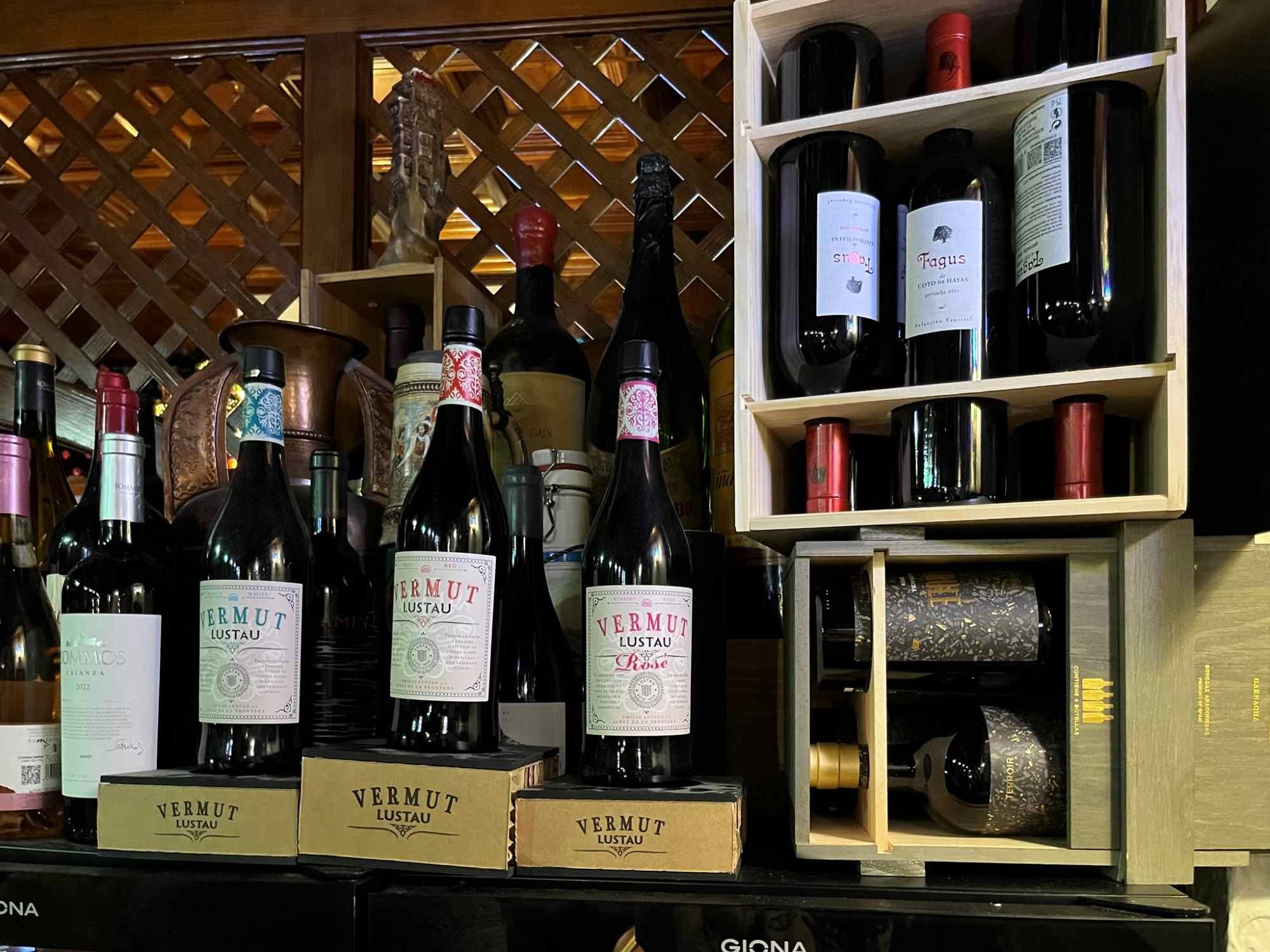
Vermouth is an aromatised, fortified wine, made from a white wine base infused with botanicals including wormwood, gentian, orange peel and herbs like thyme or sage. In Andalucía, the base tends to be a sherry wine.
After first becoming popular in Spain in the late 19th century, vermouth had rather fallen out of fashion by the end of the 20th century. It has recently enjoyed something of a resurgence, although no one seems to be quite sure why. Perhaps it is because the quality of vermouths has improved, with better wine being used as the base. Bars that specialise in vermouth serve it on tap from barrels, whereas other bars just have bottled vermouth. Traditionally, it’s drunk as an aperitif with a tapa.
Related articles
Related itineraries

Guadalquivir River Valley
8 nights +

Jerez de la Frontera
Day Trip
Questions and answers
Sherry is a fortified wine, which means that a spirit (brandy) has been added to the wine. Therefore, it has a slightly higher alcohol content than a normal wine (typically 15-18%, although it can be as high as 22%).
The best Andalucían wines are the ones you personally like best – and can afford! The most famous wines are sherries and sweet wines from Málaga, but there are lots of good table wines too.
A very wide range of grape varieties are grown in Andalucía, including palomino, Pedro Ximénez, moscatel, tempranillo, garnacha, cabernet sauvignon, merlot and vigiriega.
Vermouth is an aromatised, fortified wine, made from a white wine base infused with botanicals.
The best sherries and vermouths are generally served from barrels. As they take up quite a lot of space and have a limited shelf life, most bars don’t have them. However, even bars without barrels usually offer bottled or bag-in-box sherry and vermouth.
Sangría takes a lot of time and ingredients to make well, and it has a limited shelf life, so not all bars offer it. As an alternative, order tinto de verano – red wine mixed with fizzy water (con blanca) or lemonade (con limón).