
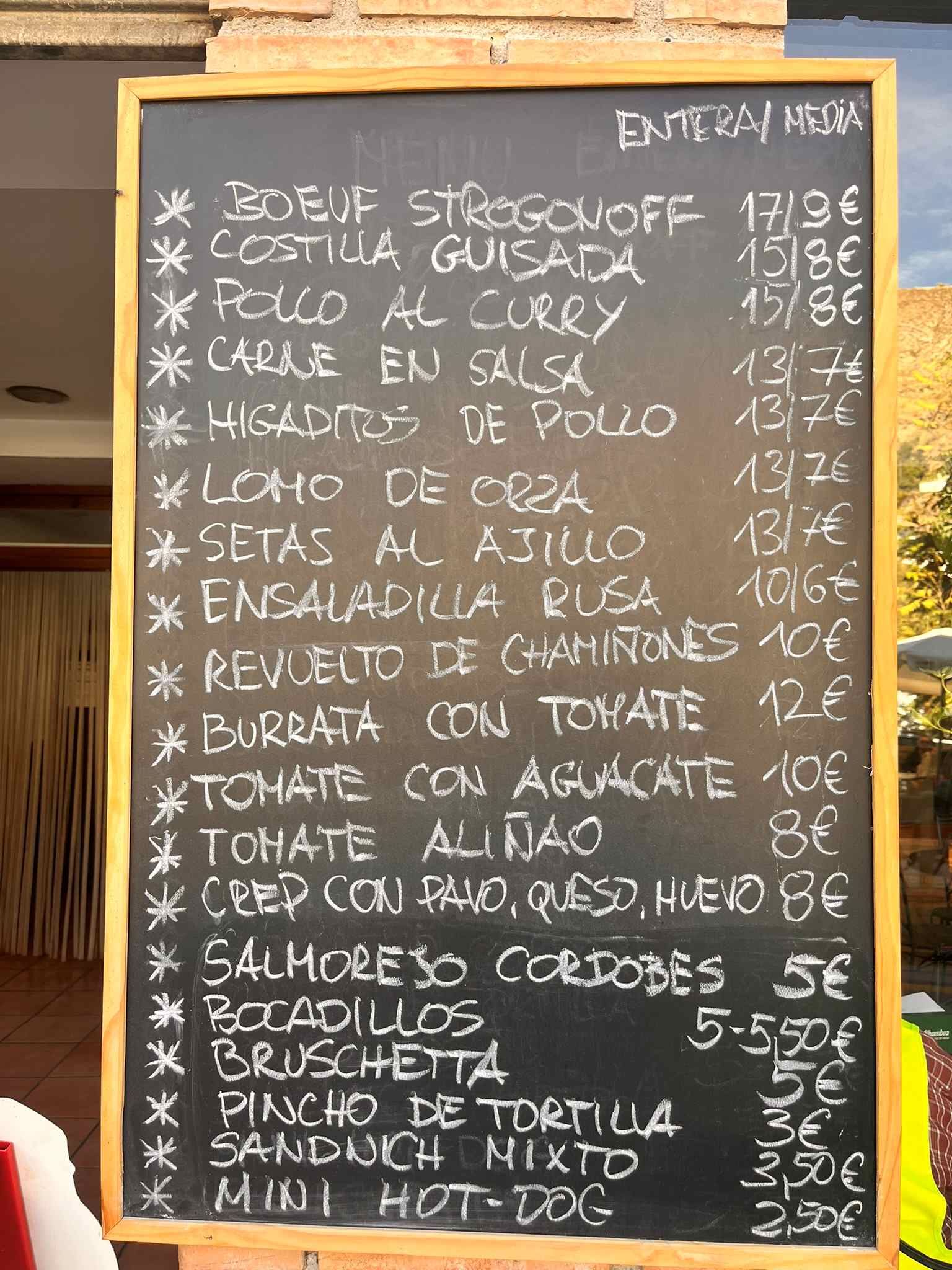
Menu decoder
It can be hard enough choosing what you want from a menu in your own language, let alone one you don’t understand, or that has been badly translated. So here’s an explainer of some of the dishes you’re most likely to encounter on menus across Andalucía. Hopefully it will help you to choose the dishes you’ll most enjoy.
Cooking and serving styles
Frito: deep-fried.
Salteado: sauteed.
A la parrilla: grilled on a barbeque.
A la plancha: grilled/fried on a metal plate or pan called a plancha, which can be flat or ribbed. If something is quickly fried in a hot frying pan with a small amount of oil, rather than being sauteed or deep-fried, it’s also called a la plancha.
Brocheta: kebab/skewer.
Estofado: stewed
Asado: roast
Marinado: marinated
Al horno: oven-cooked
Al ajillo: cooked in garlic
Al vino: cooked in wine
Revuelto: scrambled (with eggs)
Templado: lukewarm/at room temperature
Entrantes/Starters
Gazpacho: a cold soup made from tomato, pepper (capsicum), cucumber, garlic and olive oil. Traditionally, it’s drunk rather than eaten with a spoon.
Salmorejo: a cold soup made with tomato, breadcrumbs, garlic and olive oil, topped with hard-boiled egg and ham. It looks a bit like gazpacho, but it’s much thicker.
Mazamorra: a cold soup from Córdoba made from almonds, bread, garlic, vinegar and olive oil, often topped with raisins, ham, smoked fish or fruit.
Ajoblanco: a cold soup from Málaga made from almonds, bread, water, garlic, vinegar and olive oil, often topped grapes.
Ensalada: salad. Salads are generally shared as a starter, and the serving sizes reflect this. They can range from a basic mix of lettuce, tomato, onion and olive, to very elaborate dishes, often including local fruit like mangoes.
Tomate aliñado: tomatoes with dressing. Generally, the dressing is just olive oil, a tiny splash of vinegar, garlic and salt, and perhaps a bit of parsley. If the tomatoes are good, that’s all they need. Varieties like raf tomatoes have a particularly strong flavour.
Remojón: a salad made from cod, orange, spring onion, olives and sometimes hard-boiled boiled egg. It sounds like a strange combination, but it’s really good!
Pipirrana: a salad from Jaén made of quite finely chopped tomato and pepper (capsicum), combined with tuna, hard-boiled egg, garlic and olive oil.
Habas: green beans, which you see everywhere while they’re in season in spring, but not much at other times. They may be served on their own or with ham.
Espárragos and alcachofas: asparagus and artichokes. When they’re in season, both of these may be served fresh, but most often they come from a jar. Artichokes are usually served in a creamy sauce, often topped with pieces of ham.
Pimientos del piquillo (rellenos): preserved (and stuffed) roasted peppers. The stuffing is often a creamy mixture of cod and potato.
Jamón (ibérico): cured ham. In Andalucía, hams from Trevélez in the Alpujarra and Jabugo in Huelva have a particularly good reputation. A jamón reserva is a ham that has been cured for at least 12 months, while a jamón ibérico comes from a black pig of the Iberian breed. A jamón ibérico de bellota comes from an Iberian pig that has been reared outside and fed on acorns – this results in more fat infiltrated in the lean meat, a more complex flavour, and a texture that really melts in the mouth. But it’s expensive!
Queso: cheese. Most Andalucían cheese are made from goat’s milk (queso de cabra), but you also get cheeses made from sheep’s milk (queso de oveja) or cow’s milk (queso de vaca). As well as local cheeses, queso Manchego is widely available. For it to be called Manchego, it must come from Castilla la Mancha just north of Andalucía and be made from the milk of a particular breed of sheep, but there are many other less famous – and equally delicious – cheeses of a similar style from other parts of Spain.
Croquetas: croquettes, which are made from milk, flour, butter, oil, and fillings of your choice – meat, seafood or vegetable. After the mixture has been cooked, it is made into small rolls, which are dipped in egg, covered in breadcrumbs and deep-fried. At their best, they’re delicious – at worst, they can be greasy and soggy. They almost always go down well with kids.
Migas: breadcrumbs in plenty of olive oil. You can add almost anything to them, but whole garlic cloves, pepper and chorizo are some of the typical ingredients.
Patatas a lo pobre: potatoes deep-fried in olive oil until they are really soft. The recipe normally includes a bit of pepper (capsicum), onion and garlic too. Patatas a lo pobre means “pauper’s/poor-man’s potatoes”, which comes from the fact that it’s a dish you could rustle up with whatever bits of food you had lying around.
Tortilla: Spanish-style omelette, made from potatoes, eggs, onion and, you guessed it, plenty of olive oil.
Tortillita de camarones: deep-fried prawn fritter, made with wheat and chickpea flour, onion or spring onion and parsley. It sounds a bit like a tortilla, but it really isn’t! Like other fried food, tortillitas can be heavy or greasy, but the best ones are light, crunchy and delicious.
Caracoles: snails. They’re generally cooked in a spicy sauce, as the snails themselves don’t have much taste. You also sometimes get them in rice dishes. You pick them out of their shells with a toothpick or similar instrument.
Types of fish and seafood
Fritura de pescado: mixed deep-fried seafood platter, usually designed for at least two people to share.
Lubina: sea bass. Typically served a la espalda (butterflied and oven-baked) or a la plancha.
Dorada: gilt-head bream. Served in the same ways as lubina.
Trucha: trout. You do get wild trout is some of Andalucía’s rivers, but more often than not the trout you get in restaurants is farmed locally. It’s normally oven-baked, and sometimes served with slices of cured ham!
Atún: tuna: Can be served raw, seared or in as tinned tuna in salads. Some of the tuna are ranched: they are wild tuna which are caught live and then fattened up in sea pens.
Bacalao: cod. Often served in a stew containing onion, tomato and pepper (capsicum).
Merluza: hake. Often served deep-fried with a tomato-based sauce.
Salmonete: red mullet. A smallish fish with pale pink flesh. Usually served either frito or a la plancha.
Cazón en adobo: battered, deep-fried shark, seasoned with paprika, cumin and oregano.
Gamba: prawn or shrimp. There are many different types, including the camarón (common prawn), the larger langostino (striped prawn), the exquisite quisquilla (soldier striped shrimp) and the gamba roja (red prawn). They can be served raw, a la plancha, quickly boiled or al ajillo (cooked in oil with garlic, chilli, parsley and sometimes a splash of white wine; also called “al pil pil”). And of course they are key ingredients in many more elaborate dishes, such as paellas.
Calamares: squid. Usually served either frito or a la plancha. If they’re frito, the squid are cut into rings, coated in a chickpea batter, and deep-fried in olive oil. When done a la plancha, the squid is generally seared whole, and garnished with olive oil, garlic and herbs.
Pulpo: octopus. Either served grilled or a la gallega (Galician style) – cut into rounds on a bed of potatoes and sprinkled with paprika.
Arroz negro: literally “black rice”, but it means rice cooked in squid or cuttlefish ink, which colours the rice black. As you would expect, it generally contains squid, but the other ingredients vary.
Types and cuts of meat
Cerdo (ibérico): pork. If it’s labelled “ibérico” it comes from the Iberian breed of pig. Sometimes referred to as “Iberian pork” in English.
Cordero (segureño): Lamb (from Segura). Generally served either as a whole leg/shoulder or as small chops. Lamb from the mountains around the River Segura in the northeast of Andalucía has a protected geographical indication.
Ternera: Beef. Although pork is far more common than beef in Andalucía, you’ll find steak on a lot of menus.
Choto: goat. Generally served as choto al ajillo, which is a goat stew cooked in white wine and lots of garlic. The meat is chopped into small pieces, which can make it a bit difficult to deal with the bones, but the taste is very good.
Ciervo: venison. Generally served in stews with a wine, tomato and garlic base, perhaps seasoned with black pepper and bay leaves.
Conejo: rabbit. In Valencia, this is the traditional main ingredient in paella, but in Andalucía it’s often served in stews with a wine, stock and herb base.
Pollo: chicken. Not a particularly traditional meat in Andalucía, but widely available.
Pavo: turkey. Again, not a traditional meat, and much less common on menus than chicken.
Pato: duck. Duck isn’t a traditional Andalucian meat, but duck magret and confit have become quite popular, particularly at higher end restaurants.
Chuletas (or sometimes chuletillas/chuletitas): chops – either pork or lamb. Chuletillas and chuletitas are diminutives which imply the chops come from a young animal.
Costillas: ribs.
Secreto ibérico: an intensely marbled cut of pork from the shoulder area of Iberian pigs. It can be grilled or done a la plancha, and if done right it comes out slightly pink and very tender. Secreto means secret, which refers to the fact that this cut of meat is hidden away, and supposedly used to be kept by the butcher for his own consumption.
Presa ibérica: a marbled cut of pork from the back of Iberian pigs, generally served grilled or a la plancha.
Pluma ibérica: a thin pork cut from the neck end of the loin, with lower fat content than secreto or presa. Often oven cooked.
Solomillo: tenderloin. It can be beef or pork tenderloin, but if it’s not specified as being solomillo de ternera, you can normally assume it’s pork.
Carrillada/carrillera: cheek. Carrillada generally refers to pork cheeks, while carrillera is more often veal cheeks, but check whether they are “de cerdo” or “de ternera”. In both cases, they make an incredibly tender stew, served in a thick sofrito sauce made from vegetables, garlic, wine and stock.
Albóndigas: meatballs/fish balls/shellfish balls. The classic albóndiga is made from ground pork and beef, mixed with onion, but cod or squid balls are also popular. They can be served in a tomato- or almond-based sauce, and cod balls sometimes come with pine nuts.
Carne en salsa: meat in sauce. It can be any sauce, but often it’s tomato and onion-based.
Rabo de toro: oxtail stew, originally from Córdoba. It’s served in a thick sofrito sauce made from tomato, onion, carrot, garlic and wine. The tail meat is quite fatty, and there can be quite a lot of bone and cartilage to deal with, but it’s very tasty.
Pincho moruno: pork kebab/skewer marinated in olive oil and sometimes white wine with garlic, paprika, cumin and black pepper. If overcooked, they can be a bit dry, but when done right they’re delicious. Not to be confused with a pincho or pintxo in the north of Spain, where it means a small slice of bread with a topping.
Flamenquín: a roll made of pork loin, cured ham and sometimes chicken, coated in breadcrumbs and deep-fried. It’s a speciality of Córdoba.
Desserts
Flan: Spanish-style crème caramel, made from milk, egg and sugar, flavoured with vanilla.
Tocino del Cielo: literally “bacon from heaven”. This looks quite like a flan, but it doesn’t contain milk – just egg yolks, sugar and water, which are cooked in the oven until caramelised.
Tarta de queso: Spanish-style cheesecake. Unlike an American cheesecake, it doesn’t normally have a base, and it’s made with fromage frais rather than cream cheese.
Arroz con leche: Spanish rice pudding, made with round rice, milk, lemon, sugar and cinnamon.
Natillas: Spanish custard.
Helado: ice cream.
Fruta de temporada: seasonal fruit.
How well cooked do you want your meat (or tuna)?
Depending on where you come from, you might have different views about what medium rare or well done should mean, so this is just a general guide. It’s most relevant to steak, but some tuna, pork, duck and game meat dishes will also be offered done to your taste.
Poco hecha: rare.
Al punto/en su punto: medium rare. If you want it a bit more or less done, you can ask for punto menos (less done, so on the rare side of medium rare) or punto más (more done, so closer to medium).
Tres cuartos: like punto más; medium.
Hecha: medium-well.
Muy hecha: well done.
If you aren’t asked or if you don’t specify otherwise, your meat will usually come al punto. If you want to make sure it’s well done, just say you’d like it muy hecha even if they don’t ask.