Córdoba
3 nights / 4 days
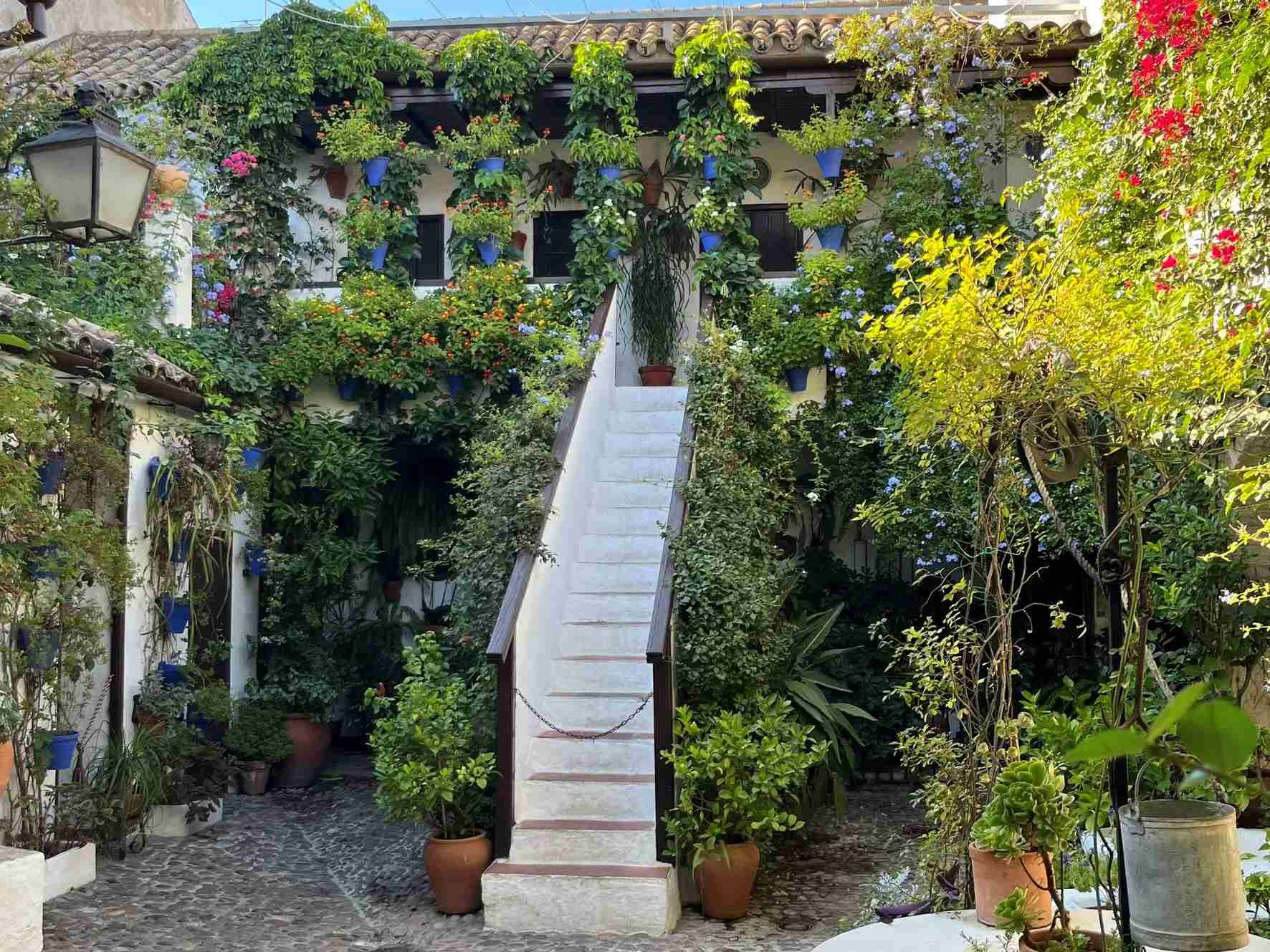
For hundreds of years, Córdoba was a centre of power, due to its position on the banks of the Guadalquivir River, with a ready supply of copper, silver and other metals from the mines in the Sierra Morena mountains. Capital of both the Roman province of Baetica and Al-Andalus (the Muslim territories in Spain), its rich cultural heritage is preserved in its architecture, customs and cuisine. This is reflected in the city’s four UNESCO World Heritage Listings: the unique Mosque-Cathedral; the historic city that surrounds it; the Medina Azahara archaeological site; and the Patios of Córdoba Festival, held each May.
Many visitors see little more than the Mosque-Cathedral and a bit of the Jewish quarter, but it’s worth lingering for a few nights to do the city justice and to experience its more tranquil side once the crowds of day-trippers have left.
For a 2-night itinerary, just leave out Day 3.
Day 1
On the first day, take a stroll along the river to see the 11th century water wheel and visit the Castle of the Christian Monarchs with its wonderful gardens.
Alcázar de los Reyes Cristianos (Castle of the Christian Monarchs)
Built on the site of the former Caliphal palace, the Castle of Christian Monarchs is a marvellous example of the various cultures that have shaped Córdoba over the centuries. Most of the complex as it stands today was built during the reign of Alfonso XI in the 14th century, but it also harbours vestiges of the city’s Roman and Islamic past. Highlights of the visit include the stunning formal gardens, as well as a fine collection of Roman mosaics and the panoramic views from the castle’s formidable ramparts.
Evening

The dining options in the historic centre are surprisingly good, despite the hordes of day-tripping tourists. Many restaurants are located in traditional Andalusian houses with pretty courtyards or roof terraces with views of the Mosque-Cathedral.
Caza Mazal specialises in Sephardic cuisine and Restaurante Damasco, as the name suggests, has a range of Middle Eastern and Persian dishes. These flavours also infuse the traditional local food on offer in any of Córdoba’s restaurants. Some others worth trying are Taberna El No 10, Restaurante El Rincon De Carmen and Casa Pepe de la Judería in Calle Romero.
Day 2
On the second day, you should be able to cover the rest of the historic centre. Our City of Caliphs audio tour is 4.7 km long (about 3 miles) and includes of the key points of interest, as well as taking you out beyond the main tourist areas. If you stop for lunch along the way and go into some of the sights, it will probably take most of the day.
The tour starts at the viewpoint across the River Guadalquivir from the Mosque-Cathedral, which is a great vantage point for admiring the city. It then crosses the Roman bridge to the historic centre, before heading up towards Plaza del Potro, Plaza de la Corredera and Plaza de las Tendillas. The second part of tour guides you through the Jewish quarter and San Basilio*. And of course you’ll also have time to visit Córdoba’s Mosque-Cathedral and climb its bell tower.
* The patios in San Basilio, which you reach at the end of the tour, have limited opening times, so they may well be closed by the time you get there. But don’t worry – we’ve reserved time to visit them on the final morning in Córdoba.
Morning
Roman Córdoba
In Roman times, Córdoba was the thriving capital of the province of Baetica, which was roughly equivalent to modern-day Andalucía. Most of its Roman remains are hidden below the city, but it’s worth visiting the Archaeological Museum, which occupies the site of the Roman theatre and has a good collection of Roman statues and everyday items. The Roman Temple has recently been restored and can be visited if booked in advance.
Of course, there’s also the “Roman bridge”, although very little of the original Roman structure remains. Nevertheless, it’s one of Córdoba’s iconic sights, and a great vantage point from which to admire the Mosque-Cathedral and mighty River Guadalquivir.


Plaza del Potro
Plaza del Potro is an attractive square named after the statue of a colt that adorns the fountain. It is flanked by three museums: the Flamenco Centre Fosforito ($) housed in a former inn mentioned in Cervantes’ masterpiece Don Quijote; Córdoba’s Fine Arts Museum; and the Julio Romero de Torres Museum ($), dedicated to the work of one of Spain’s finest symbolist artists.

Lunch
Grab a quick lunch at one of the many good bars and restaurants in the heart of Córdoba’s old town. Bar El Barón in Plaza de Abades is excellent, and we pass it near the start of the City of Caliphs audio tour.
Afternoon
Córdoba Mosque-Cathedral
Córdoba’s Mosque-Cathedral is, alongside the Alhambra, the outstanding example of Andalucía’s Islamic heritage. The original mosque, with its iconic double-tiered red and white arches, was completed in less than two years at the end of the 8th century. The mosque’s elegant combination of semi-circular, horseshoe and multifoil arches has provided inspiration for buildings across the world. The Main Chapel added by the Christians in the 16th century thrusts up through the roof of the mosque, creating a striking fusion of Islamic and Christian architecture that dominates Córdoba’s skyline.

Judería: Córdoba’s Jewish quarter
In the 13th and 14th centuries, the sinuous streets of Córdoba’s Judería were home to thousands of Jewish people, but they were forced to flee or convert to Christianity after a bloody pogrom in 1391. The quarter still retains the charming medieval layout of its streets, and its sights include the beautiful Synagogue, the Chapel of Saint Bartholomew ($), and the House of Sefarad ($), which tells the story of Spain’s former Jewish community.

Evening
For something different, at the Royal Stables near the Alcázar you can see an equestrian show combining pure-bred Spanish horses and flamenco.
There are several good restaurants in the San Basilio neighbourhood, including Restaurante Puerta de Sevilla and Restaurante Taberna la Viuda.
Day 3
Our suggestions for the third day include two of Córdoba’s treasures outside the Jewish quarter: Medina Azahara and Palacio de Viana. If you have the time, they are both fascinating.
Morning
Medina Azahara
After Abd-al Rahman III proclaimed himself Caliph of Córdoba in the year 929, he decided to build a new capital just 8 km from Córdoba. Although Medina Azahara has been pillaged for building materials over the centuries, archaeologists have been able to piece together the city’s overall layout and reconstruct some of its monumental buildings. Excavations are ongoing, but you can visit quite a bit of the site. There’s also an excellent museum that puts it all in context.
Get the special bus to the site from the stop on Glorieta Cruz Roja near the Puerta de Almodóvar.

Lunch
There are several bars and restaurants just inside the Puerta de Almodóvar, near where the bus the Medina Azahara stops, including Restaurante Casa Rubio.
Afternoon
Palacio de Viana
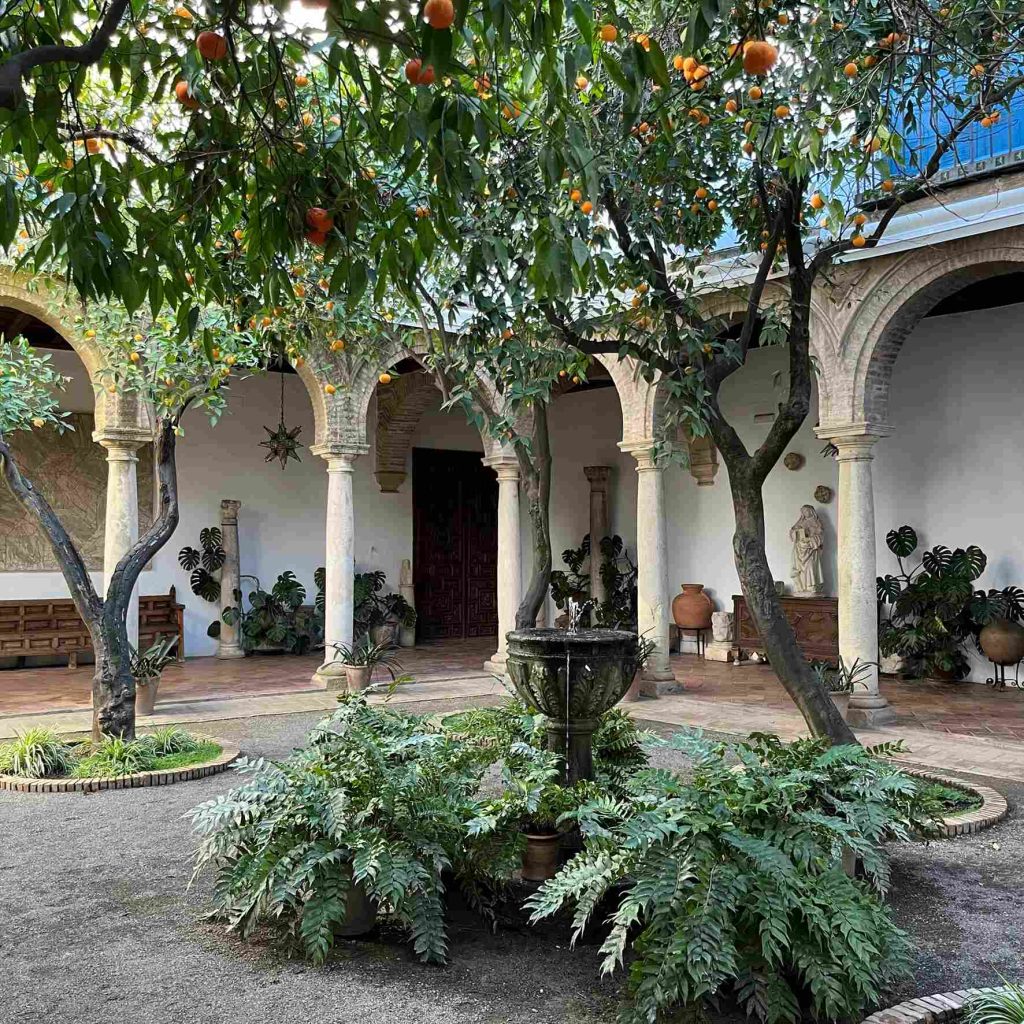
The Palacio de Viana is a mansion that was built originally in the 15th century, but has been adapted to changing needs over the centuries. Inside you can see 12 different patios, beautifully decorated with plants and reflecting a range of different architectural styles.
It’s also worth exploring surrounding neighbourhood, which is home to the Royal Church of Santa Marina de Aguas Santas – known as the bullfighters’ church – and the Royal Convent Church of Saint Augustin, as well as charming whitewashed streets that retain their traditional Cordoban character.
Evening
Córdoba is famous for its traditional tabernas. In an effort to preserve them, the local council has created a special badge that identifies the ones of particular cultural or historical interest. Away from the main tourist centre, you’ll find Taberna Salinas near the Roman Theatre and Taberna San Miguel “Casa El Pisto” in Plaza de San Miguel. If the taberna fare sounds a bit too heavy, Tu Pescaito in Plaza de la Corredera is an excellent option for fish and seafood.
Day 4
On your final morning in Córdoba, set aside time to visit Córdoba’s famous patios in the San Basilio district.
Morning
Córdoba’s patios
Córdoba is famous for its UNESCO-listed Patios festival, which is held in May. Prizes are given for the most beautifully decorated patios or courtyards, and there are also categories for balconies and window boxes.
In the San Basilio area, there are several privately-owned flower-filled courtyards you can visit all year round. Opening times vary, but they are usually open late morning, so go before lunch. Make sure you have some coins handy as a small donation is expected.

Related audio tours
Questions and answers
A lot of people visit Córdoba on a day trip, and this is enough time to see the Mosque-Cathedral and the main sights in the Jewish quarter. However, it’s worth staying one or two nights to explore a bit more of the city and experience the laid-back atmosphere once the day-trippers have left.
Many sights and museums in Córdoba are closed on Mondays. In summer, quite a few only open in the morning, so it’s worth checking the times in advance so you can adjust your plans accordingly. The tourist office publishes a full listing.
For most of the year, the Castle of the Christian Monarchs is open all day, but in the hot summer months it’s only open in the morning. If this is the case, you should be able to visit the castle in the morning and leave the Mosque-Cathedral until the afternoon. Remember, it’s also closed all day on Mondays and on Sunday afternoons all year round.
Córdoba Zoo and conservation centre is very popular with families. It has more than 100 species of animal and it’s fairly easy to get do, just down the river from the historic centre. The Mosque-Cathedral and Castle of the Christian Monarchs are good bets with slightly older kids.