
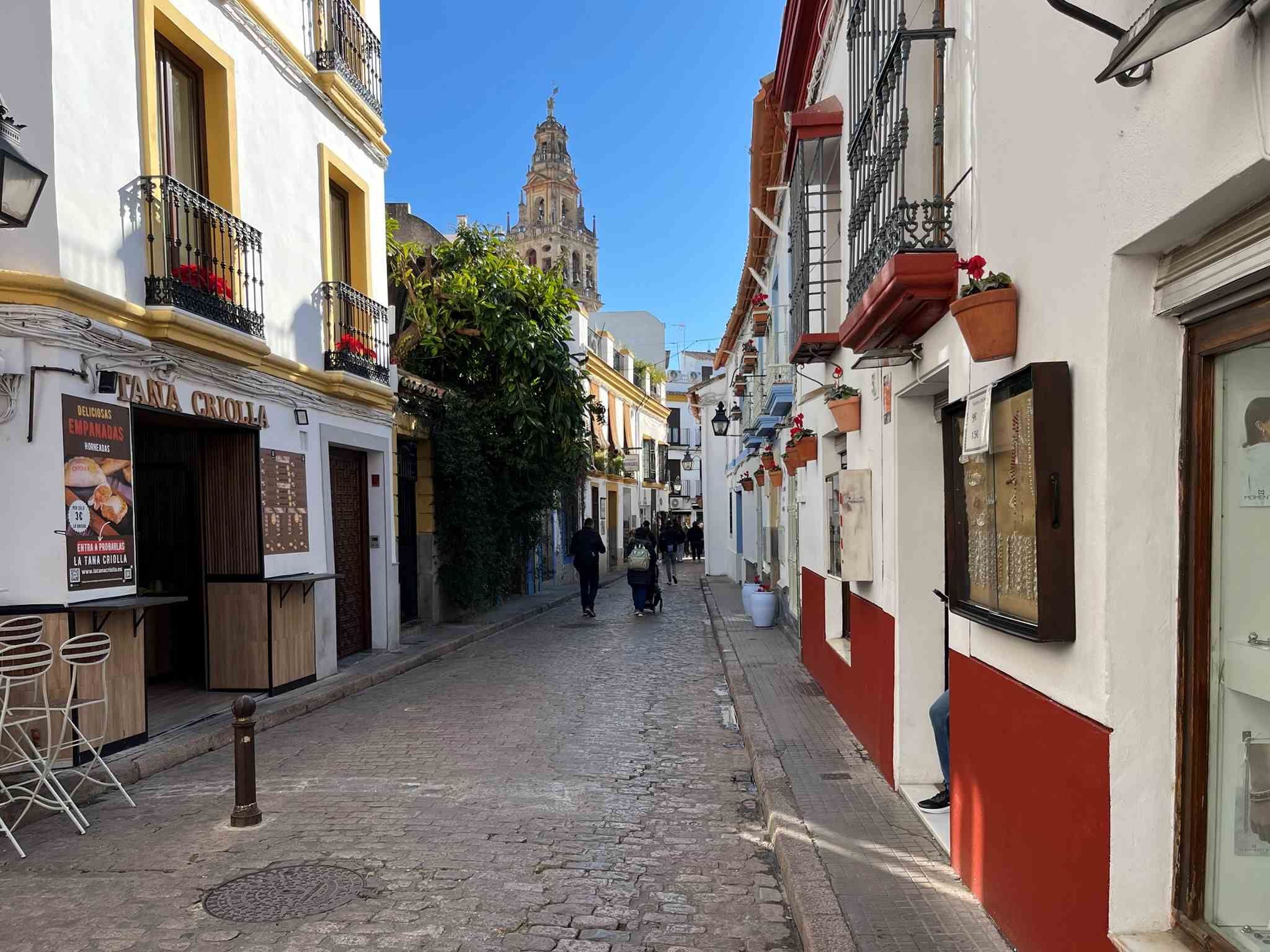
Córdoba’s Judería
With its narrow, winding streets, the judería – or Jewish quarter – is perhaps the most charming part of Córdoba’s historic centre. It’s certainly very popular with tourists! It’s made up of 12 few streets centred around Plaza Maimonides, Calle Judíos and Calle Tomás Conde.
At one point in the Middle Ages, Córdoba was home to one of Europe’s biggest Jewish communities, but under Muslim rule, most Jewish people lived outside the city walls. It was only after the Christian conquest of the city in 1236 that they were ordered to move inside the walls to the judería. The community continued to thrive until 1391, when Jewish people in Córdoba and across Spain were massacred in a series of brutal pogroms. Many of the surviving Jews were compelled to convert to Christianity, and Christians moved into the depopulated judería. Finally, in 1492 all Jews were forced to choose between converting and leaving Spain.
Synagogue and Casa de Sefarad
The small but richly decorated synagogue, which was built in 1314 in the Mudéjar style, is a must-see.
The nearby Casa de Sefarad ($) tells the story of the Sephardic Jews – the Jews who lived in the Iberian Peninsula and were then forced to convert or go into exile. There is an interesting guided tour, as well as exhibits about notable people, everyday life and religious ceremonies and rituals.

Maimonides
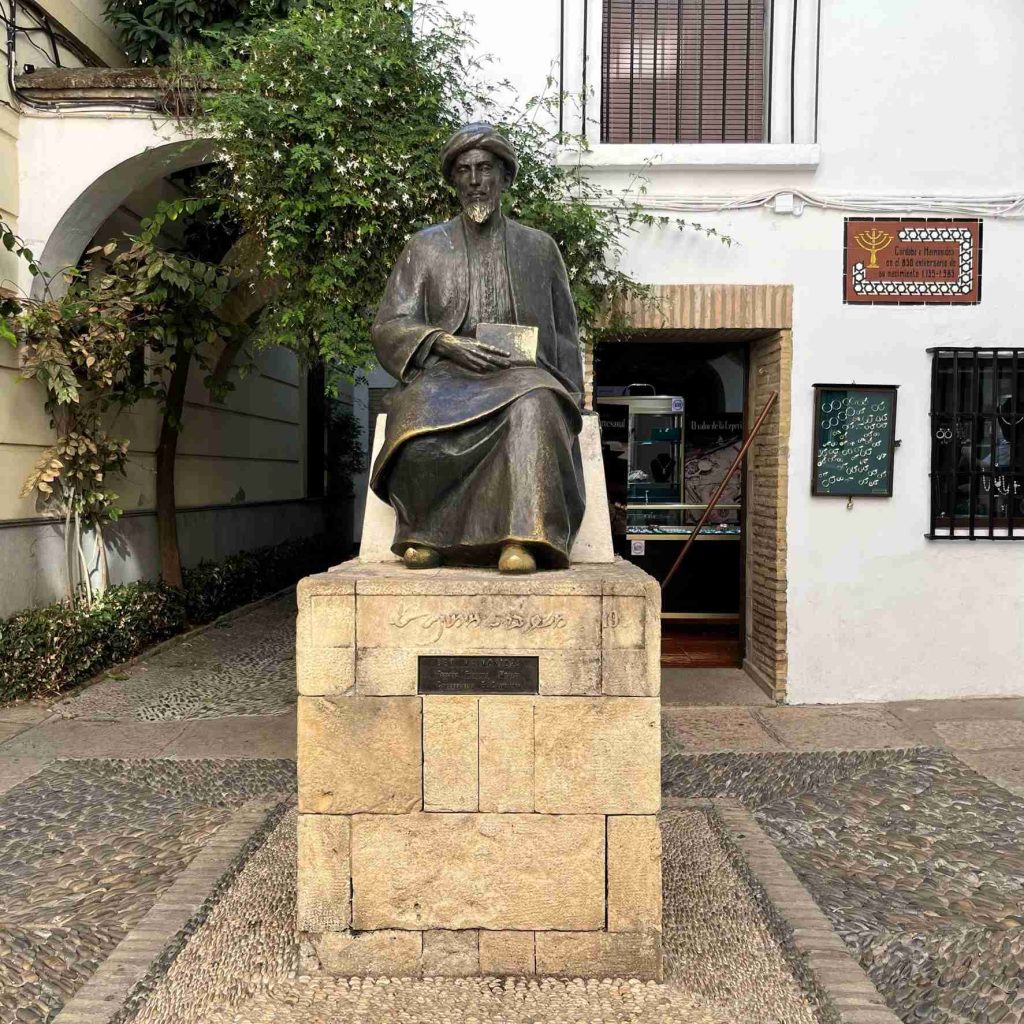
The Jewish community also suffered persecution under Muslim rule. Near the synagogue there’s a statue of the great Jewish philosopher Maimonides, who lived in Córdoba in the 1100s before his family was forced to flee, as they refused to convert to Islam.
Further up the same street, the Casa Andalusí ($) is a recreation of a typical Andalucian house, with rooms set around small courtyards in the Mediterranean tradition. The neighbourhood is also home to the beautiful funerary chapel Capilla de San Bartolomé ($), as well as the bullfighting museum ($).
The judería is quite small, so it doesn’t take very long to explore on foot. And if you do find yourself in need of refreshment, the judería has some excellent bars and restaurants, including ones that draw on the city’s Muslim and Jewish heritage.
Official websites:
- Capilla de San Bartolomé: https://www.manmaku.es/capillamudejar/english.html
- Casa de Sefarad (in Spanish): https://lacasadesefarad.com/
Related articles
Related audio tours
Related itineraries


Questions and answers
Córdoba had a large Jewish community under the Muslims and in the early part of Christian rule. Córdoba’s judería – or Jewish quarter – is made up of 12 streets close to the Mosque-Cathedral. It dates from the period after the Christian conquest, when Jews were ordered to move inside the city walls. In 1492 all Jews were forced to choose between converting and leaving Spain, and their culture was systematically eradicated, so few concrete traces remain. You can visit the beautiful former synagogue, and the Casa de Sefarad is a small museum that tells the story of the Sephardic Jews. There’s also a statue of the Jewish philosopher Maimonides, who lived in Córdoba in the 1100s.
Strictly speaking, the Calleja de las Flores isn’t within the judería, but it’s very close by. At times, the Calleja de las Flores can feel a bit overrun by tourists, but it is worth a visit for the beautiful view of the Mosque-Cathedral’s bell tower framed by the narrow, flower-filled alleyway. It’s likely to be quieter in the early morning or evening.
Caza Mazal just off Calle Tomás Conde specialises in Sephardic cuisine, but the traditional Andalucian food on offer in any of Córdoba’s bars and restaurants is influenced by its roots in the blending of Christian, Jewish and Muslim cultures.