
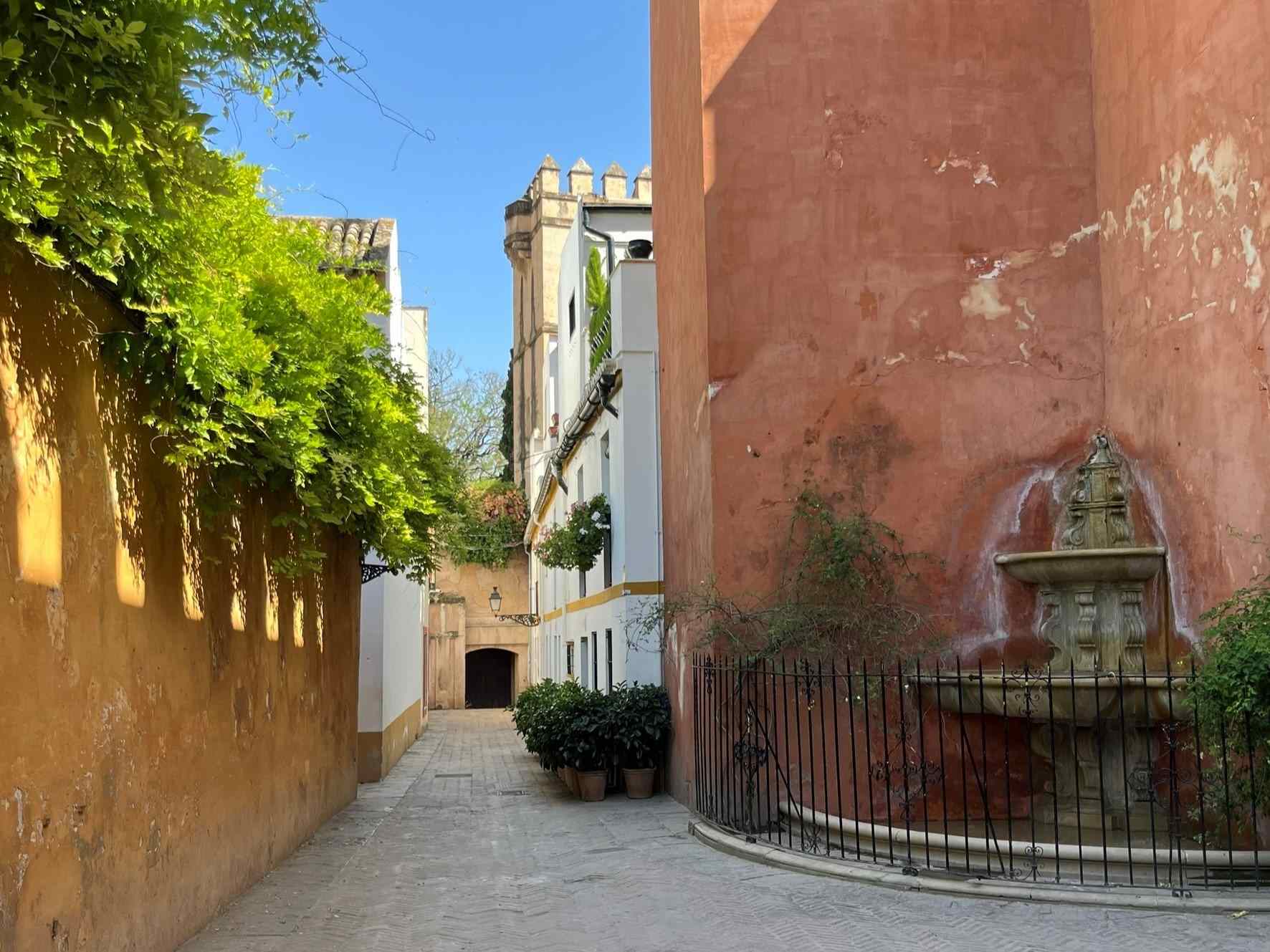
Santa Cruz
Just a stone’s throw from the cathedral and the Royal Alcázar, Seville’s Santa Cruz district is often referred to as the judería – or Jewish quarter – but really that only covers a short period of its long history. It developed as a neighbourhood under Muslim rule, but after the Ferdinand III of Castile conquered Seville in 1248, the Muslims were expelled from the city. Ferdinand then established the judería in what is now Santa Cruz and San Bartolomé, where it remained until the tragic pogroms of 1391 which decimated Seville’s Jewish population. Over the subsequent centuries, buildings have been demolished and new ones have sprung up in their place, but Santa Cruz has somehow managed to hang on to its medieval charm.
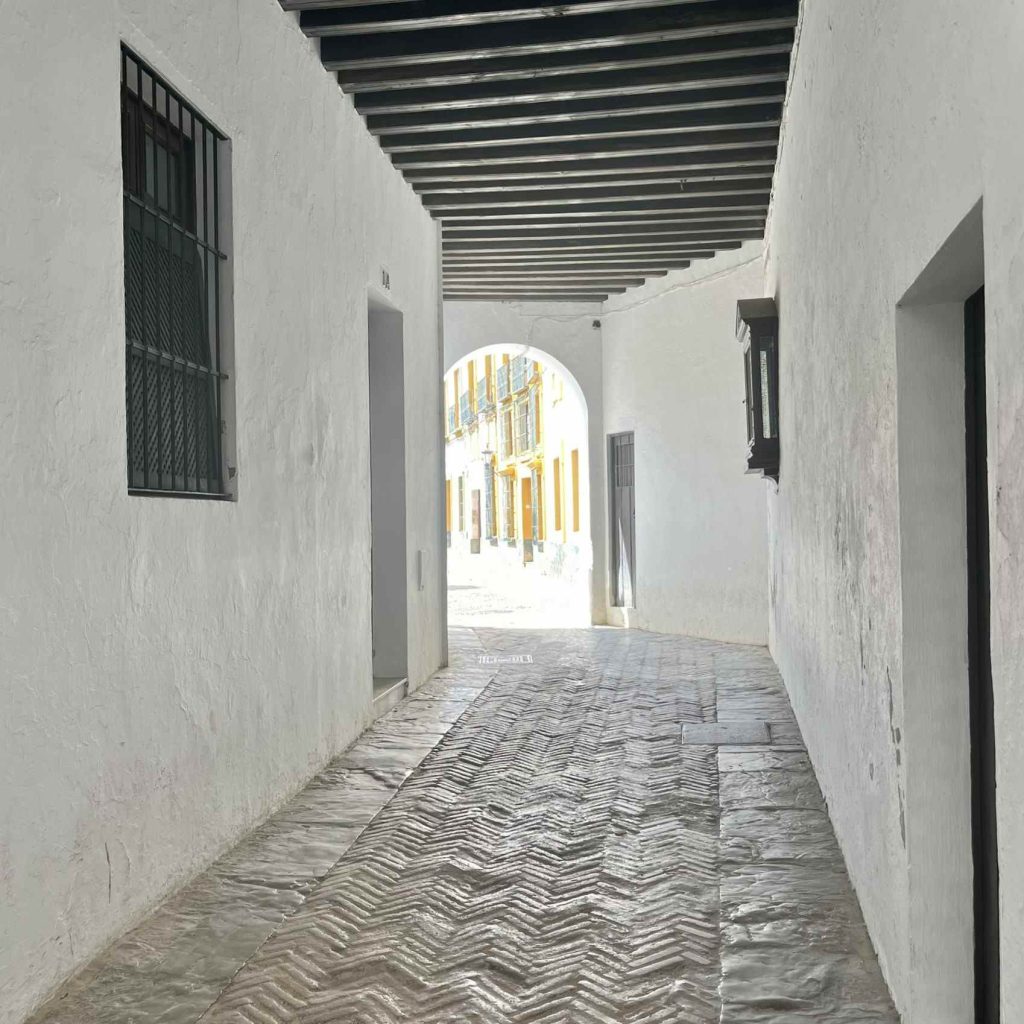
The main attraction is exploring the narrow, winding alleyways and quaint squares planted with jasmine and orange trees, as well as popping into the many shops, cafés, bars and restaurants. You’ll also catch glimpses of the Giralda and pass the balcony where Rosina supposedly sang her arias in Rossini’s opera The Barber of Seville.
In Santa Cruz and neighbouring San Bartolomé there are three churches that bear witness to the area’s Jewish heritage: Santa Cruz, Santa María la Blanca and San Bartolomé were built on the sites of synagogues, which had themselves replaced earlier mosques.
There are also remnants of Muslim heritage in Santa Cruz: a couple of the restaurants – Restaurante San Marco Santa Cruz and Cervecería Giralda Bar – are housed in former Arab baths. And the old city wall built under Muslim rule in the 11th or 12th century runs between Santa Cruz and the Royal Alcázar.
Santa Cruz is a very touristy area, so before sitting down for a drink or a bite to eat, it is worth checking the latest reviews – food quality, service and prices vary considerably.


Questions and answers
The main attraction of Santa Cruz is exploring the narrow, winding alleyways and quaint squares.
The medieval character of Santa Cruz is retained in its narrow, winding alleyways. The churches of Santa Cruz, Santa María la Blanca and San Bartolomé were built on the sites of synagogues. However, since Jews were forced to convert or go into exile, few material traces of their culture remain in Santa Cruz.
The Muslim city wall built in the 11th or 12th century separates the district of Santa Cruz from the Royal Alcázar. The remains of Arab baths have been found in various properties, including two restaurants – Restaurante San Marco Santa Cruz and Cervecería Giralda Bar.