
Historic Capitals – Seville, Córdoba and Granada
7 nights / 8 days
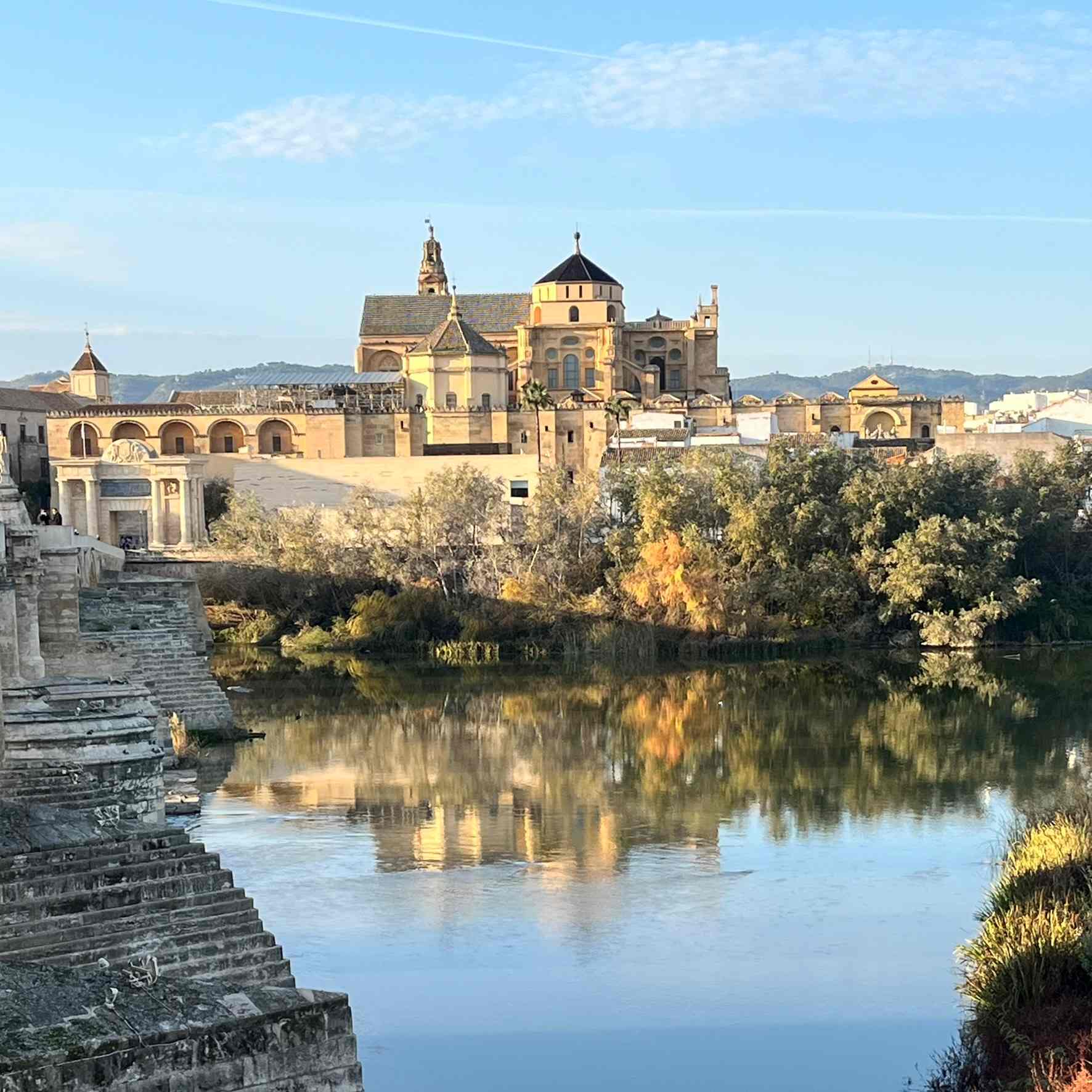
For thousands of years, Andalucía has been a melting pot of cultures: Iberian, Phoenician, Roman, Muslim, Jewish and Christian. Going right back to Roman times, Córdoba was the capital of the province of Baetica, but over the centuries the centre of power has shifted between it and its two great historic rivals: Seville and Granada.
The legacy of this rich heritage can be found in all three cities. It is present in UNESCO-listed monuments like the Alhambra, Mosque-Cathedral of Córdoba and Seville Cathedral, as well as in the winding alleys, picturesque squares, centuries-old customs and traditional cuisine.
This one-week itinerary includes the most emblematic sights while also finding time to explore a few hidden corners of each city that most visitors miss. We’ve deliberately packed in as much as possible, so you may prefer to cut back on some parts or take a few days extra to go at a more leisurely pace. Besides, by the end of the week, we’re sure you’ll already want to come back!
Days 1-3 Seville
Our three city itinerary starts in Seville, which is well served by its international airport and high-speed trains. Start by exploring Seville the Plaza de España, before spending the evening in the romantic Santa Cruz district. If you have time, our Plaza de España audio tour will give you an insight into the history of the Plaza and what it represents.
On the second and third days, explore the historic centre and the districts either side of the Guadalquivir River, as well as visiting the Cathedral and Royal Alcázar. Our Gateway to the Americas VoiceMap audio tour guides you through the historic centre and along the bank of the Guadalquivir while you find out about Seville’s Golden Age, when it had the monopoly on trade with Spain’s colonies in the Americas. We also have an audio tour of the Triana neighbourhood on the other side of the river.
Day 1
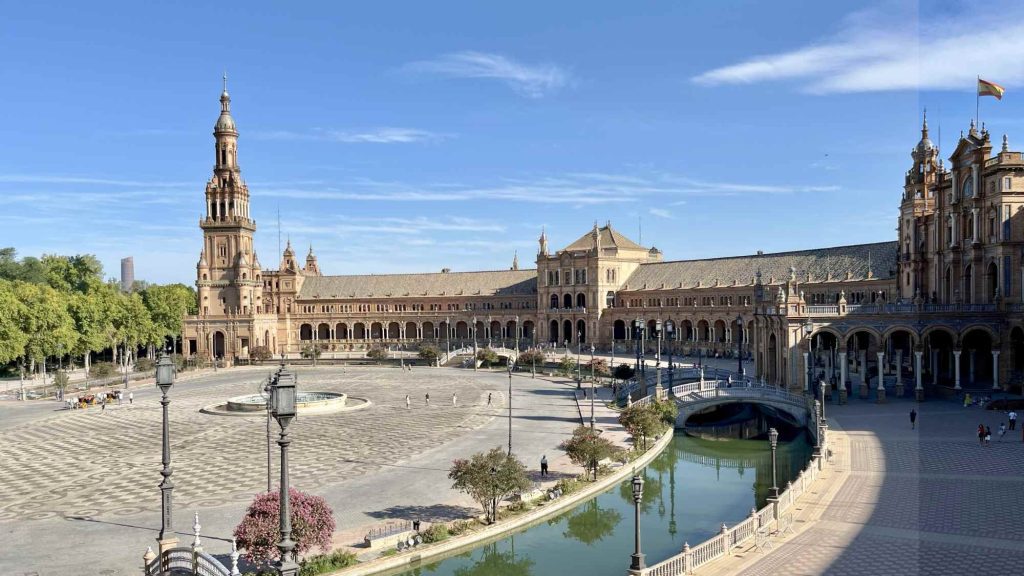
Plaza de España
The Plaza de España is one of Spain’s most iconic sights. It was built for the Ibero-American Exposition of 1929, which celebrated the historic links between the Iberian Peninsula – Spain and Portugal – and the Americas. The ornately tiled panels – one for each Spanish province – chart key moments in Spain’s history.
The Plaza de España is set in the María Luisa park, which is home to several other sights. These include the Museum of Arts and Customs ($), housed in a beautiful neo-Mudéjar pavilion also built for the Expo.

Evening
Santa Cruz
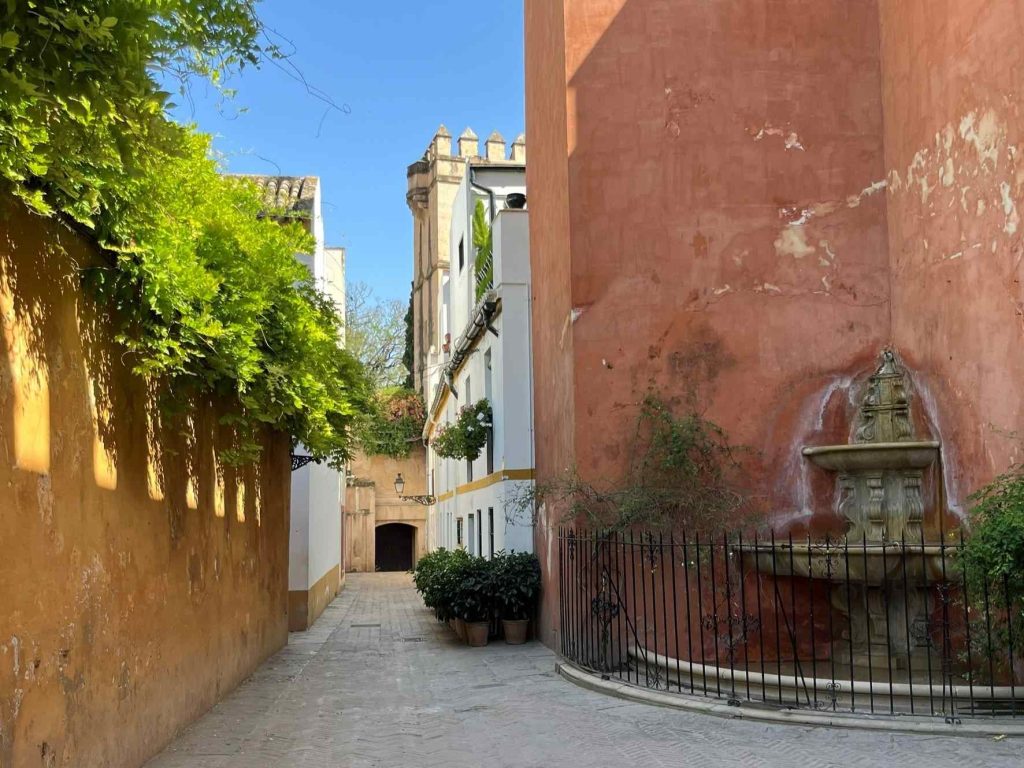
Lose yourself in the labyrinthine web of streets in the former Jewish quarter of Seville. Although these days the district is packed with souvenir shops, you can still enjoy some traditional tapas in an atmospheric bar or charming square.
Bear in mind that service can be a bit hit or miss, and it’s often hard to find space in local institutions like Bodega Santa Cruz, known locally as “Las Columnas” and Casa Román. Other bars to try include Taberna Álvaro Peregil and El Librero.
Restaurante San Marco Santa Cruz housed in some 12th century Arab baths offers a good range of Spanish and Italian dishes. Another bar where you can see the remains of old Arab baths is Cervecería Giralda Bar – they were discovered in conjunction with renovations carried out during the pandemic.
Day 2
Morning
Seville’s historic centre
Dominated by the cathedral ($) and the Royal Alcázar ($), Seville’s historic centre is also home to a number of other interesting sights. These include the impressive City Hall, the Archives of the Indies, the bull ring ($), the Hospital de la Caridad ($) and its attached chapel with stunning paintings by Murillo.
Many of the finest buildings date from Seville’s Golden Age in the 16th and 17th centuries, when gold and silver from the Americas funded the construction of churches, convents and mansions in the Renaissance and Baroque styles.

Along the Guadalquivir
The east bank of the Guadalquivir, which is now just a peaceful side-branch from the main river, has been turned into a pleasant promenade. Sights in this area include the twelve-sided Torre de Oro, which in Muslim times formed part of the city’s defences, and a replica of the Nao Victoria, the boat which completed the first circumnavigation of the Earth. You also get great views across to Triana, the lively neighbourhood on the other side of the river.

Lunch
You can enjoy anything from traditional Andalucian fare to modern fusion cuisine at one of the many bars and restaurants in the city centre. For better value and a more authentic experience, avoid the area right by the cathedral and head into the side streets. And it’s always worth checking the latest reviews before sitting down!
Afternoon
Seville Cathedral
Seville’s massive cathedral was built in the 15th century on the site of the city’s former main mosque. Its bell tower – the famous Giralda – and the Orange Tree Courtyard still serve as reminders of that Islamic past. Although it was originally conceived in the Gothic style, later additions mean that the building we see today combines Islamic, Gothic, Renaissance and Baroque elements.
The cathedral also houses an impressive art collection, as well as the tombs of notable figures including Ferdinand III of Castile and Christiopher Columbus. For a completely different perspective on the building and its surroundings, you can do a rooftop tour of the cathedral.

Evening
Glide along the Guadalquivir on a sunset river cruise.
Calle Feria and the streets around are great for tapas bar-hopping – try Casa Vizcaíno or Bar El Templo de Feria. Fatouch has very tasty Lebanese food.
For a formal meal, Lalola de Javi Abascal offers modern Andalucian cuisine, specialising in Iberian pork dishes.
Day 3
Morning
Real Alcázar of Seville (Royal Alcázar)
Seville’s Royal Alcázar is really two separate palaces set in beautiful gardens. The rather austere Gothic palace dates from Alfonso X’s reign in the late 13th century, while Pedro I’s Mudejar palace is a harmonious blend of Muslim, Christian and Jewish influences. If at first glance it resembles the Nasrid Palaces in the Alhambra, that’s no coincidence – they were both built in the 14th century, and Pedro had a good relationship with Muhammad V, the Muslim ruler of Granada.

Lunch
The atmospheric Mercado de Triana has numerous tapas bars among the market stalls selling fresh produce, so it’s a great spot for lunch.
Afternoon
Triana
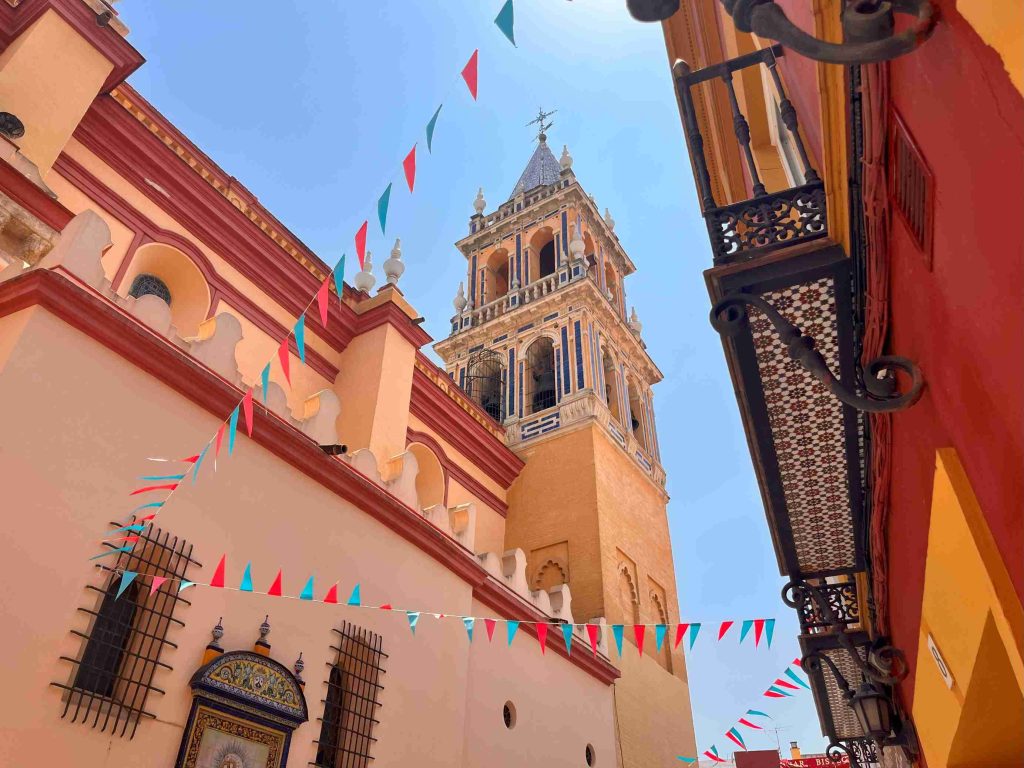
The brightly-coloured houses on Triana’s waterfront are one of Seville’s most recognisable landmarks, but behind them lies an equally colourful neighbourhood waiting to be explored. Once a working-class district with a large Roma population, these days Triana is a great place to soak up the Sevillano atmosphere, enjoy some authentic tapas and catch a passionate flamenco performance.
Evening
You shouldn’t miss the opportunity to see a flamenco show while you’re in Triana. There are a lot of good venues, including Sala Almoraima – Tablao Flamenco and Teatro Flamenco Triana.
The lively Triana district has some great options for traditional Sevillian food, particularly if you step a bit away from the end of the Triana bridge. Try Blanca Paloma, Las Golondrinas or Bar Típico.
Days 4-5 Córdoba
Many people visit Córdoba on a day-trip, but there’s a lot to see, so we think it merits a longer stop. Not least to enjoy the serenity of the streets and the river in the evening and early morning.
Our City of Caliphs audio tour starts at the viewpoint across the River Guadalquivir from the Mosque-Cathedral and then crosses the Roman bridge to the historic centre. We think it’s the perfect way to start exploring the city. If you choose to do the City of Caliphs tour, we recommend doing the first part of it – as far as the Patio de los Naranjos – on the first day in Córdoba. This will take you past the main Roman sights, Plaza del Potro, Plaza de la Corredera and Plaza de las Tendillas.
On the next day, the second part of tour will guide you through the Jewish quarter and the patios of San Basilio. And of course you’ll also have time to visit Córdoba’s iconic monuments: the Mosque-Cathedral and the Castle of the Christian Monarchs. Whether or not you choose to do the audio tour, we think this is a good way to organise your time in Córdoba.
Day 4
Morning
Travel to Córdoba
The fastest way to travel from Seville to Córdoba is by train (1 hour), but you can also get a bus (2 hours +) or drive (allow up to 2 hours).
Lunch
Grab a quick lunch at one of the many good bars and restaurants in the heart of Córdoba’s old town. Bar El Barón in Plaza de Abades is excellent, and we pass it near the start of the City of Caliphs audio tour.
Afternoon
Roman Córdoba
In Roman times, Córdoba was the thriving capital of the province of Baetica, which was roughly equivalent to modern-day Andalucía. Most of its Roman remains are hidden below the city, but it’s worth visiting the Archaeological Museum, which occupies the site of the Roman theatre and has a good collection of Roman statues and everyday items. The Roman Temple has recently been restored and can be visited if booked in advance.
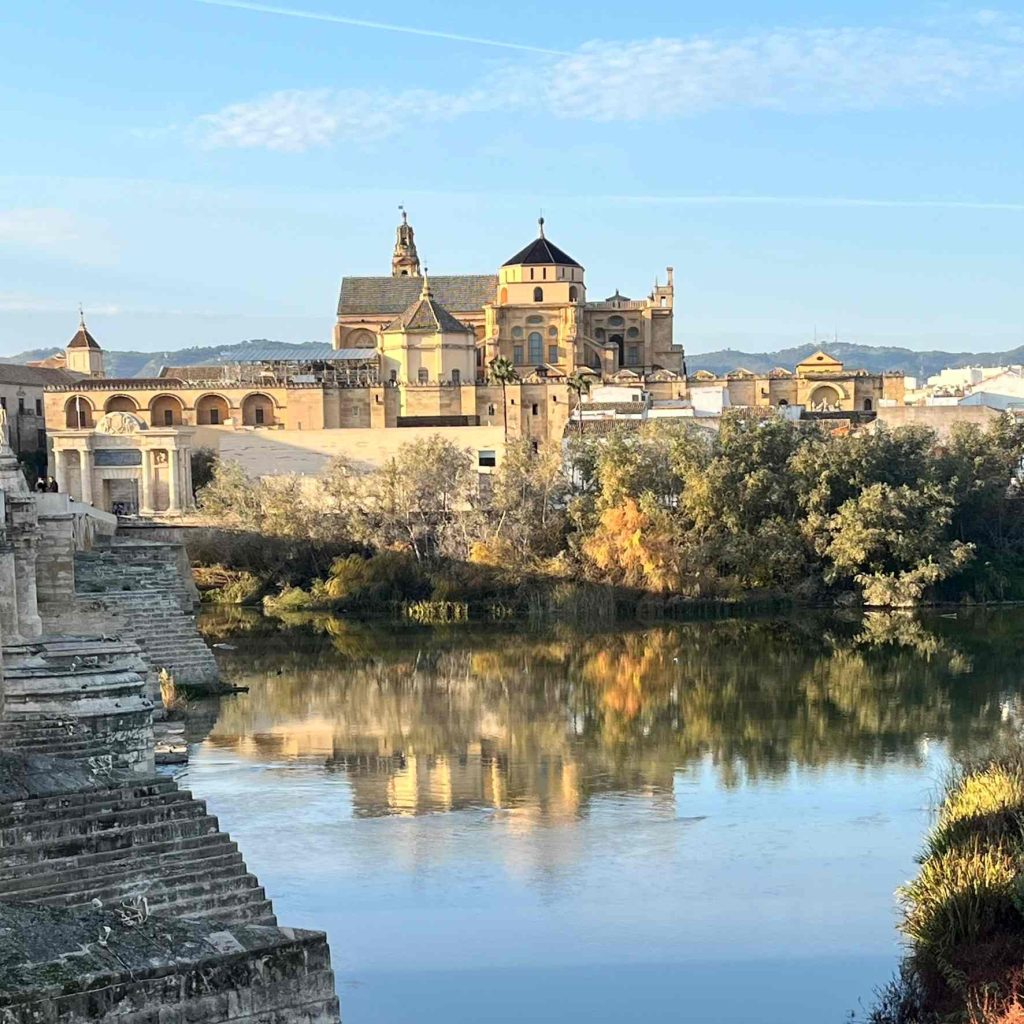
Of course, there’s also the “Roman bridge”, although very little of the original Roman structure remains. Nevertheless, it’s one of Córdoba’s iconic sights, and a great vantage point from which to admire the Mosque-Cathedral and mighty River Guadalquivir.
Plaza del Potro
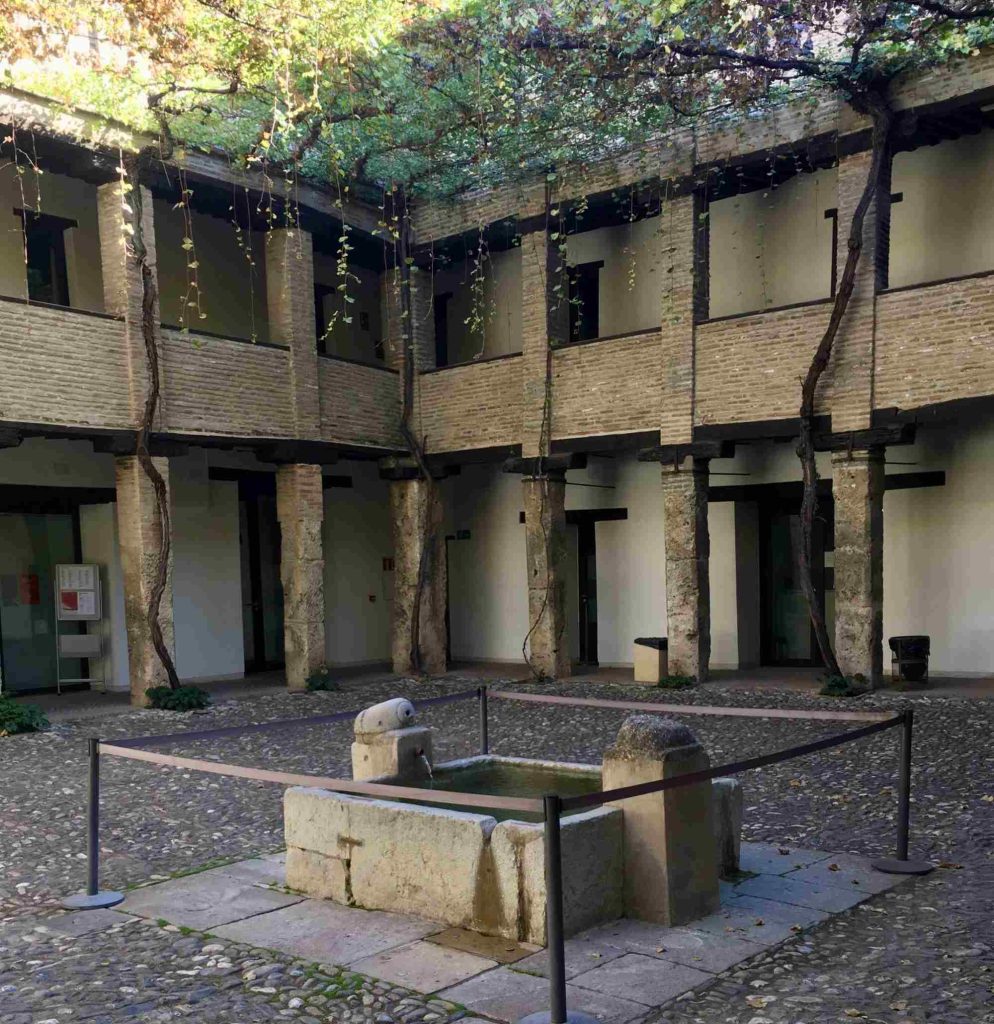
Plaza del Potro is an attractive square named after the statue of a colt that adorns the fountain. It is flanked by three museums: the Flamenco Centre Fosforito ($) housed in a former inn mentioned in Cervantes’ masterpiece Don Quijote; Córdoba’s Fine Arts Museum; and the Julio Romero de Torres Museum ($), dedicated to the work of one of Spain’s finest symbolist artists.

Evening
The dining options in the historic centre are surprisingly good, despite the hordes of day-tripping tourists. Many restaurants are located in traditional Andalusian houses with pretty courtyards or roof terraces with views of the Mosque-Cathedral.
Caza Mazal specialises in Sephardic cuisine and Restaurante Damasco, as the name suggests, has a range of Middle Eastern and Persian dishes. These flavours also infuse the traditional local food on offer in any of Córdoba’s restaurants. Some others worth trying are Taberna El No 10, Restaurante El Rincon De Carmen and Casa Pepe de la Judería in Calle Romero.
Day 5
Morning
Córdoba Mosque-Cathedral
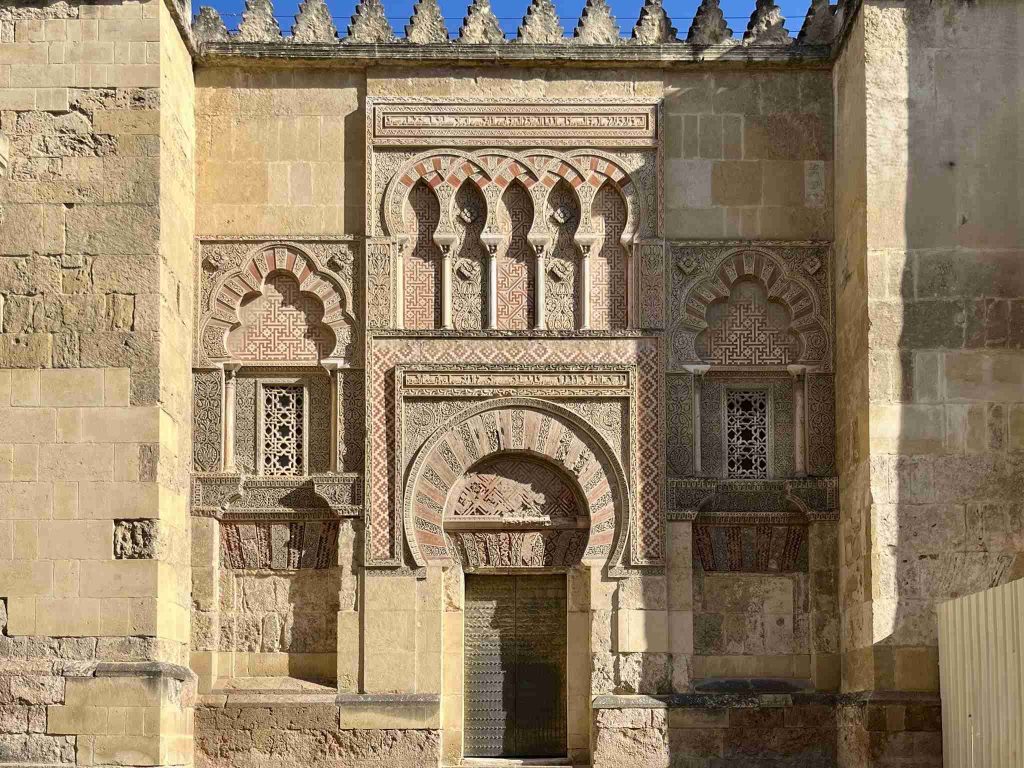
Córdoba’s Mosque-Cathedral is, alongside the Alhambra, the outstanding example of Andalucía’s Islamic heritage. The original mosque, with its iconic double-tiered red and white arches, was completed in less than two years at the end of the 8th century. The mosque’s elegant combination of semi-circular, horseshoe and multifoil arches has provided inspiration for buildings across the world. The Main Chapel added by the Christians in the 16th century thrusts up through the roof of the mosque, creating a striking fusion of Islamic and Christian architecture that dominates Córdoba’s skyline.
Judería: Córdoba’s Jewish quarter
In the 13th and 14th centuries, the sinuous streets of Córdoba’s Judería were home to thousands of Jewish people, but they were forced to flee or convert to Christianity after a bloody pogrom in 1391. The quarter still retains the charming medieval layout of its streets, and its sights include the beautiful Synagogue, the Chapel of Saint Bartholomew ($), and the House of Sefarad ($), which tells the story of Spain’s former Jewish community.

Córdoba’s patios
Córdoba is famous for its UNESCO-listed Patios festival, which is held in May. Prizes are given for the most beautifully decorated patios or courtyards, and there are also categories for balconies and window boxes.
In the San Basilio area, there are several privately-owned flower-filled courtyards you can visit all year round. Opening times vary, but they are usually open late morning, so go before lunch. Make sure you have some coins handy as a small donation is expected.

Lunch
There are several good restaurants in the San Basilio neighbourhood, including Restaurante Puerta de Sevilla and Restaurante Taberna la Viuda.
Afternoon
Alcázar de los Reyes Cristianos (Castle of the Christian Monarchs)
Built on the site of the former Caliphal palace, the Castle of Christian Monarchs is a marvellous example of the various cultures that have shaped Córdoba over the centuries. Most of the complex as it stands today was built during the reign of Alfonso XI in the 14th century, but it also harbours vestiges of the city’s Roman and Islamic past. Highlights of the visit include the stunning formal gardens, as well as a fine collection of Roman mosaics and the panoramic views from the castle’s formidable ramparts.

Evening
For something different, at the Royal Stables near the Alcázar you can see an equestrian show combining pure-bred Spanish horses and flamenco.
Córdoba is famous for its traditional tabernas. In an effort to preserve them, the local council has created a special badge that identifies the ones of particular cultural or historical interest. Away from the main tourist centre, you’ll find Taberna Salinas near the Roman Theatre and Taberna San Miguel “Casa El Pisto” in Plaza de San Miguel. If the taberna fare sounds a bit too heavy, Tu Pescaito in Plaza de la Corredera is an excellent option for fish and seafood.
Days 6-8 Granada
Many visitors to Granada prioritise the Alhambra, but there is much more to the city than that. On the first day, explore the historic centre and Lower Albaicín districts. Our Enchanting Granada audio tour guides you through this area while giving you an introduction to the city.
The second day is devoted to Granada’s UNESCO World Heritage Site: the Alhambra, Generalife and Albaicín, as well as the former Roma district of Sacromonte.
On your final day in Granada, visit the Cathedral or Royal Chapel, browse the handiworks in the Alcaiceria, explore the Realejo district or just relax in a picturesque square with a cup of coffee.
Day 6
Morning
Travel to Granada
You can do the journey from Córdoba to Granada by train (1 ½ to 2 hours) or bus (3 hours).
If driving, allow 2 ½ to 3 hours. The more scenic and direct route is via the N-432, rather than using dual carriageways.
Lunch
Sample tapas based on local produce at Granada’s central market, the Mercado San Agustín, or Taberna Palo Cortao opposite.
Afternoon
Granada’s Historical Centre
Explore Granada’s historical centre, which is home to the city’s Renaissance and Baroque masterpieces. Sights include Plaza Bib-Rambla, the Corral del Carbón, the Cathedral ($) and Royal Chapel ($), the Basilica of San Juan de Dios ($) and St. Jerome Monastery ($). Much of the centre is pedestrianised, and there are plenty of pleasant squares where you can stop for refreshment at a café or bar with a terrace.
Lower Albaicín
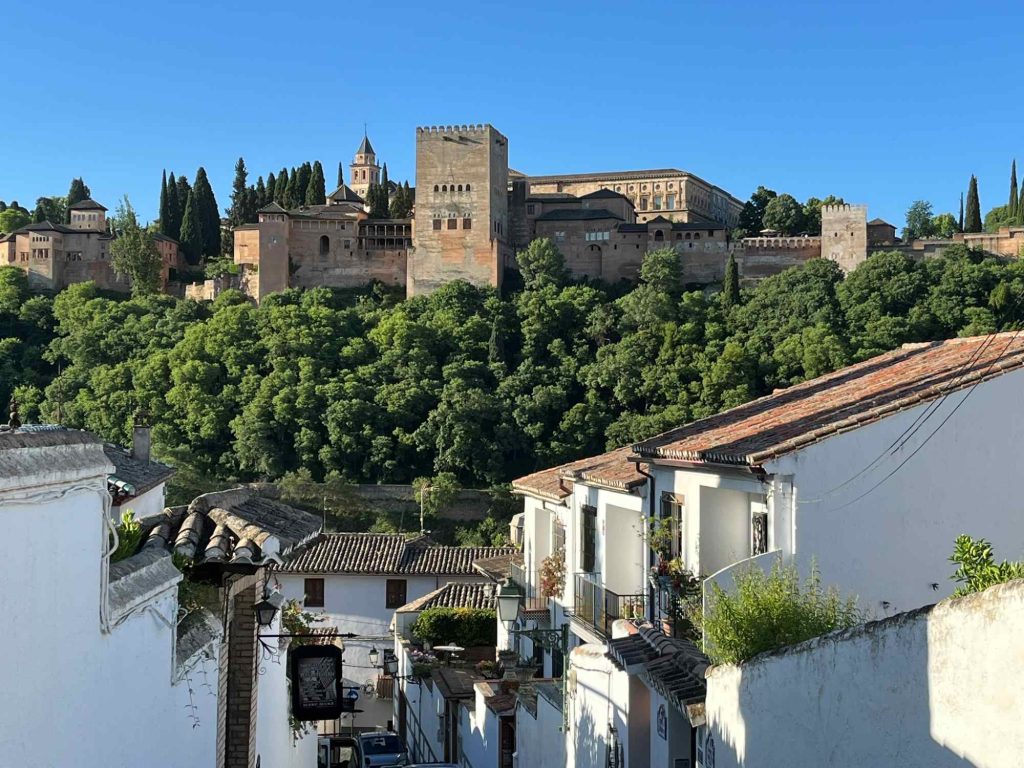
Soak up the atmosphere of the World Heritage-listed Albaicín district while you weave through the medieval alleyways created under the city’s Moorish rulers. Head up the picturesque Carrera del Darro to El Bañuelo ($) (the Arab baths), Casa de Zafra ($), Paseo de los Tristes and return via the Mirador de los Carvajales for a great view of the Alhambra.
Evening
Tapas in Realejo
Go tapas bar-hopping in Realejo. Granada is famous across Spain for its “free” tapas culture, where a different tapa is served included with the price of each drink. The lively Realejo district is packed with tapas bars – check out El Conde, La Taberna del Kosmonauta, Casa de Vinos La Brujidera or Taberna Granados for tasty tapas and a good range of wines.
Day 7
Morning
Alhambra and Generalife
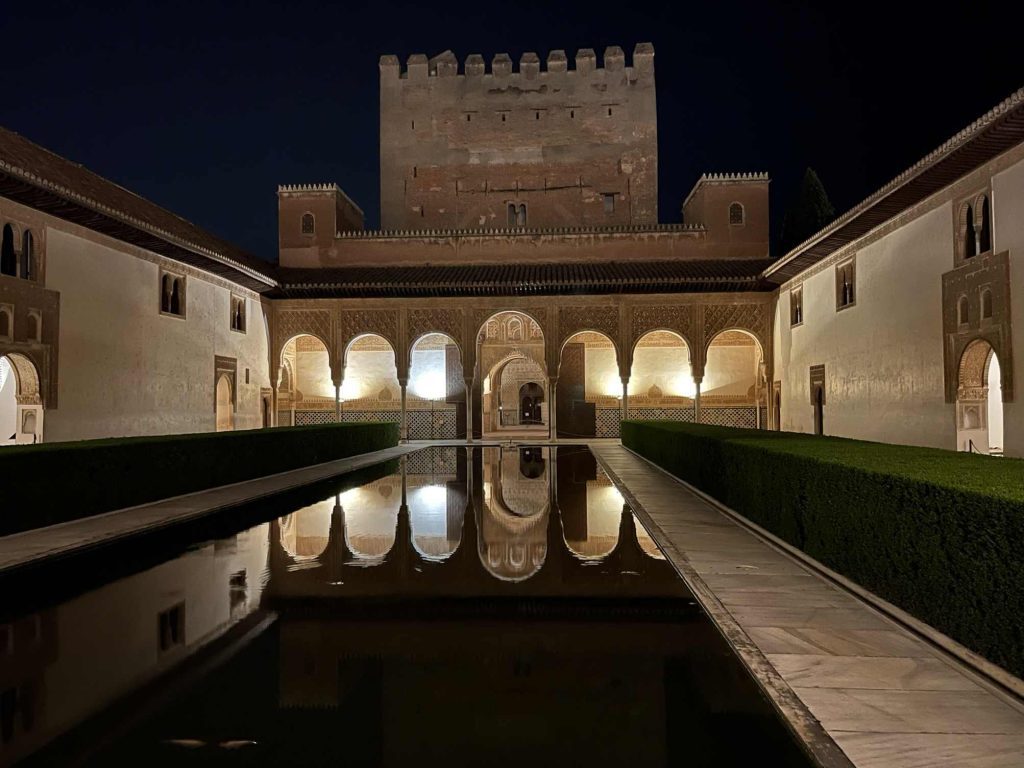
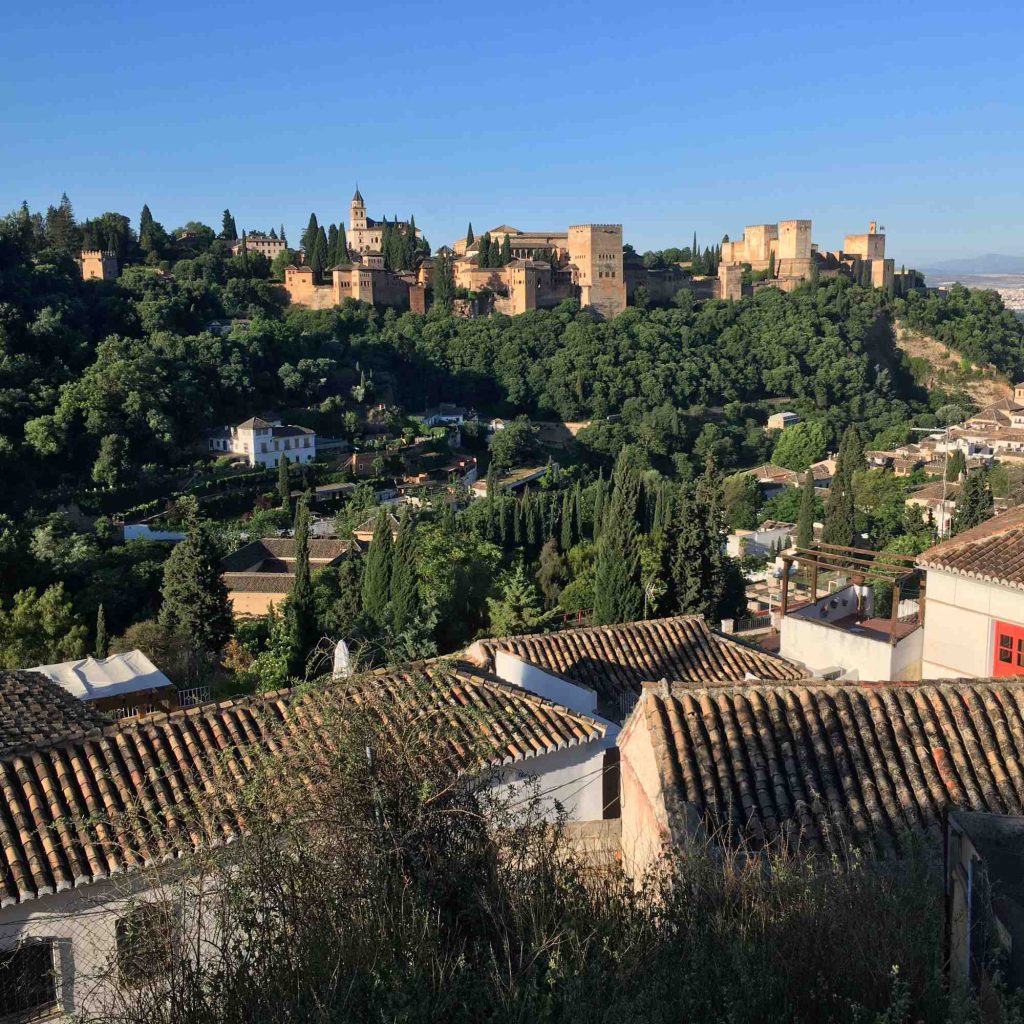
The spectacular Alhambra, or “red palace”, is one of the finest and best-preserved examples of historic Islamic architecture in the world. Set on a hill that dominates the modern city, its intricately ornate decoration, peaceful patios and delightful gardens are a must-see for any visitor to Granada.
Lunch
Near the Alhambra and set in a shady garden, Restaurante Jardines Alberto is reasonably priced with a decent range of dishes. The restaurant at the Parador has a lovely terrace overlooking the Generalife, but it’s a bit more pricey and service can be variable.
Alternatively, take bus C32 across to Placeta San Miguel Bajo in the Upper Albaicín. It’s a charming square with several restaurants. Try Café Bar Mirador de la Lona, Mesón El Yunque or Restaurante Qadima.
Afternoon
Upper Albaicín
On the hill opposite the Alhambra lies the Albaicín, site of the original Moorish settlement. Enjoy losing your way amongst the charming, narrow alleyways and cobbled streets of this UNESCO World Heritage Site, whose street layout has barely changed since medieval times. The popular Mirador de San Nicolás offers fantastic views of the Alhambra, Generalife and the Sierra Nevada. Make sure you also visit Plaza Larga, the Carmen de los Geranios and the beautiful Palacio de Dar al-Horra ($).
Sacromonte
In Sacromonte, for centuries people have lived in cave houses dug out of the soft rock. The district lay just outside the historic city walls, which made it a haven for marginalised groups, including the Roma people. This is where flamenco developed in Granada, and it is still a great place to catch a flamenco show. It also offers spectacular views across the valley to the Alhambra.
If you would like to learn more about living in a cave house, you should visit the Sacromonte Caves Museum ($), and the Sacromonte Abbey ($) is also worth a visit.
Evening
If your budget allows, enjoy an unforgettable moonlight dinner with views of the Alhambra at a restaurant in a traditional Carmen.
If you want to see flamenco, you can catch a show in a Sacromonte cave or at Jardines de Zoraya in the Albaicín.
Day 8
Morning
If you have time on your last morning and you haven’t already been, visit the Royal Chapel and/or Cathedral. Alternatively, explore the Realejo district, browse the handiworks in the Alcaiceria or just relax in a square with a cup of coffee.
Granada Cathedral
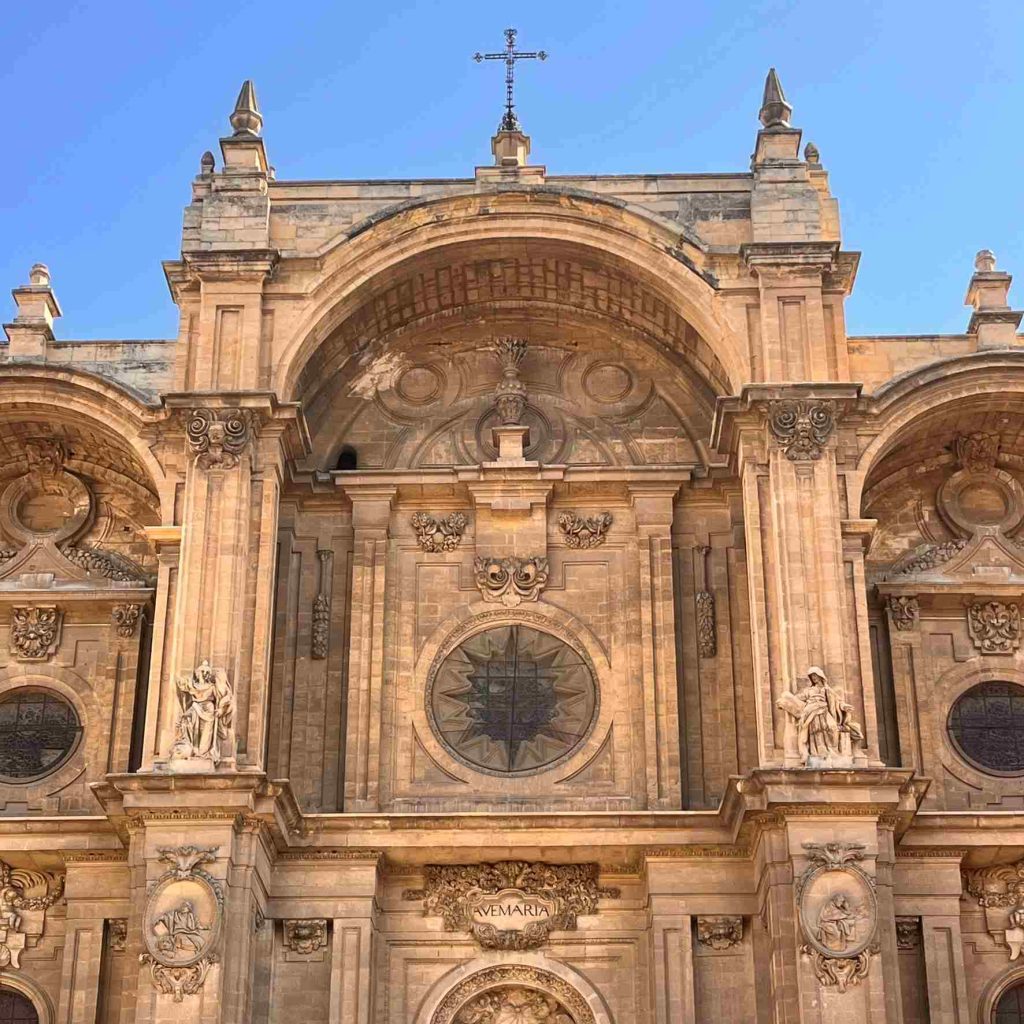
Work on Granada’s massive cathedral started in 1523, but it was only completed 181 years later in 1704. It was originally intended as a Gothic cathedral, but in 1528 the architect Diego de Siloe was brought in to redesign it in the more modern Renaissance style, which was just beginning to become popular in Spain. Tastes continued to evolve while the cathedral was being built, so the main façade and many decorative elements inside the cathedral are in the Baroque style.
Royal Chapel
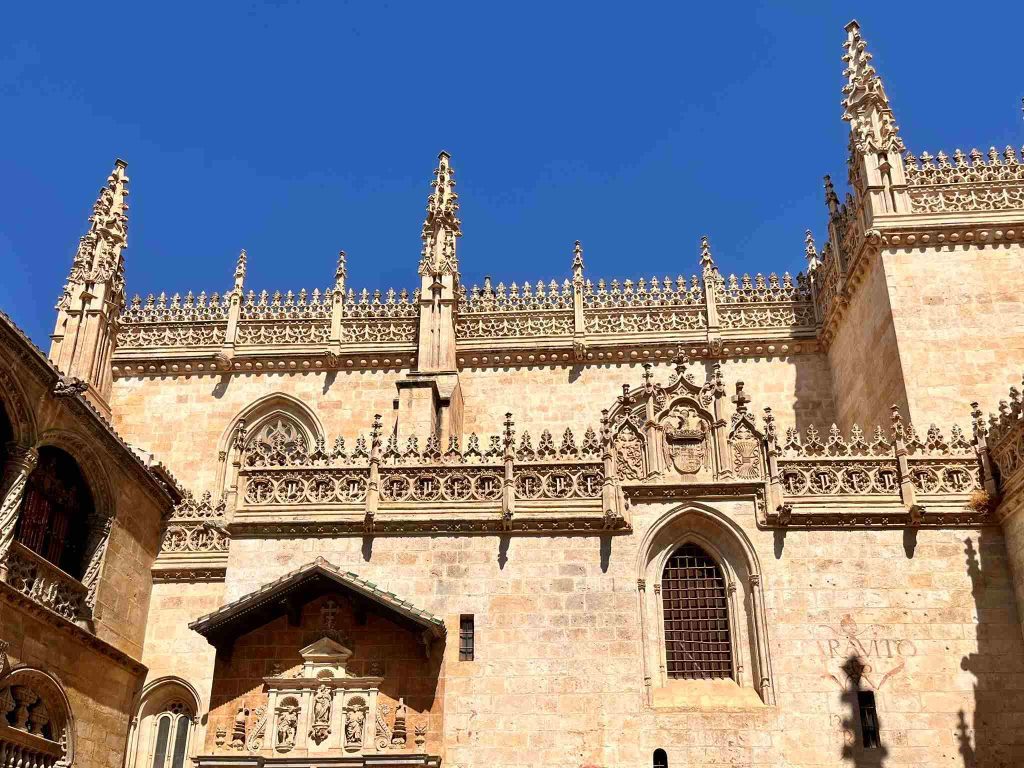
Having conquered Granada in 1492, Isabella I of Castile and Ferdinand II of Aragón decided this is where they should be buried. The Royal Chapel (1505-17) was built right next to the former main mosque, which had been temporarily consecrated as the city’s cathedral. The chapel is generally considered the pinnacle of Gothic and Mudéjar architecture in Granada, and it is worth going inside to admire the beautiful craftsmanship and to see the tombs of Isabella and Ferdinand.
Realejo
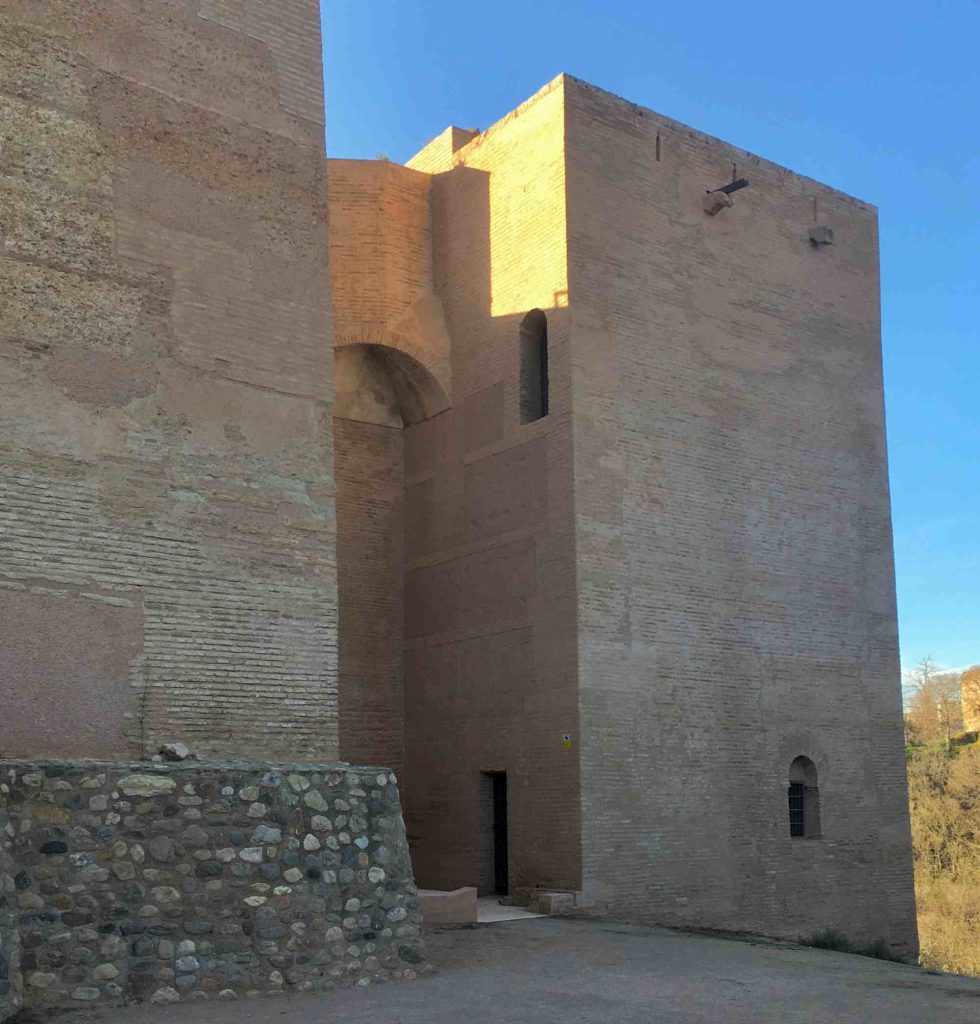
Historically, Realejo was Granada’s Jewish quarter, but these days remnants of the city’s Muslim and Jewish legacy are intermingled with Christian churches and Renaissance palaces. There are no must-see attractions, but sights worth a visit include the Cuarto Real de Santo Domingo ($), Torres Bermejas, Fundación Rodríguez-Acosta ($), Casa de los Tiros and Campo de Principe. The district’s pleasant squares are also great places to linger over a coffee.
Related audio tours
Save money with a tour bundle
Included audio tours:
- Enchanting Granada: A Walking Tour of the Historical Centre and Lower Albaicín
- Gateway to the Americas: A Walking Tour Through Seville’s Golden Age
- City of Caliphs: A Guide to Córdoba’s Layered History

Included audio tours:
- Seville’s Plaza de España: A Window into the Rich History of Spain
- Gateway to the Americas: A Walking Tour Through Seville’s Golden Age
- Flamenco on the Guadalquivir: Industry and Artistry in Seville’s Triana
Included audio tours:
- Enchanting Granada: A Walking Tour of the Historical Centre and Lower Albaicín
- The Albaicín and Sacromonte’s Iconic Sights: A Granada Walking Tour
- Vibrant Multicultural Realejo: A Walking Tour of Granada’s Old Jewish Quarter
Questions and answers
Yes, a week gives you just enough time to visit Seville, Granada and Córdoba, although if you want to see all of the most famous sights, you’ll have a packed schedule. Add a day or two to your itinerary if you want to take things at a more leisurely pace – or save one of the cities for later.
Whether you choose the train or the bus depends on personal preference. The train takes a circuitous route via Córdoba and Antequera, so it isn’t that much quicker than the bus. Direct trains take two and a half hours, whereas the bus takes about three hours. Typically, the bus is much cheaper than the train, and it’s a good service with comfortable, modern coaches with an onboard toilet.
Most people opt for the train between Seville and Córdoba as it’s a frequent service that only takes around 40 minutes. Buy your train ticket in advance, particularly at busy times of year. The bus takes two hours or more.
Whether you choose the train or the bus depends on personal preference. The train takes just over an hour and a half, while the bus takes 2 hours 45 minutes. Typically, the bus is much cheaper than the train, and it’s a good service with comfortable, modern coaches with an onboard toilet.