
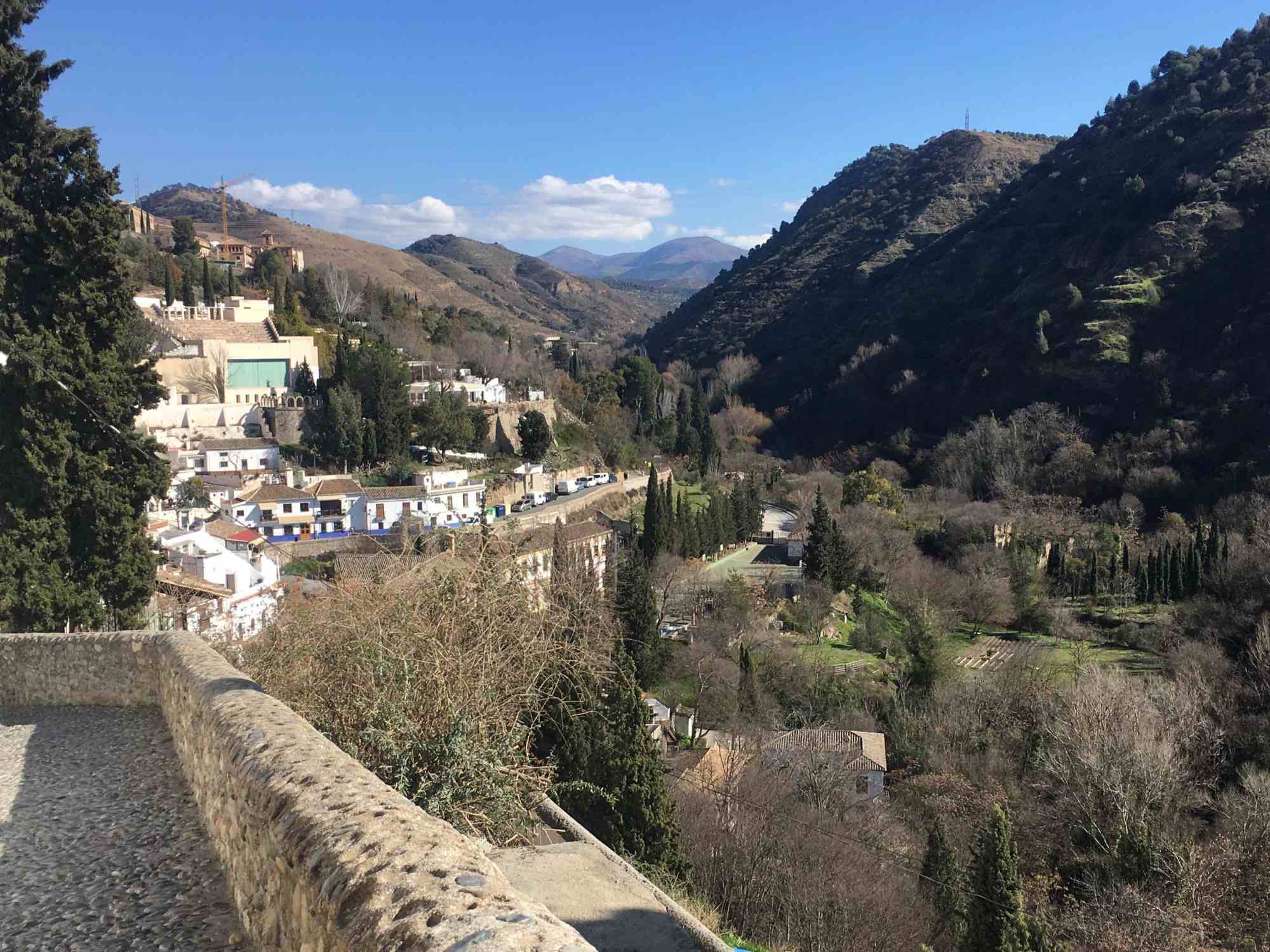
Sacromonte
Just outside Granada’s old city walls lies Sacromonte, most famous for its cave houses. Historically, the residents of this neighbourhood were marginalised groups like the Roma, as well as converts from Islam and Judaism to Christianity. It was here that flamenco developed in Granada, and there are many atmospheric flamenco venues where you can catch a show.
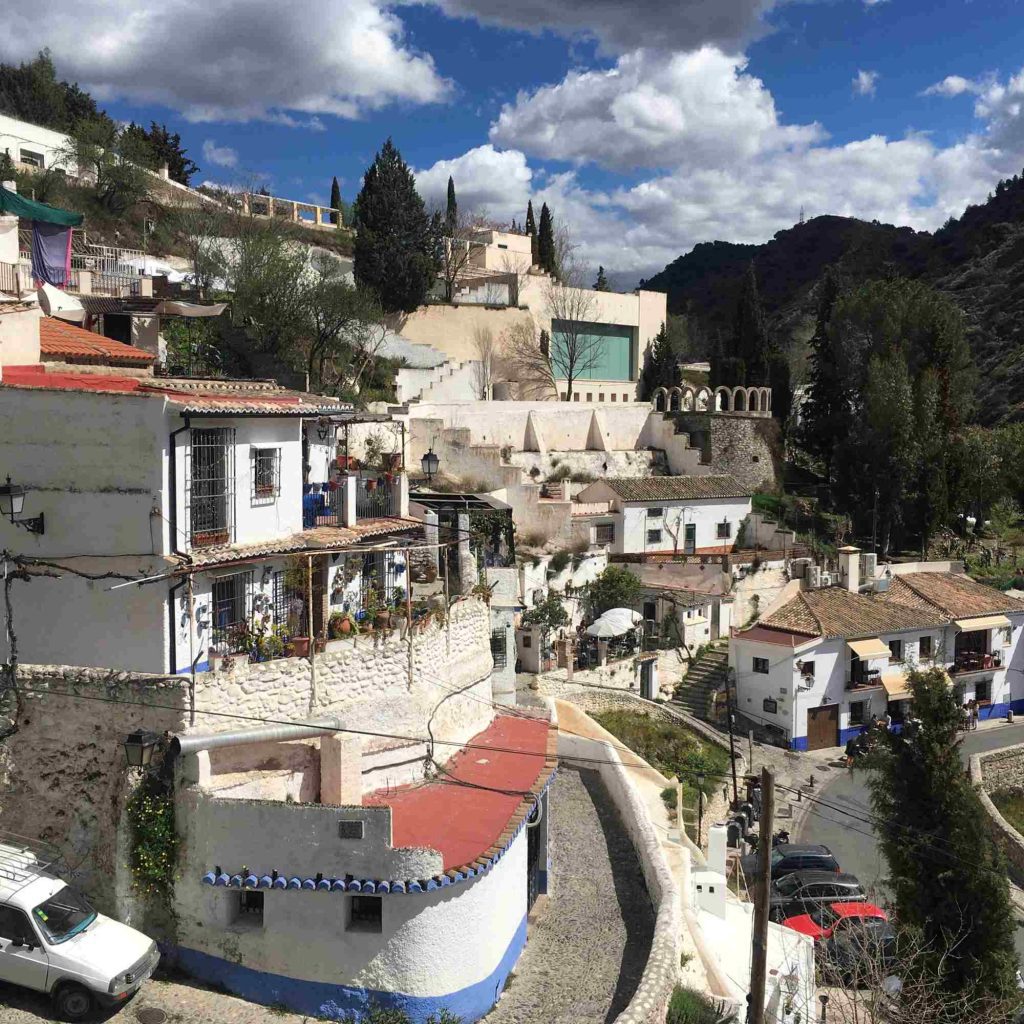
Sacromonte Caves Museum
The Sacromonte Caves Museum is worth visiting for a great insight into how and why people around the world have lived in caves, naturally focusing on the history of Sacromonte. There are also displays about local culture, arts and crafts, including flamenco, exhibited in caves in the hillside.
Official website: https://sacromontegranada.com/en/
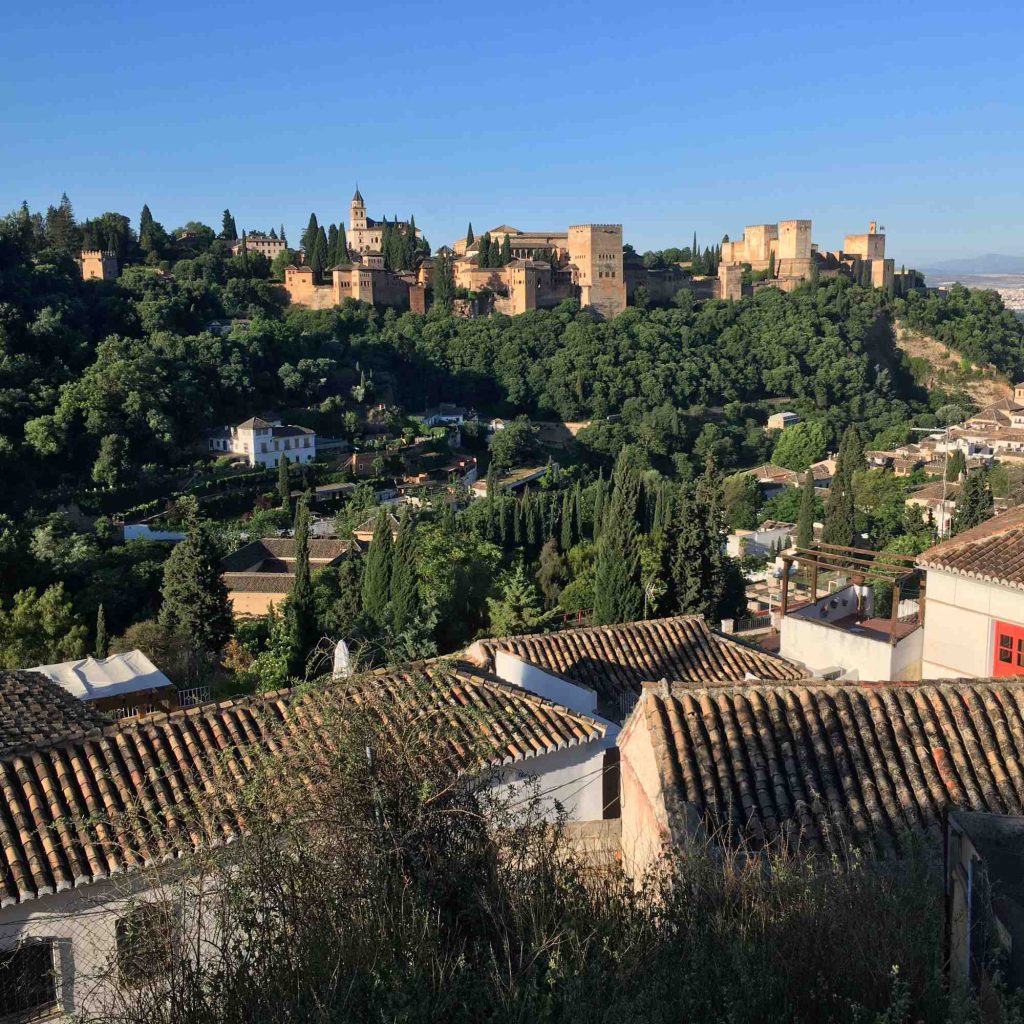
Mirador de Mario Maya
To get away from the traffic on the Camino del Sacromonte, head up to Calle Verea de Enmedio and Mirador de Mario Maya, which provides great views up the valley and across to the Generalife and Alhambra.
Abadía de Sacromonte
Whereas the cave houses seek to disappear into the hill, the huge Abadía de Sacromonte (Sacromonte Abbey) stands proudly up from the side of the valley. This abbey was established on the site where the relics of Granada’s patron St Cecilius were supposedly found in the late 16th century. Alongside the relics, there were books inscribed on thin leaves of lead that told the story of how St Cecilius and his companions were early Christian martyrs, killed by the Romans in the 1st century for refusing to renounce their faith. Unsurprisingly, the authenticity of the books is disputed, but the abbey developed into a major pilgrimage site and centre of learning. You can visit its church, cloisters and the cave chapels built where the relics were found. The small museum has a wonderful collection of old books and manuscripts, as well as the lead books.
Official website: https://ticketsgranadacristiana.com/en/monumentos/abadia-del-sacromonte/


Questions and Answers
You can see a show in one of the flamenco caves in Sacromonte. This might seem a bit touristy, but most visitors find it an atmospheric experience. The municipal auditorium La Chumbera also has flamenco performances showcasing up-and-coming local artists. The glass-backed stage gives views of the Alhambra, making for a dramatic setting.
Yes, there are a few private cave houses in Sacromonte that you can visit for a small fee – for example on Calle Verea de Enmedio. Most of the flamenco venues in Sacromonte are also in caves. The Sacromonte Caves Museum makes use of caves in the hillside for its exhibits on living in caves and other aspects of local culture.
The C34 bus serves Sacromonte, and you can catch it from Gran Vía de Colón near the cathedral or Plaza Nueva. There are various bus stops, including at Sacromonte Abbey.
Sacromonte Abbey is an impressive complex of buildings with an informative audio guide included in the ticket price. The visit includes the abbey’s church and cloisters, and the small museum has a wonderful collection of old books and manuscripts. You can also go down into the cave chapels, built where the relics of Granada’s patron St Cecilius were supposedly found in the late 16th century.