
Albaicín
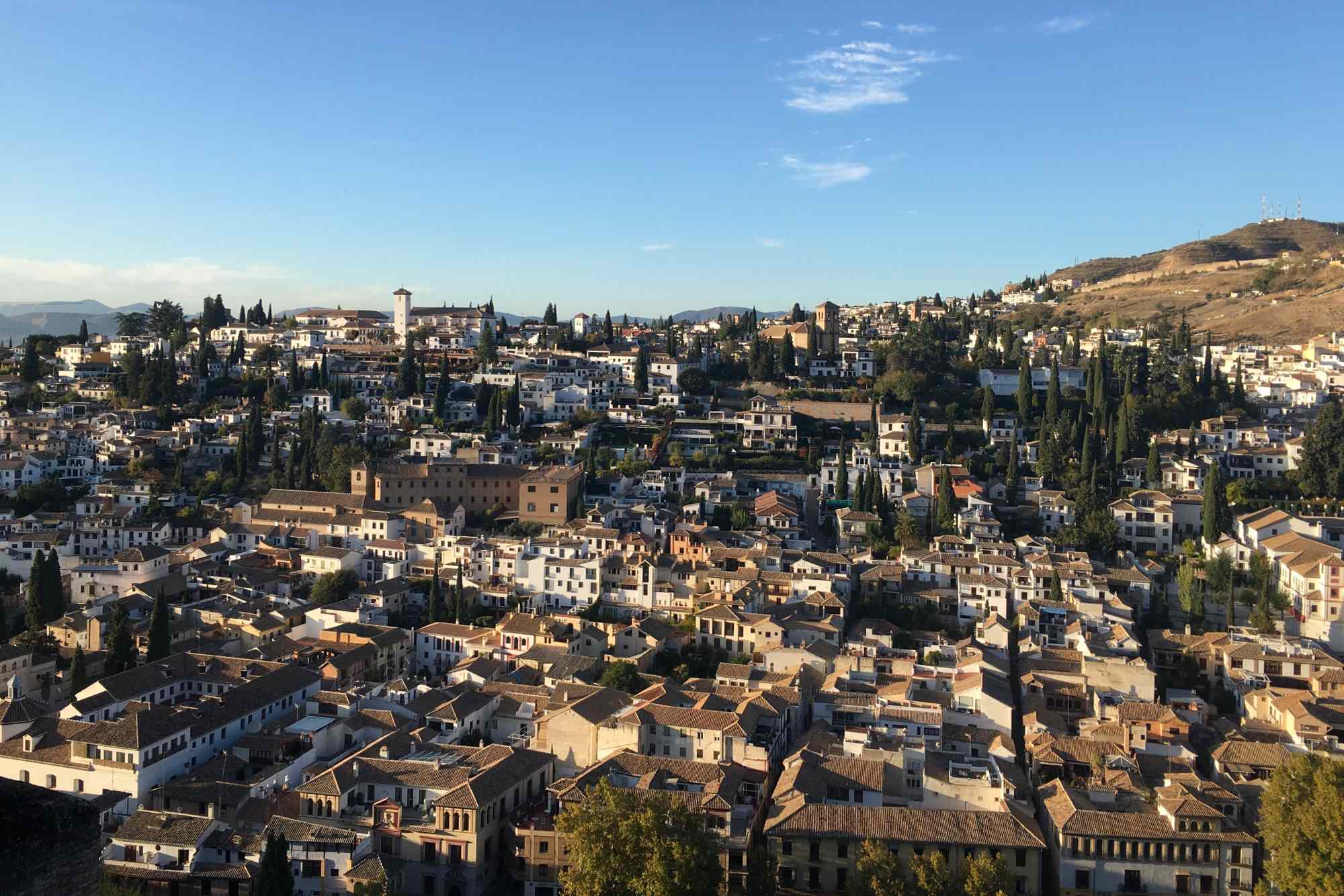
The Albaicín is the part of Granada which best preserves the character of the Muslim medieval city, and together with the Alhambra it is listed as a UNESCO World Heritage Site. You can easily spend a morning or afternoon getting lost in its narrow streets and alleyways, or stopping for some refreshment at one of the many charming squares. There are plenty of interesting sights too, but none take very long to visit.
The Albaicín is generally divided into the Albaicín Bajo and Albaicín Alto – the lower and upper Albaicín. The lower Albaicín, which is the part adjacent to Calle Elvira, Plaza Nueva and the River Darro, is really an extension of the city centre and can easily be reached on foot. The upper Albaicín is the heart of the neighbourhood, but you may want to take a bus up – particularly if it’s hot!
Lower Albaicín
In the lower Albaicín, you can visit the Bañuelo ($) (Arab baths), the Archaeological Museum, two beautifully restored Moorish houses called Casa de Zafra ($) and Casa Horno de Oro ($), the Maristán ($) (a former hospital) and a museum about the Inquisition in the Casa de los Olvidados ($).
There are several interesting churches, including San Pedro y San Pablo ($), where you can go inside to admire the 16th-century carved wooden ceiling and climb up the bell tower for great views. Two of the other churches – San Juan de los Reyes and San José – are the only ones in Granada whose bell towers were once minarets.
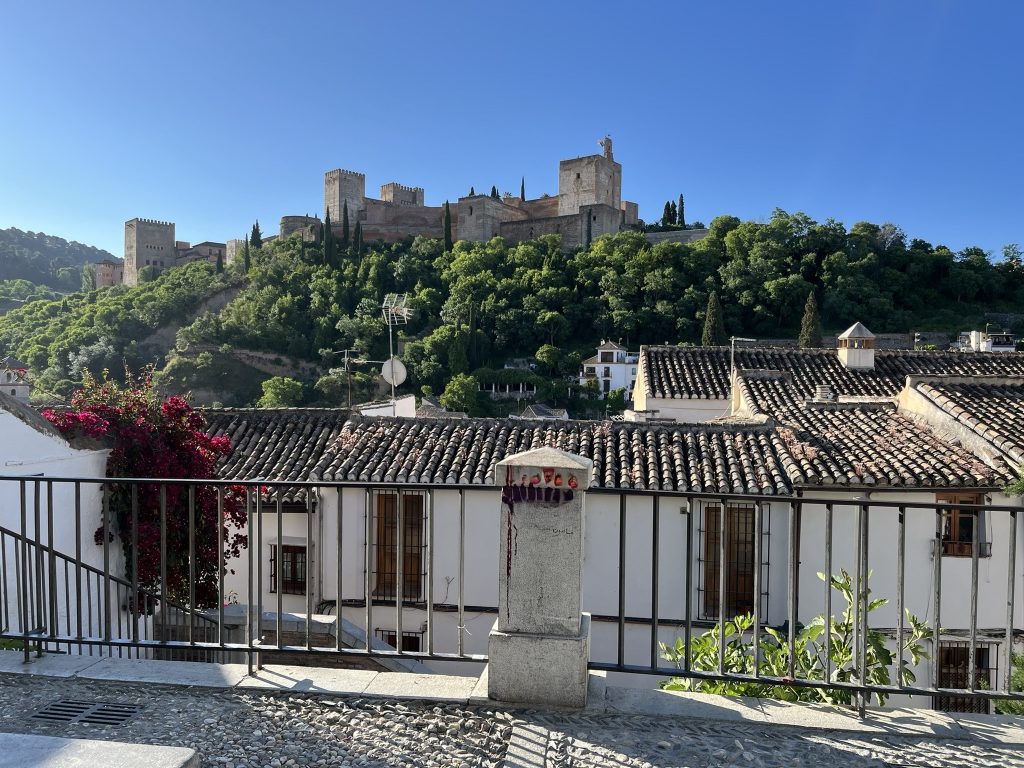
Even though you’re down in the valley, you still get great views up to the Alhambra from Paseo de los Tristes and Mirador Placeta de los Carvajales.
Official websites:
- Banuelo: https://www.alhambra-patronato.es/en/discover/andalusian-monuments/el-banuelo
- Casa de Zafra (in Spanish): https://www.albaicin-granada.com/casa-de-zafra-centro-de-interpretacion-del-albaicin/
- Casa Horno de Oro: https://www.alhambra-patronato.es/en/discover/andalusian-monuments/casa-horno-de-oro
Upper Albaicín
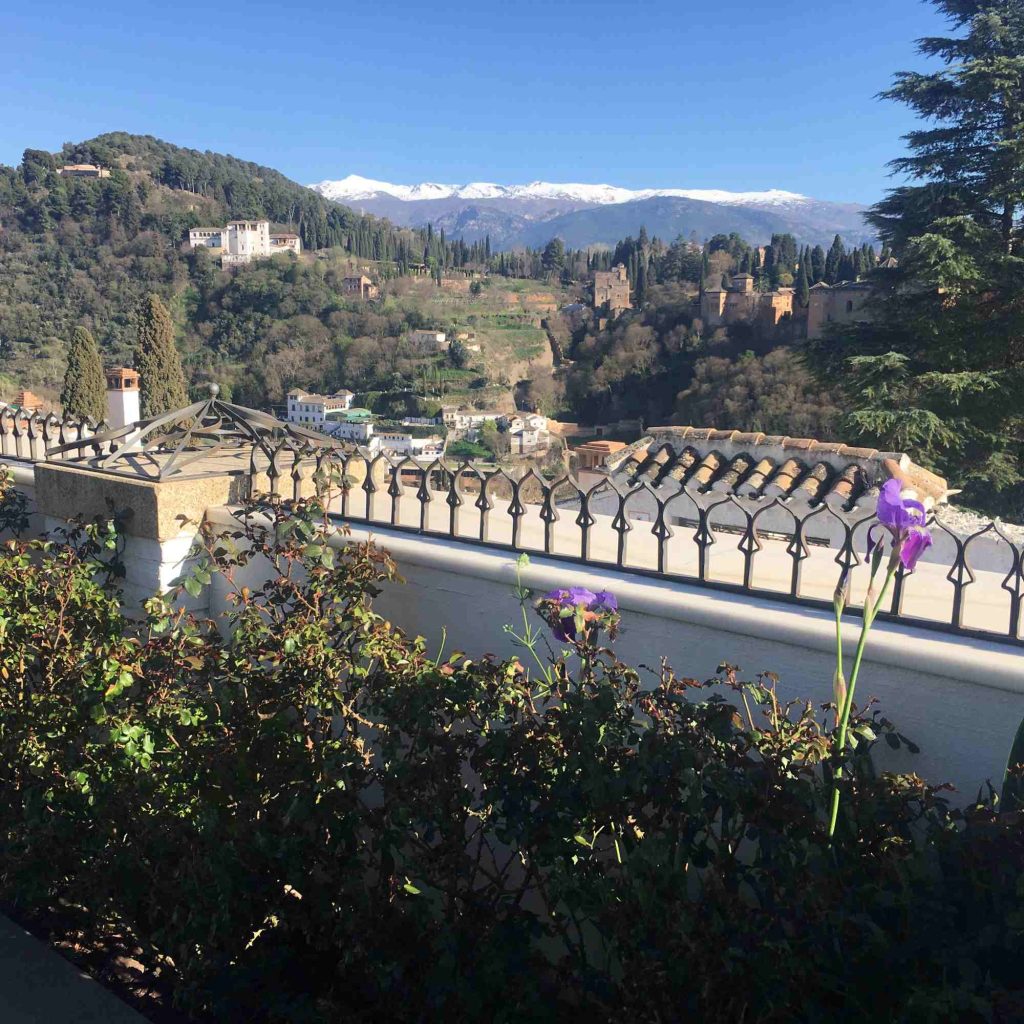
The upper Albaicín occupies the same hill as the earlier Iberian and Roman settlements. These days, it is centred around Plaza Larga, which hosts a market and has many bars and restaurants. However, the first stop for tourists tends to be Plaza de San Nicolás for the spectacular views of the Alhambra. The Mirador de San Cristóbal and Mirador de la Lona are two other great viewpoints.
The sights in the upper Albaicín include the Palacio Dar Al-Horra ($), which was the home of Aixa, the mother of Granada’s last Muslim king, Boabdil. Over 500 years later the Belgian artist Max Moureau made his home in the Carmen de los Geranios, which he donated to the city of Granada on his death. It’s a fascinating place to visit, both for the exhibitions of his art and the house itself, which consists of a number of small buildings set around courtyards at various levels.
There are several lovely churches in the upper Albaicín. El Salvador ($) was built on the site of the former main mosque in the Albaicín, and the original ablution fountain is still preserved in its delightful orange tree courtyard. San Miguel Bajo ($) and San Nicolás both have amazing views from their bell towers. San Nicolás has recently been restored, and has some interesting modern architectural elements and works of art integrated into the Mudéjar-style church.
Official websites:
- Palacio Dar Al-Horra: https://www.alhambra-patronato.es/en/discover/andalusian-monuments/palacio-de-dar-al-horra
- San Nicolás church: https://ticketsgranadacristiana.com/en/monumentos/iglesia-de-san-nicolas-torre/
Carmens
The Albaicín is dotted with carmens – a characteristic style of house with a garden that dates from after the Christian conquest, but draws on Moorish influences. You can’t see inside as they’re surrounded by high walls with few windows facing outwards. But behind the walls are delightful gardens and terraced patios, planted with vines, as well as orange, lemon, apple and pomegranate trees. The word carmen comes from the Arabic “karm”, which means vine.
Most carmens are privately owned, but some have been converted into restaurants with unbeatable views across to the Alhambra. You pay a bit of a premium, of course, but if you can afford it, it’s well worth it – particularly for lunch on a bright winter’s day or, at hotter times of year, an evening meal enjoying the cool breeze and the floodlit Alhambra.
Related articles
Related audio tours
Related itineraries

Granada
2-3 Nights

Granada Day Trip
Day Trip

Questions and Answers
It’s hard to say, because there are so many places in Granada where you get great views of the Alhambra. The best-known viewpoint is Mirador San Nicolás, with its panoramic vista of the Alhambra and Generalife, set against the backdrop of the Sierra Nevada mountains. But there are also fantastic views from Mirador Placeta de los Carvajales and the church towers of San Miguel Bajo and San Nicolás, as well as from the top floor of the Archaeological Museum and several of the restaurants in the Albaicín.
Strictly speaking, you cannot see the sunset from Mirador de San Nicolás because it faces in the wrong direction. However, the soft light around sunset is beautiful against the backdrop of the Alhambra. To actually watch the sun go down, head to Mirador de San Cristóbal, San Miguel Alto or Lavadero de la Puerta del Sol in the Realejo district.
Yes, you can walk from the centre of Granada to the Mirador de San Nicolás and other parts of the Upper Albaicín, but it is quite a steep climb. You’ll be walking on cobbled streets and alleyways, so wear comfortable shoes. On hot days it’s a good idea to take a bottle of water. If you prefer, you can take a bus up instead.
The C31 bus serves the Albaicín, and you can catch it from Gran Vía near the cathedral or Plaza Nueva. There are various stops, including Paseo de los Tristes, Plaza de San Nicolás and San Miguel Bajo.
The C32 bus links the Alhambra with the Albaicín, and you can catch it from just below the ticket office. There are various stops in the Albaicín, including Paseo de los Tristes, Plaza de San Nicolás and San Miguel Bajo.
It is free of charge to visit the Carmen de los Geranios, and the archaeological museum is free for EU residents. Most other sights have a small entry fee, but the Palacio Dar Al-Horra, Bañuelo, Casa de Zafra, Casa Horno de Oro and Maristán have free entry on Sunday mornings.