
Nasrid Kingdom of Granada (1238–1492)
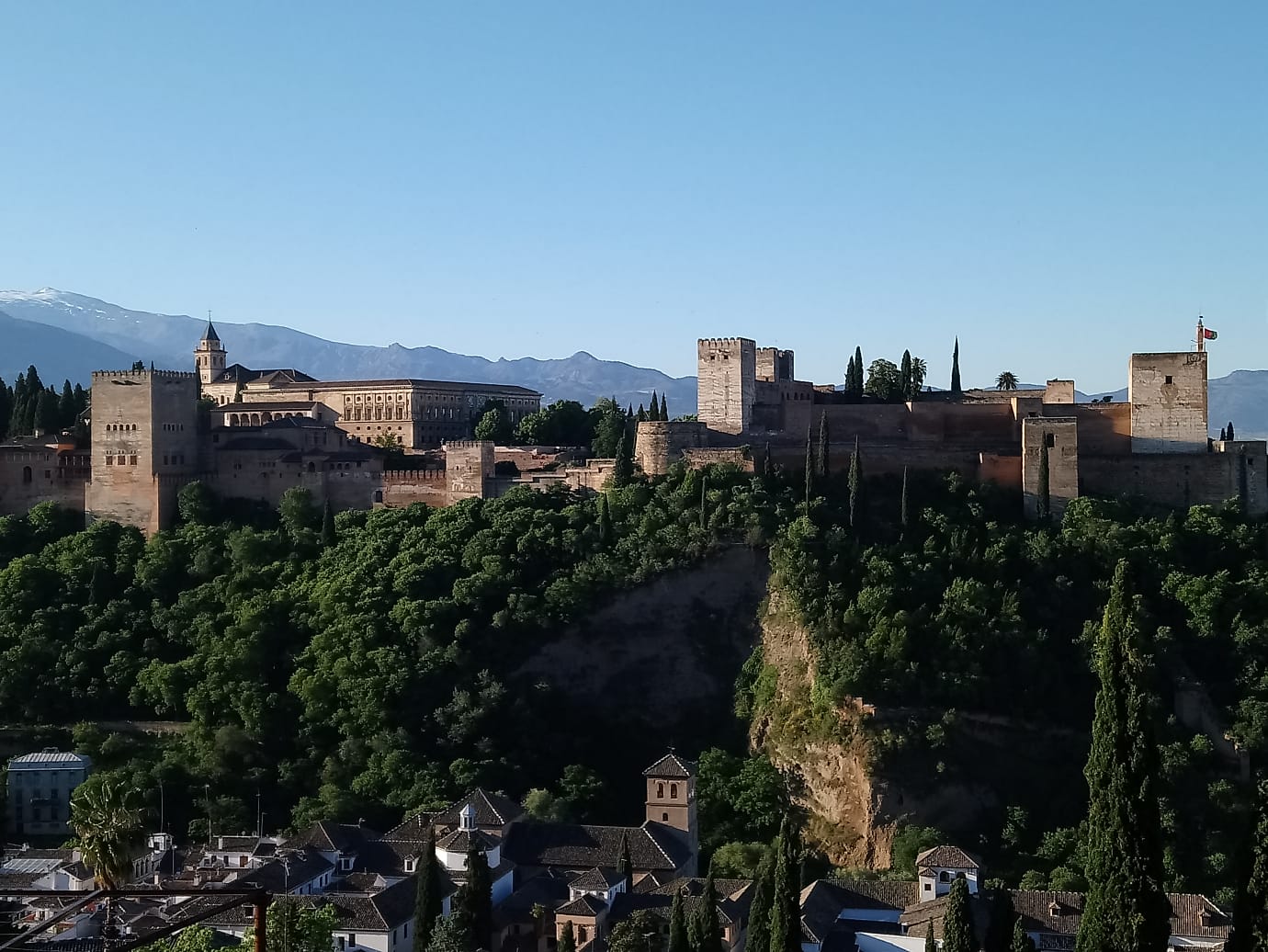
During the final period of Muslim rule in Andalucía, only the Nasrid Kingdom of Granada held on, covering roughly the modern provinces of Málaga, Granada and Almería. Although politically weak and riven by internal conflict, it was a centre of culture and learning which left us an incredible legacy, including the Alhambra.
Nasrid Dynasty
The collapse of Almohad power in Al-Andalus led to chaos in the areas still under Muslim control, which once again broke up into a number of smaller taifas. Against this backdrop, one Muslim prince known as Ibn al-Ahmar took control of various cities including Granada, where he founded the Nasrid Dynasty as Muhammad I in 1238.
In 1246 Muhammad paid homage to Ferdinand III of Castile as a vassal – in other words, he recognised that he was subservient to Ferdinand, setting the stage for the relationship between Castile and Granada over the following 250 years. Muhammad also agreed to pay a tribute to Ferdinand and to provide him with military support, which he most notably did in 1248 when Ferdinand laid siege to and finally conquered the Muslim stronghold of Seville.
Economically strong but politically weak
Granada could afford to pay tributes to Castile thanks to the wealth generated by its silk industry. A new variety of mulberry tree was introduced to improve the quality of the silk, which was exported to Castile, northern Europe and around the Mediterranean. Málaga was also famous for its beautiful gilded ceramics, some of which you can see in the Museum of Málaga.
The kingdom’s wealth allowed its rulers to invest in magnificent civil and military architecture. As soon as he took power, Muhammad I (reigned 1238–1273) decided to move the royal residence from the Albaicín to the hill on the opposite side of the River Darro. This would evolve into the palatine city known as the Alhambra, but only the Alcazaba was built during his reign.
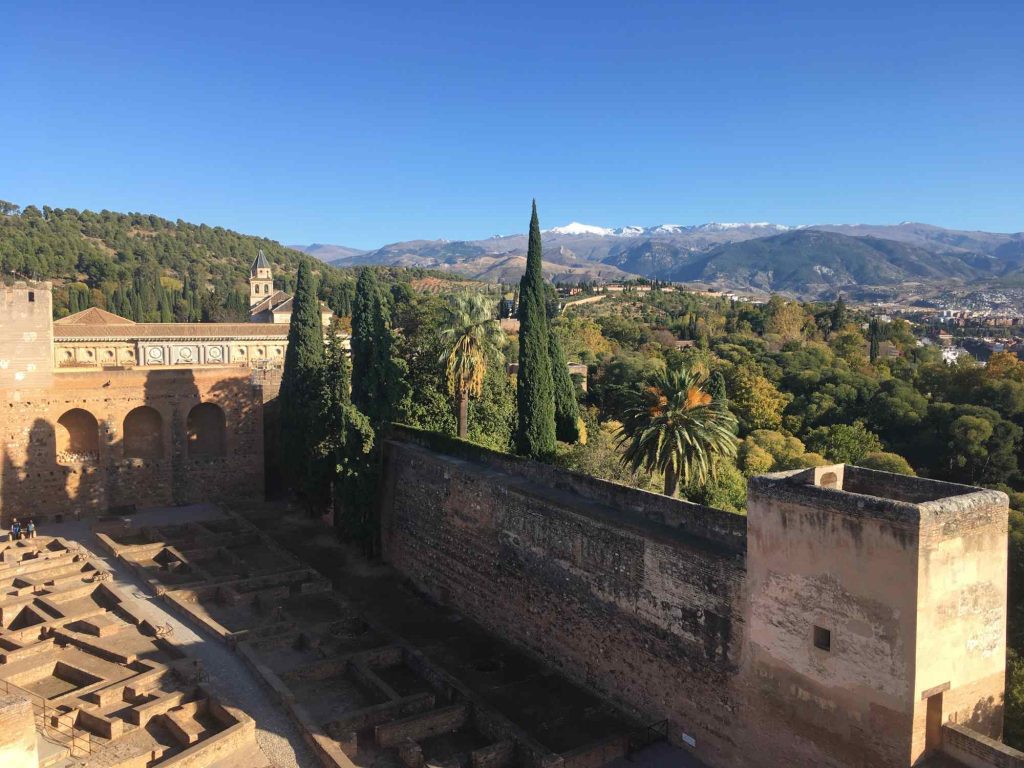
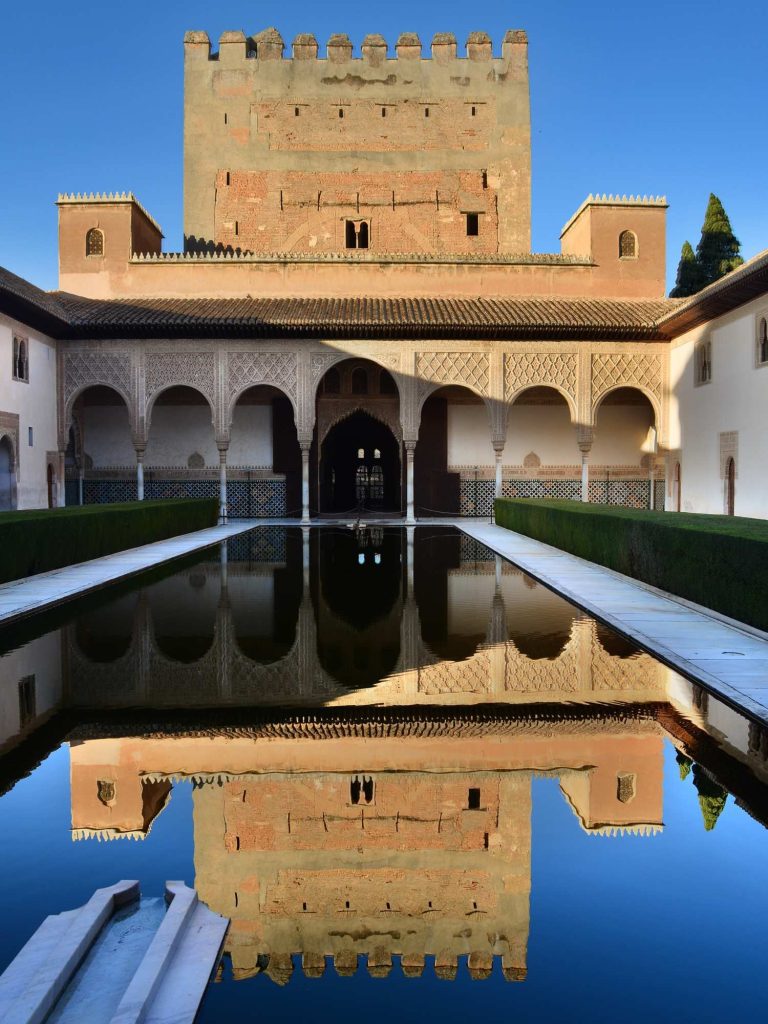
The finest examples of Nasrid architecture are from the 14th century, particularly during the reigns of Yusuf I (reigned 1333–1354) and Muhammad V (reigned 1354–59, 1362–1391). This is when the Comares Palace and Palace of the Lions were added to the Alhambra.
Other Nasrid buildings in Granada include the Madraza, which was an important centre of learning, and the Maristán hospital, built in response to the Black Death.
Under the Nasrids, Málaga became the principal port, and its fortifictations at the Gibralfaro and Alcazaba were greatly enhanced.
Muhammad V and Pedro I
Throughout its history, the Nasrid Kingdom was riven by internal conflicts, ranging from palace intrigues to outright civil wars. The reign of Muhammad V was no exception, but after he was deposed in 1359 by his half-brother Ismail II, he was able to regain the throne with the help of a powerful ally: the Christian king of Castile, Pedro I. Muhammad V repaid the favour by coming to Pedro’s aid in his war against his half-brother Enrique II, although ultimately Enrique defeated Pedro.
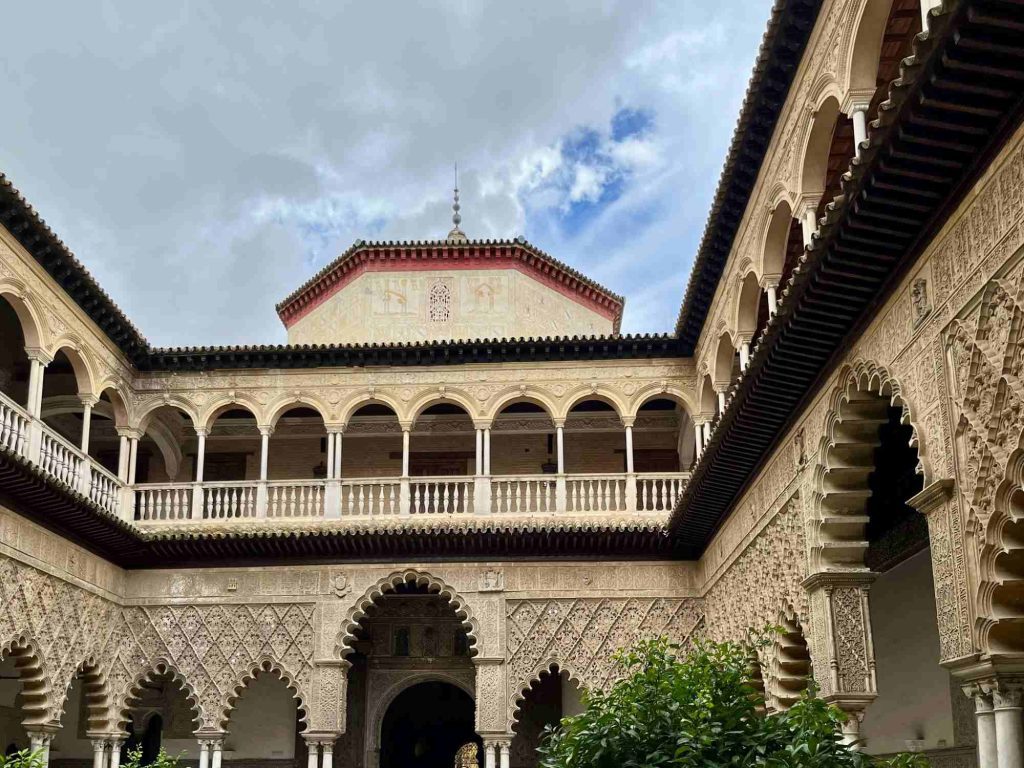
The alliance between Muhammad and Pedro was based on Muhammad’s regular payment of his tributes to Pedro, but it appears the two men developed a genuine friendship and mutual respect. This led to an interchange of ideas and people between the two kingdoms: Pedro I’s palace in the Real Alcázar in Seville was deeply influenced by the Alhambra, and workers from Granada helped to build it.
Muley Hasan, Aixa and Boabdil
In its final decade, the Nasrid Kingdom descended into political chaos, partly fuelled by the decision of Muley Hasan (reigned 1464–82, 1483–85) to marry Zoraya, a Christian slave girl who had converted to Islam. Head-over-heels in love with her, he neglected his other wives, including his senior wife Aixa. She moved away from the Alhambra to the Dar al-Horra Palace in the Albaicín, where she focused on promoting the interests of her son Boabdil (reigned 1482–83, 1487–92).
Meanwhile, war broke out with the Christians, who under Isabella I of Castile and her husband Ferdinand II of Aragón had decided that it was time to end the Muslim presence on the Iberian Peninsula once and for all. In 1482 Boabdil overthrew his father, but the following year he was captured by the Christians at the Battle of Lucena.
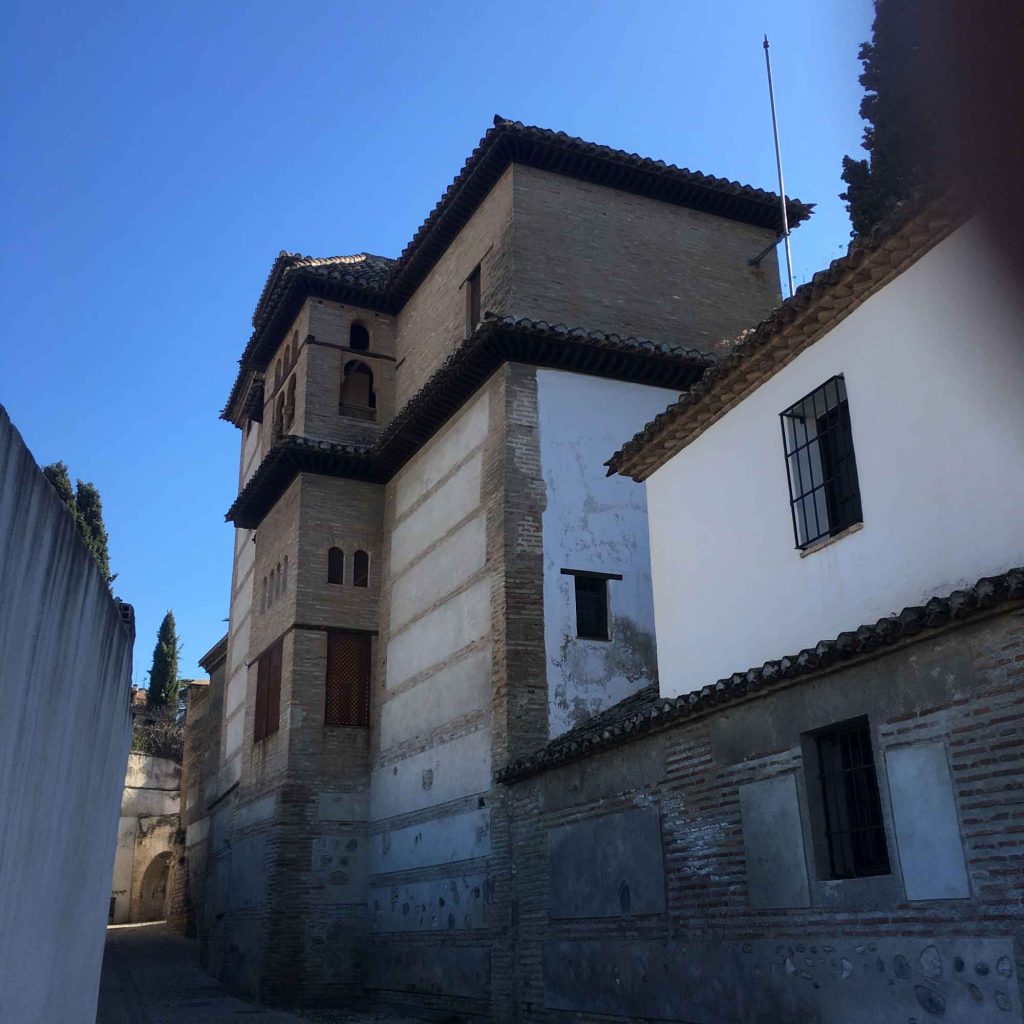
End of Muslim rule
Muley Hasan briefly returned to the throne, but the Christians released Boabdil on the promise that he would continue the civil war against his father, now as their vassal. After waging a war against his father and then his uncle, Boabdil retook power, but his kingdom was fatally weakened. At the start of 1492 he was forced to hand over the keys of Granada to Isabella and Ferdinand.
Aftermath
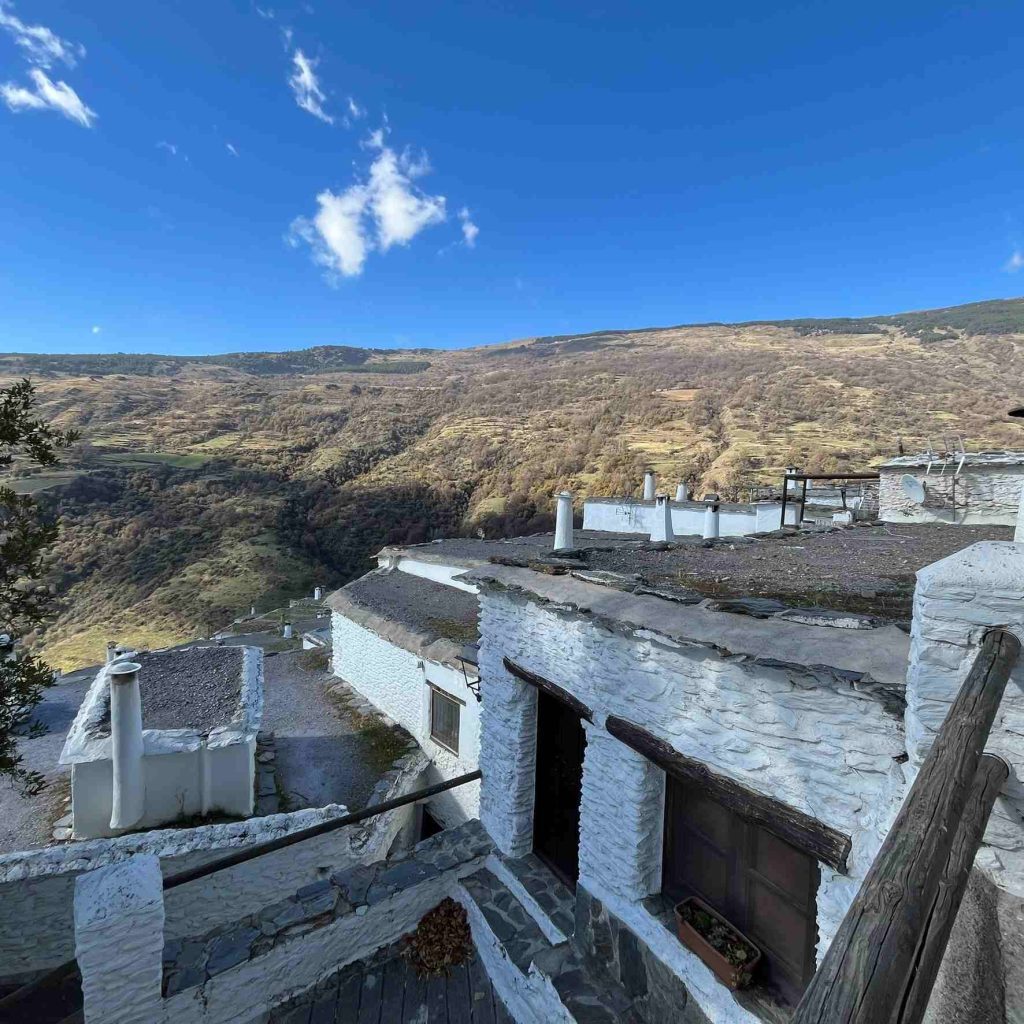
Boabdil and many of his closest followers moved to the Alpujarra, before continuing to North Africa the following year. Most ordinary Muslims had no choice but to remain where they were, and initially they were permitted to continue practising their faith. However, after a Muslim rebellion (1499–1501) which was brutally repressed, they were forced to choose between conversion and exile. Those who converted became known as the Moriscos, but religious and cultural tensions remained.
After the Rebellion of the Alpujarras (1568–71), the Moriscos were expelled from Granada and resettled across the rest of Spain. Finally, between 1609 and 1613, Philip III expelled the Moriscos from all of Spain, arguing that they would never be properly assimilated and that they therefore represented a threat to Spain. Of those that survived the dangerous journey into exile, most settled in North Africa or the Ottoman Empire.
Related articles
Related audio tours
Related itineraries


Questions and answers
The name Nasrid comes from the fact that its founder, Muhammad I, came from the Banu Naṣr clan.
The Moriscos were people of Muslim origin who had converted to Christianity.
The final Muslim king of Granada was known as Boabdil, although his official name was Muhammad XI. He also had the nickname El Rey Chico (Boy King) due to his youth.
The Rebellion of the Alpujarras was a revolt against the Christian rulers by the Moriscos in what had been the Kingdom of Granada. It gained most support in the Alpujarras.