
Emirate of Córdoba (711–929)
For over five centuries, Muslim rulers controlled the whole of Andalucía, and even the word Andalucía comes from “Al-Andalus”, the name given by the Muslims to their territories in the Iberian Peninsula. And for another 250 years after that, they clung onto power in the Kingdom of Granada.
During the first two hundred years of Muslim rule, Córdoba was the capital of a powerful Emirate which covered most of modern Spain and Portugal.
Muslim conquest
In the early 700s, the Umayyad Caliphate ruled the entire Muslim world, which by that time included the Middle East, Persia and North Africa. The exact circumstances of how the Umayyads conquered Hispania are disputed, but we know that in 711 Hispania was racked by civil war, with the Visigoth king Roderic having recently overthrown his predecessor. Roderic’s enemies probably requested assistance from Musa Ibn Nusayr, the provincial governor of North Africa, which had been conquered by the Umayyad Caliphate.
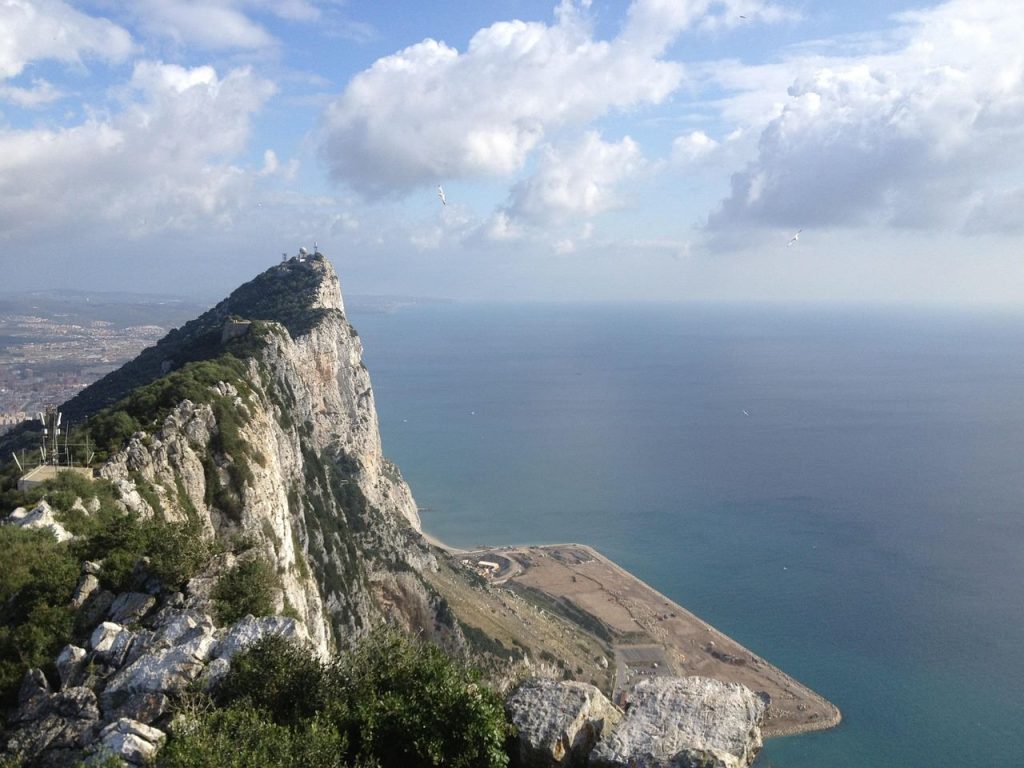
Musa agreed to send his general Tariq ibn Ziyad, who set up his initial base at Gibraltar. As an aside, the rock is named after him: the word Gibraltar derives from Jebel at-Tariq, which means Mountain of Tariq. Tariq defeated and killed Roderic at the Battle of Guadalete, which may have taken place near Jerez de la Frontera. He followed this up with another victory over the rump of the Visigoth forces near Écija.
Encouraged by this success, Musa decided to conquer the whole of the Visigoth kingdom. In 712 he joined Tariq with a larger Arab and Berber force, and together they quickly subdued most of Hispania.
There was a slight setback at the Battle of Covadonga (722) in modern-day Asturias, a minor skirmish which the Christians would later claim as their first victory over the Muslims. In any case, it is true that the Muslims never managed to take the central part of northern Spain around Cantabria and Asturias.
From Hispania, the Umayyad armies continued into what is now France, once again winning several crushing victories. Their seemingly unstoppable advance was finally brought to a halt by the Frankish general Charles Martel at the Battle of Poitiers in 732, and by 750 they had been pushed back south of the Pyrenees.
Expansion of the Christian kingdoms
Over the following 750 years, starting from what is now Asturias, the Christian kingdoms in the Iberian Peninsula gradually expanded southwards at the expense of the Muslim ones, although the fortunes of the various sides changed many times along the way.
Although the Christian kingdoms were intermittently pushing south, Andalucía remained almost entirely in Muslim hands for over 500 years from the invasion in 711. The region has a wealth of heritage from that period, including some of the greatest historic monuments in Andalucía.
Independent Emirate
Initially, Al-Andalus was a province of the Umayyad Caliphate, ruled by a Caliph in Damascus, who was the political and spiritual leader of the ummah – the entire Muslim world. However, in 750 the Abbasid Dynasty overthrew the Umayyads after defeating them at the Battle of the Zab. The Abbasids went on to massacre the Ummayad royal family, but one of the few survivors – a young prince called Abd al-Rahman – fled to Al-Andalus. After landing at Almuñecar, he gained support from local power brokers, who helped him to overthrow the Abbasid Caliphate’s unpopular governor. In 756 he proclaimed himself the independent emir of Al-Andalus in Archidona.
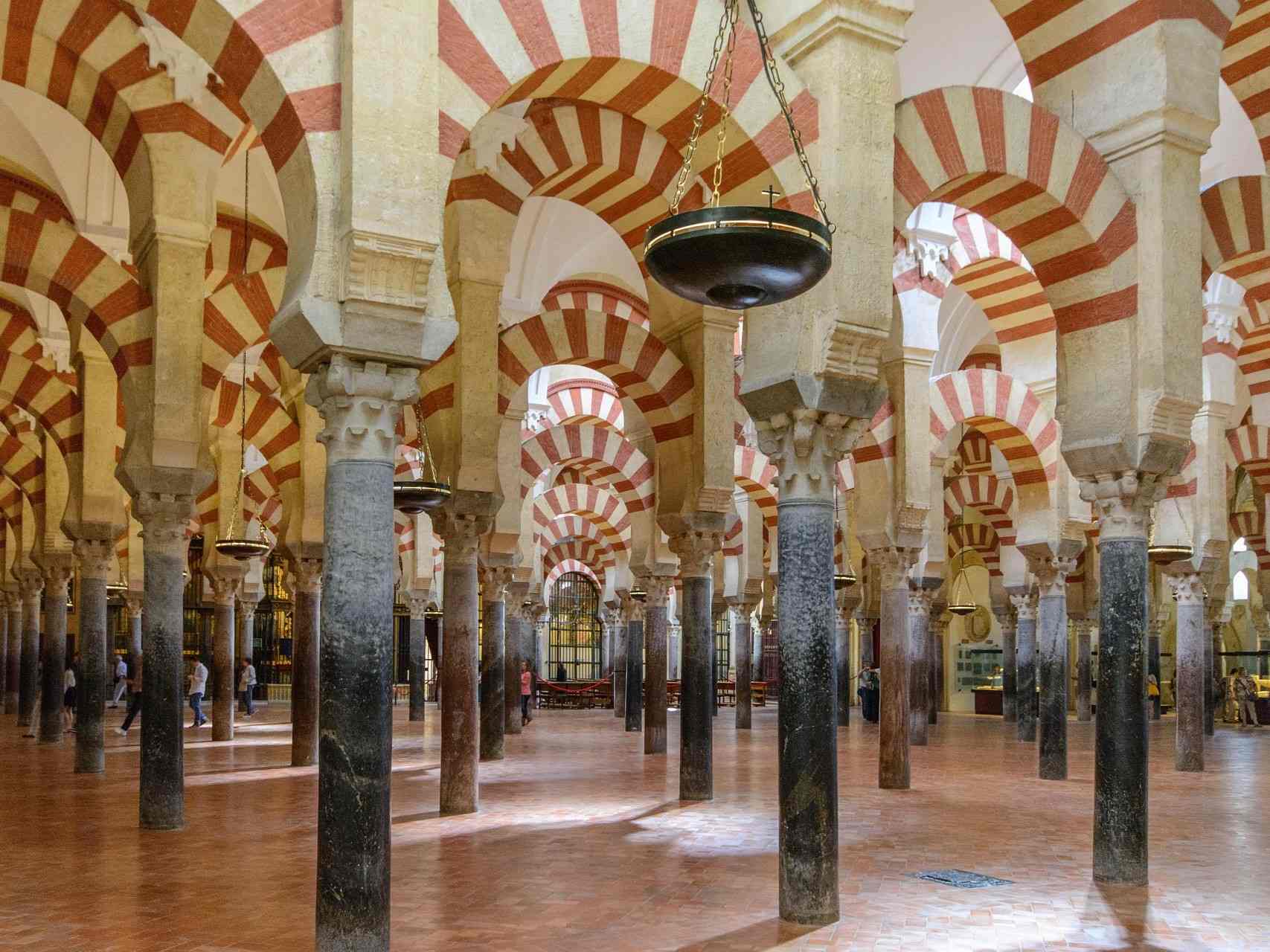
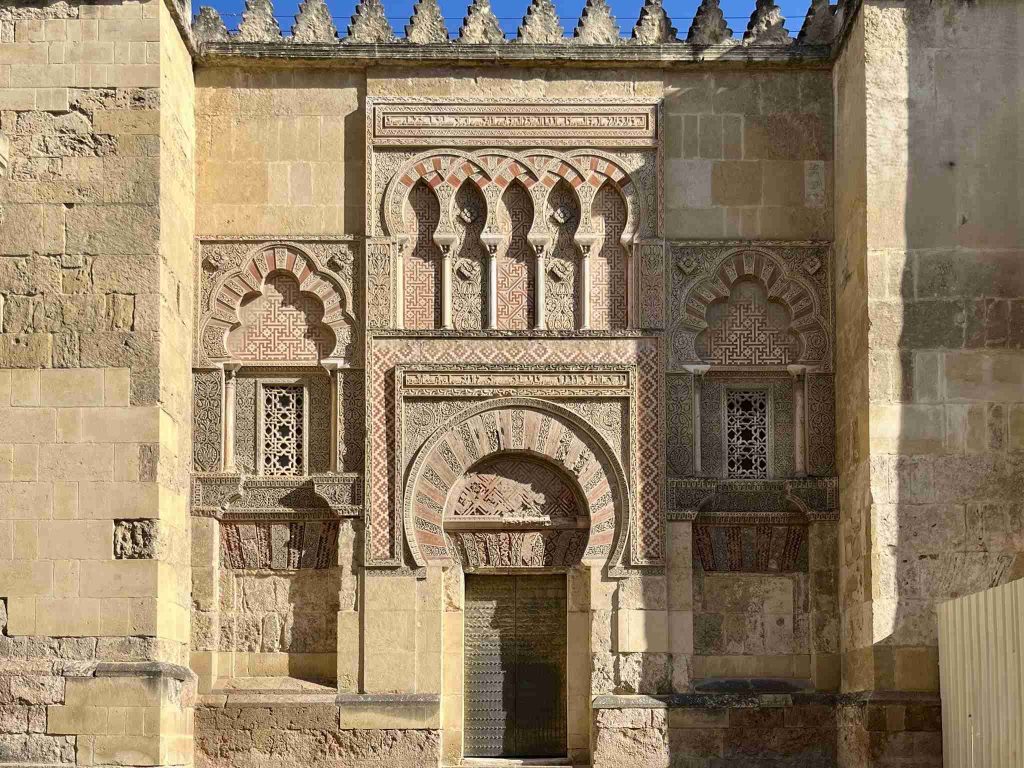
Abd al-Rahman took over a fractious territory, with rivalries between the Arabs, North African Berbers and Christians. By the end of his reign he had largely succeeded in pacifying the situation, and he was ready to think about his legacy. That meant establishing monumental buildings, including a great mosque in Córdoba, where the whole Muslim population could gather for Friday prayers. The mosque was later expanded on three occasions to keep up with Córdoba’s growing population, reaching its present size in the late 10th century.
Economy
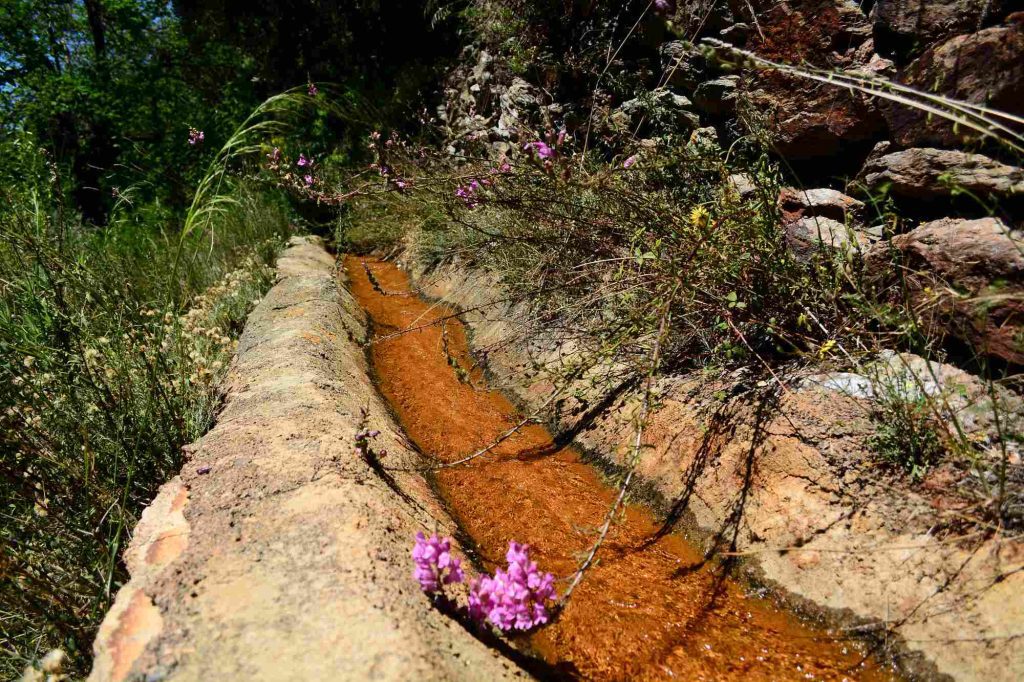
While its Christian rivals in the north remained relatively weak, the Emirate of Córdoba was the pre-eminent power in the Iberian Peninsula. Its economy was based on agriculture, including the classic “Mediterranean triad” of grain, olives and grapes, as well as new crops like sugar cane, cotton and pomegranates. Irrigation systems were upgraded, allowing new areas to be brought into production. The extensive network of irrigation channels first established during this period is still in use in places like the villages of the Alpujarra.
In the 9th century, a small and unprepossessing creature which would go on to transform the economy of Al-Andalus arrived in the peninsula: the silkworm. Silkworms live exclusively off mulberry leaves, and mulberry trees happen to grow really well in the Sierra Nevada mountains. Up until this point, the Byzantine Empire had a monopoly on silk production in Europe, but now it faced competition from the Emirate of Córdoba. You can still see occasional mulberry trees in the mountains.
Religious tolerance
The Emirate was fairly tolerant of Christians and Jews, who had to pay an additional tax, but were otherwise allowed to continue practising their respective faiths. Arabic soon became the main language of Al-Andalus, but it was probably only in the 10th century – 200 years after the conquest – that the majority of the population had converted to Islam. This helps to explain the relatively relaxed – or even lax – interpretation of Islam during this period, including the continued consumption of wine.
Umar ibn Hafsūn rebellion
Towards the end of the 9th century there was a major rebellion led by Umar ibn Hafsūn, who was a Muladí – descended from Christian converts to Islam. His followers included Muladís, Berbers and Christians, united by their resentment of the predominantly Arab ruling class. Ibn Hafsūn himself apparently converted to Christianity, and you can still visit the ruins of the church that was carved out of the rocks at his remote hideout at Bobastro, in the mountains of Málaga.
Related articles
Related audio tours
Related itineraries


Questions and answers
An emirate is a territory ruled by an emir, which historically meant a Muslim commander or leader.
Al-Andalus was the part of the Iberian Peninsula ruled by the Muslims at any particular time. At its greatest extent, it covered almost the whole peninsula.
The name Gibraltar derives from Jebel at-Tariq, which means Mountain of Tariq. It is named after Tariq ibn Ziyad, who was one of the Muslim generals who conquered the Visigoth kingdom, using Gibraltar as his initial base.
The original mosque was built by Abd al-Rahman I, but it was subsequently extended on three occasions.