
Real Alcázar of Seville
“Real” means “royal”, and Seville’s Real Alcázar likes to claim it’s the oldest royal palace still in use in Europe. It’s a fascinating and beautiful place, and you can easily spend a whole morning or afternoon exploring the palaces and gardens.
History
The first castle in this area was built during the Caliphate of Córdoba in the 10th century. The site was chosen for its location right by the main port, which at that time was on a secondary branch of the River Guadalquivir that no longer exists.
The city’s Christian kings also built their royal residences here. Alfonso X – the son of Ferdinand III who had conquered the city – built a Gothic palace during the second half of the 13th century, and around one hundred years later, Pedro I added his Mudéjar palace.
Architecture
Pedro I’s Mudéjar Palace
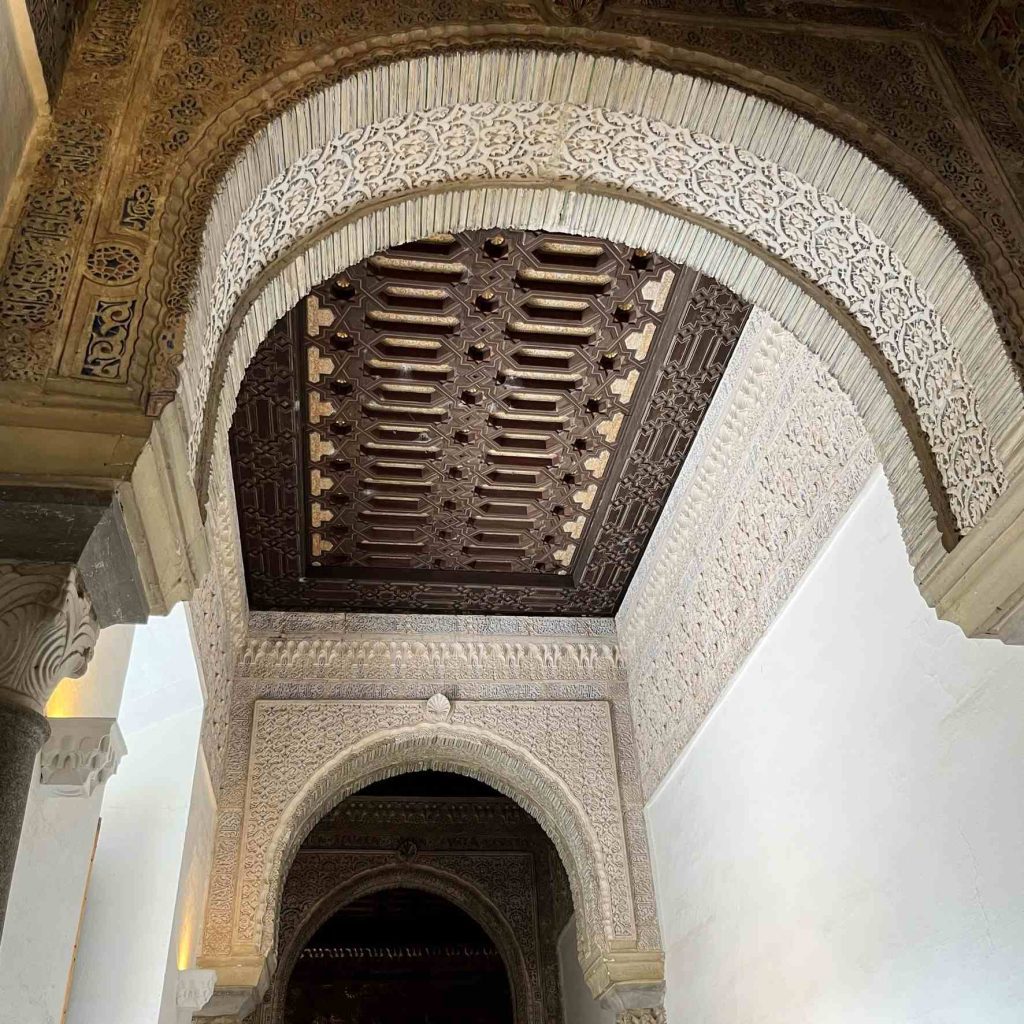
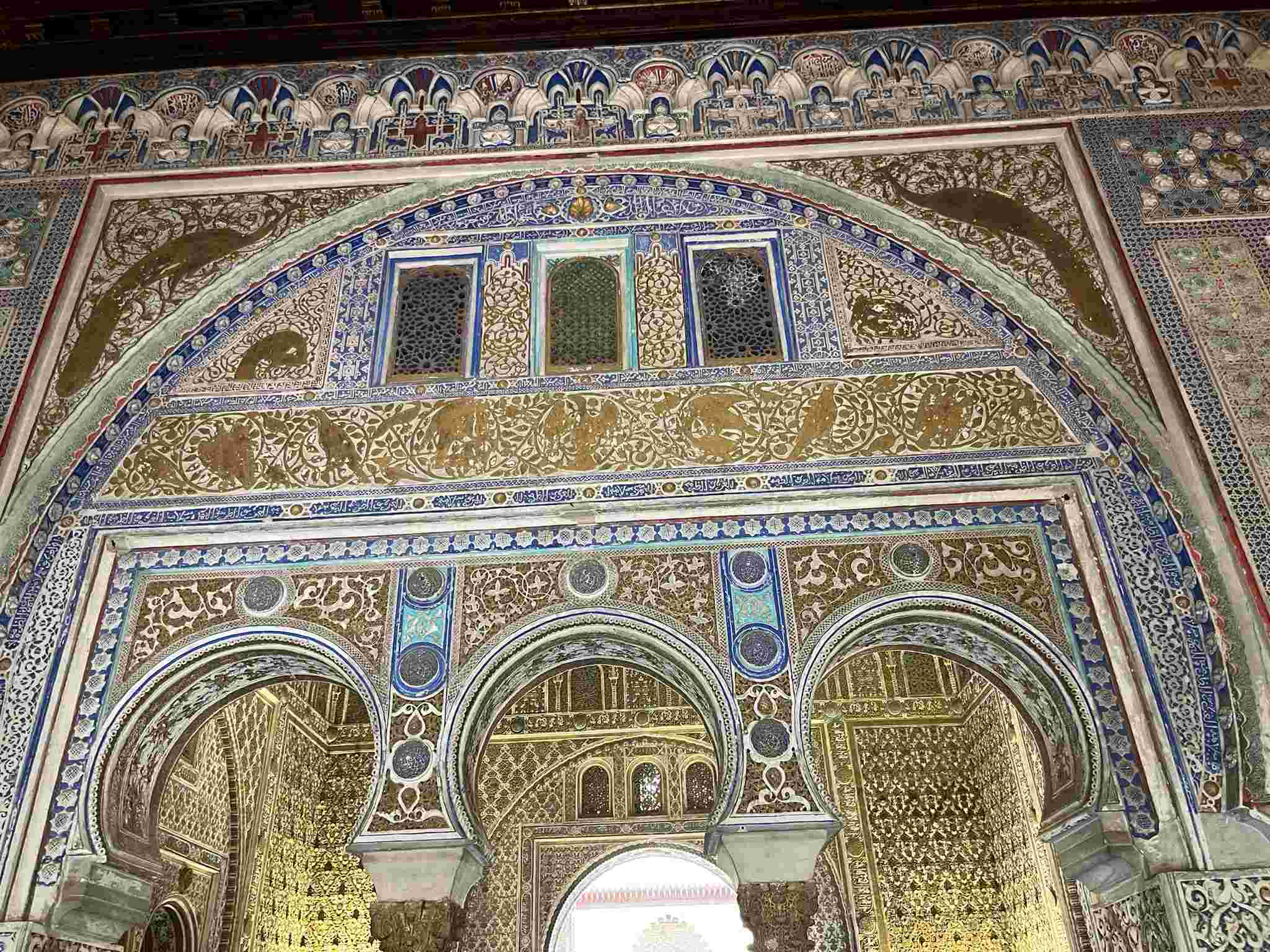
When you enter the Alcázar, you could be forgiven for thinking you’re in a Muslim palace like the Alhambra. In fact, very little remains of the original Muslim castle. What you can see straight ahead of you is Pedro I’s magnificent 14th-century residence. It was built around the same time as the Alhambra, but whereas Granada was still controlled by the Muslims in the 14th century, Seville was already in Christian hands. Nevertheless, Pedro chose to build his palace in what is known as the Mudéjar style, which introduces Christian elements into traditional Islamic and Jewish craftsmanship. No doubt he was influenced by his close relationship with Muhammad V, the ruler responsible for the Palace of the Lions in the Alhambra.
Pedro’s palace features patios, fountains, exposed brickwork, ornate stucco decoration, multifoil and keyhole arches, slender pillars and beautifully carved wooden ceilings. And a secret passage to escape potential assassins!
Gothic Palace
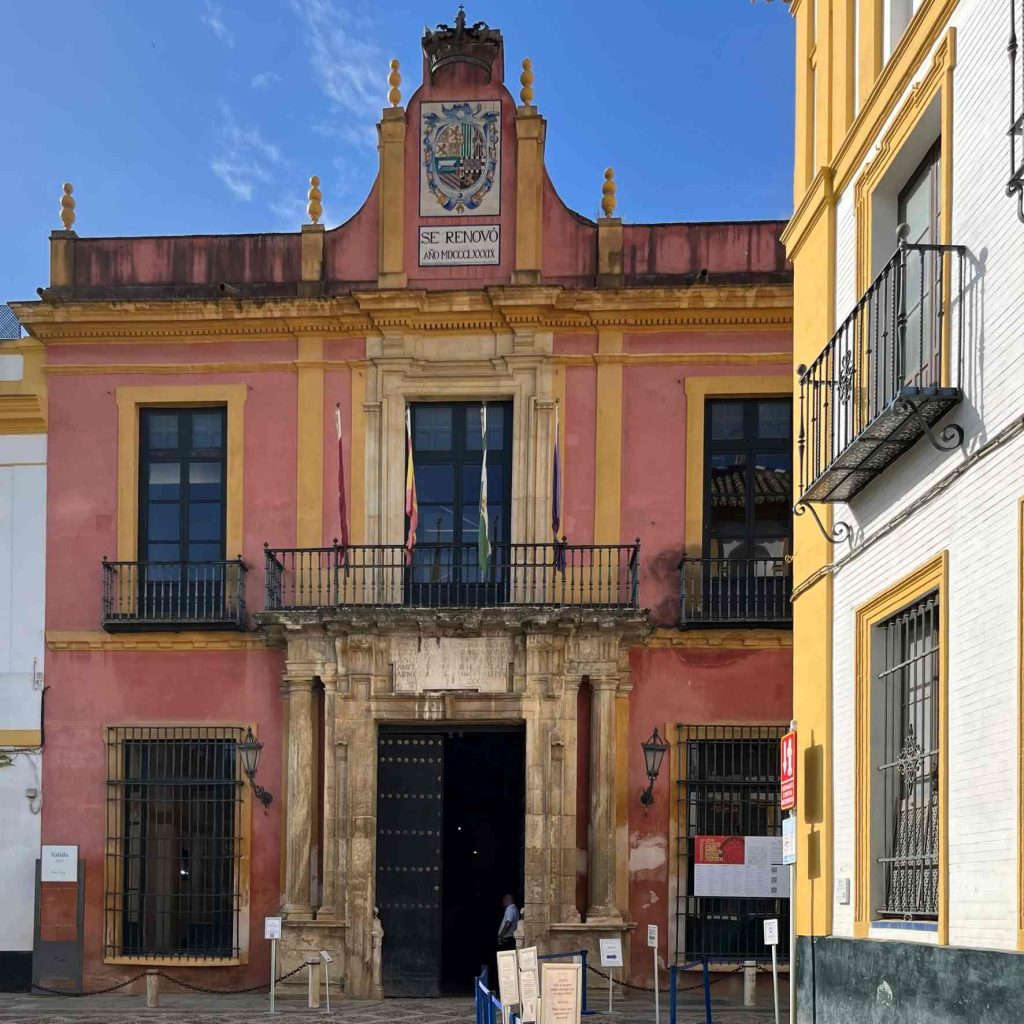
Whereas Pedro’s palace was intended as his personal residence, the older and more austere Gothic palace was a place for doing state business and receiving dignitaries. The palace includes a chapel, a room decorated with 18th-century tapestries and a banquet hall where the Emperor Charles V married Isabella of Portugal.
Later alterations
Over the centuries, the Alcázar has undergone many transformations as a result of the changing needs and tastes of the Spanish royal family. When they are in Seville, they still stay in the rooms above Pedro I’s palace, which were added in the 16th century.
Gardens
The palaces are set in beautiful gardens with over 170 different plant species from around the world. There are follies and fountains, and in good weather it’s a lovely place to spend some time. The gardens date right back to the Middle Ages, but they were completely remodelled in the Renaissance style in the 16th century.
Practicalities
- To avoid long queues and to make sure you get a ticket, you should buy your ticket in advance online. You will get a specific time slot. Arrive a little before the alloted time – you may need to wait in line before being let in.
- There is a combined ticket which includes a visit to the Upper Chambers – the royal family’s private chambers. While you don’t get much time in each room, you’re in a small group with a good audio guide, so it’s worth doing if you have time.
- Entry is free for residents of Seville. On Monday afternoons there are a limited number of free tickets for the general public available on the official website, but you need to be very lucky to get one. Bear in mind that these tickets are for the last hour before closing, so you might be a bit short of time.
- On summer evenings, there is a programme of concerts and dramatised tours.
Official ticket website: https://alcazarsevilla.org/prepara-la-visita/


Questions and answers
The Real Alcázar is on the site of a Muslim castle, but very little of that structure remains. Alfonso X of Castile built a Gothic palace during the second half of the 13th century. Pedro I of Castile then added his Mudéjar-style palace in the 14th century. He was probably inspired in his design choices by the Alhambra in Granada. Since then, the Alcázar has been adapted to changing tastes and requirements.
The Real Alcázar is still an official royal residence, where the royal family stay when visiting Seville. Their apartments are in the Upper Chambers.
Yes, it’s recommended to buy your ticket in advance for the Real Alcázar in Seville to avoid long queues and secure your preferred time slot.
The Upper Chambers are worth visiting if you have the time, as you get to see the Spanish royal family’s private residence. However, there is strict security, and the visit can feel a little rushed.
Only buy tickets from the Real Alcázar’s official website: https://alcazarsevilla.org. Other vendors may add a significant commission to the ticket price.
This is down to personal preference, but most visitors don’t book a guided tour. The palaces and gardens are lovely to stroll around in your own time. The entry ticket includes an audio guide that you can access via your phone. This provides a decent overview of the history and the main points of interest in the palaces.