
Mudéjar Architecture
Many of the styles of art and architecture you’ll see in Spain are very similar to ones you’ll find elsewhere in Europe – Romanesque, Gothic, Renaissance and Baroque, for example. But there’s one style that’s unique to Spain: Mudéjar.
A fusion of cultures
The name Mudéjar comes from the name given to the Muslims who lived in the medieval Christian kingdoms in the Iberian Peninsula. These Muslims ended up living in Portugal, Castile or Aragón as these countries expanded southwards, in the process occupying towns and territory that had been Muslim for hundreds of years. Some of the Muslims living there chose to head south to the areas still in Muslim hands, and in some cases they were expelled, but the Mudéjars were the ones who stayed.
The Mudéjars included many artisans, and they continued to work as before, maintaining their traditions and building techniques. However, at least in the case of the grand buildings that have survived until modern times, their clients were mainly Christian – kings, nobles and the Catholic Church. And of course they were working alongside Christian and Jewish artisans.
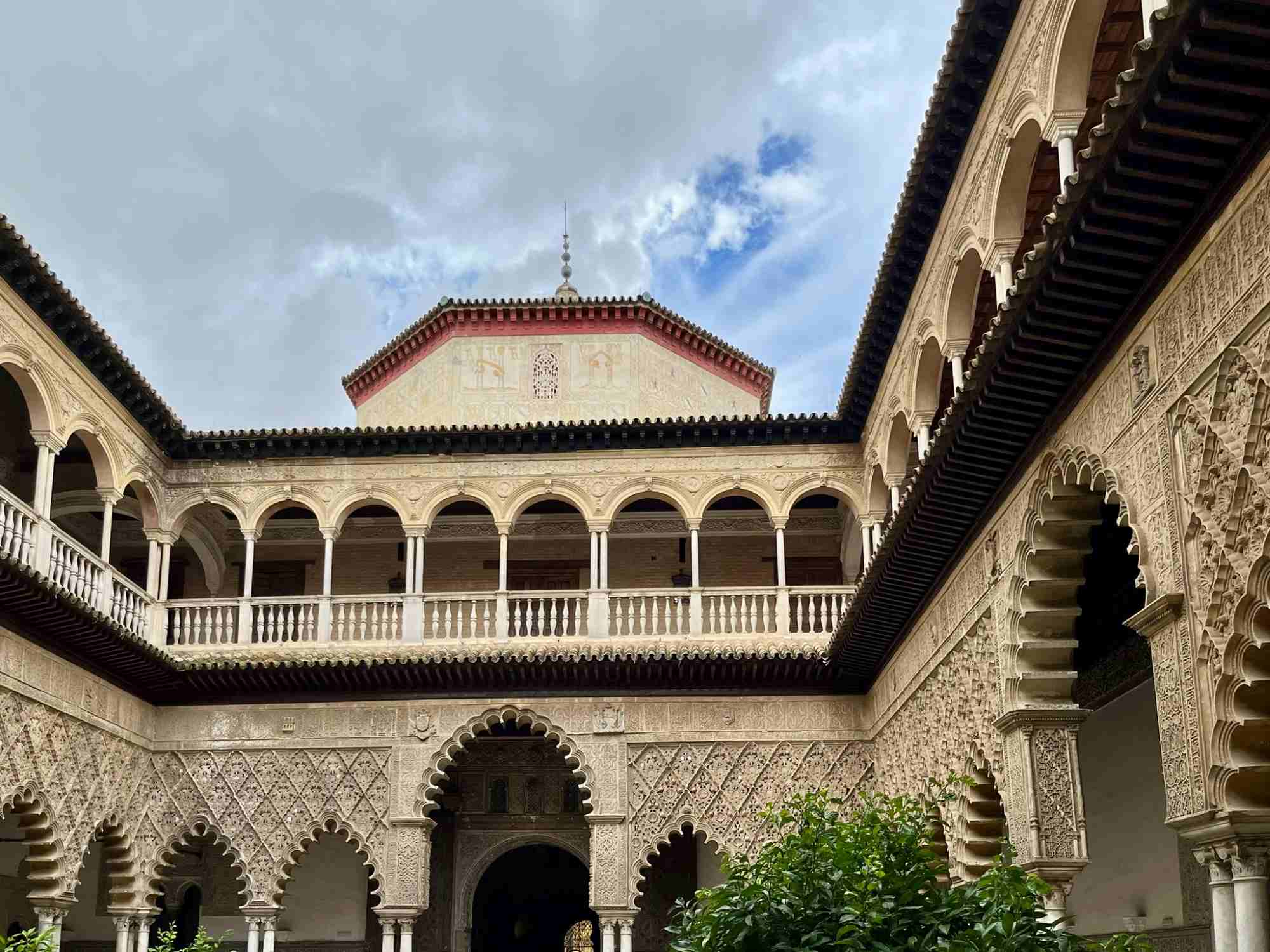
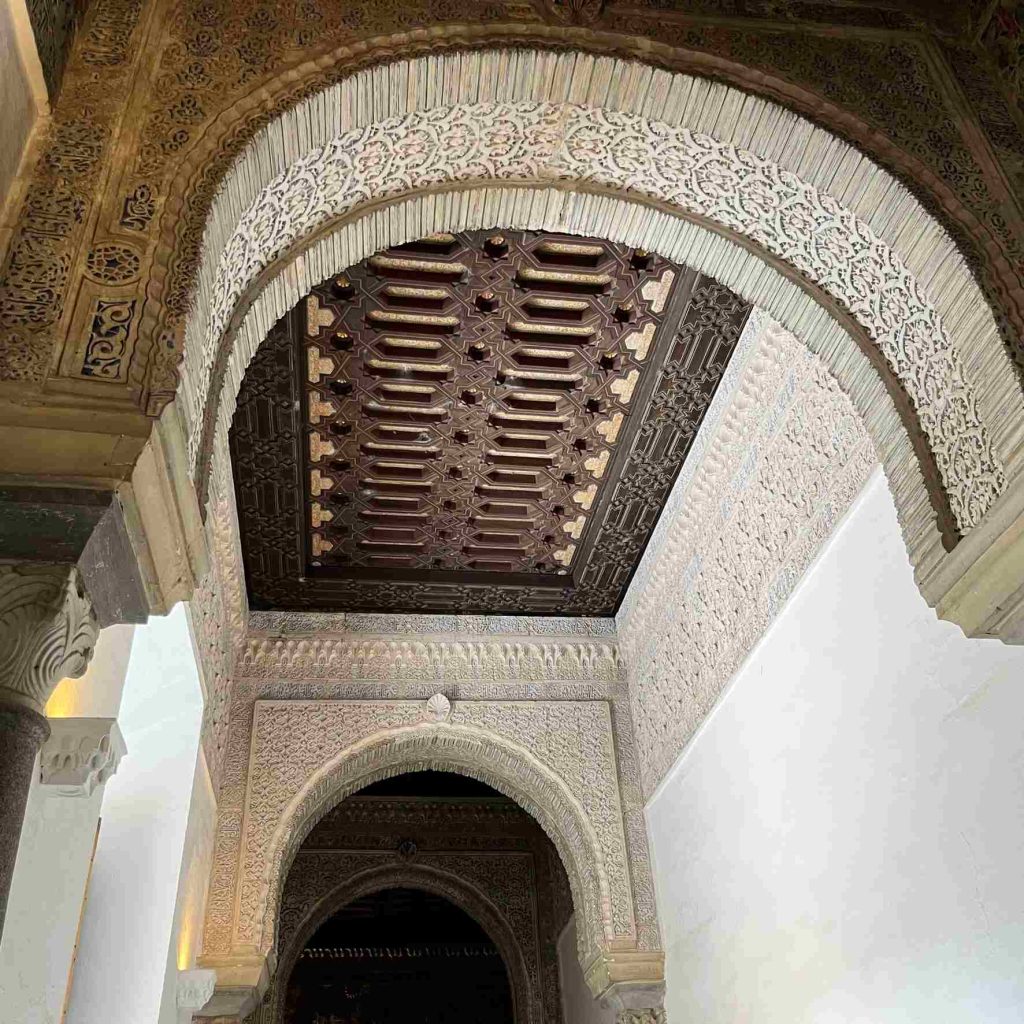
So, Mudéjar art and architecture was a fusion of the cultures of three religions – Islam, Christianity and Judaism – but the Islamic influence is strongest. The most characteristic element of Mudéjar architecture is the use of inexpensive but ornately decorated materials such as bricks, tiles, plaster and wood, rather than hewn stone or marble. They retain the geometric and vegetal patterns of Islamic architecture, but new designs also start to appear in the stucco and tile work, including coats of arms.
Early Mudéjar architecture is contemporary with Gothic architecture elsewhere in Europe, and it has some characteristics in common with it. Venetian Gothic architecture, which also had Islamic influences, is perhaps most similar, with its horseshoe and multifoil arches, slender columns and exposed brickwork. But it doesn’t have the same kind of stucco work or tiling, and it has vaulted ceilings rather than the beautifully carved, coffered wooden ceilings so often seen in Mudéjar architecture.
Examples of Mudéjar architecture
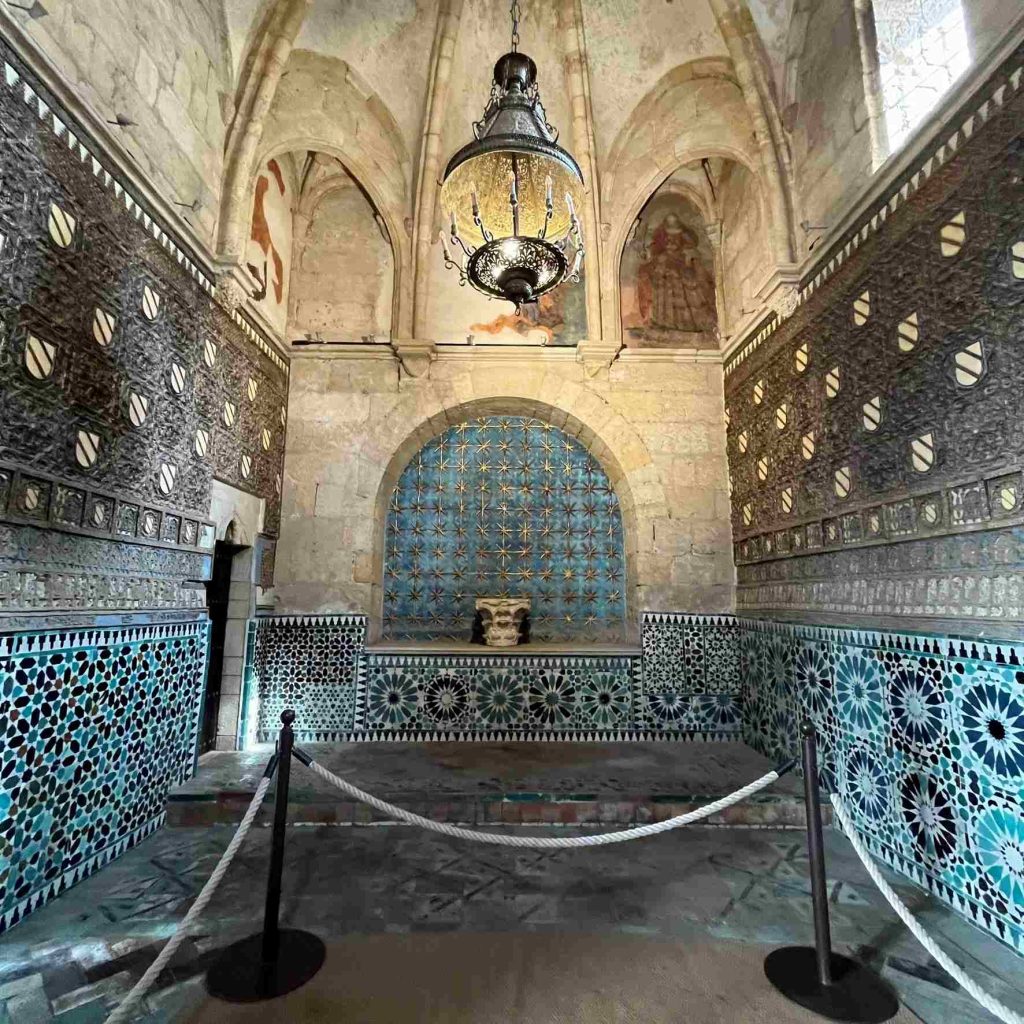
Perhaps the finest example of the Mudéjar style is Pedro I’s palace in the Real Alcázar in Seville, which actually employed artisans from the Muslim Kingdom of Granada, as well as local ones. Other beautiful examples from a similar period include the Chapel of San Bartolomé, Synagogue and Casa Árabe in Córdoba, as well as the church in the Convent of Santa Clara in Seville. The 13th-century Fernandine churches in Córdoba and Seville combine a more traditional Gothic structure with Mudéjar decorative elements.
Examples of the newer Mudéjar-Renaissance style include churches like Santa Ana and San Pedro y San Pablo in Granada, and the Casa de Pilatos mansion in Seville. The Cartuja Monastery in Seville has Gothic, Mudéjar and Renaissance elements.
In the Real Alcázar in Seville, you can also visit the Gothic palace, with its vaulted ceilings and stone walls. This is older than Pedro’s Mudéjar palace, which tells us something else about the Mudéjar style: it was a conscious choice, rather than a necessity born out of the skills of the local workforce. It was perfectly possible to erect more traditional Gothic buildings in Andalucía, but ultimately the Christian elite chose a local style that reflected the history and traditions of the Iberian Peninsula, even if that meant incorporating designs that many people associate with Islam.
Mix of styles
In practice, most historic buildings in Andalucía combine several architectural styles, including two or more of Gothic, Mudéjar, Renaissance and Baroque. There are all kinds of reasons for this: cathedrals and churches took a very long time to build, so the style in vogue when they were started was rarely the same as when they were finished; buildings were extended or refurbished in a different style from the original structure; and some buildings were partially destroyed in wars or by earthquakes, and then rebuilt in a newer style.
But there’s also another reason: the use of the term Mudéjar for art and architecture was coined in the 19th Century – the people designing and commissioning these buildings were simply creating what they hoped would be beautiful buildings, drawing on both local and imported traditions. So, even in buildings that haven’t been heavily modified, you’ll very often see design elements from various traditions alongside one another.
Related articles
Related audio tours
Related itineraries


Questions and answers
The Mudéjars were Muslims living in areas of the Iberian Peninsula controlled by the Christians, including the kingdoms of Castile and Aragón.
Mudéjar is a style of architecture that arose in the Christian kingdoms of Spain in the Middle Ages as a fusion of the cultures of three religions – Islam, Christianity and Judaism. It drew heavily on Islamic traditions and techniques, for example in its use of ornate plasterwork and wood carvings.
The Pedro I Palace in the Real Alcázar in Seville is generally considered the finest piece of Mudéjar architecture in Andalucía. The Chapel of San Bartolomé, Synagogue and Casa Árabe in Córdoba are other good examples.
Mudéjar architecture mainly used inexpensive materials such as bricks, tiles, plaster and wood.