
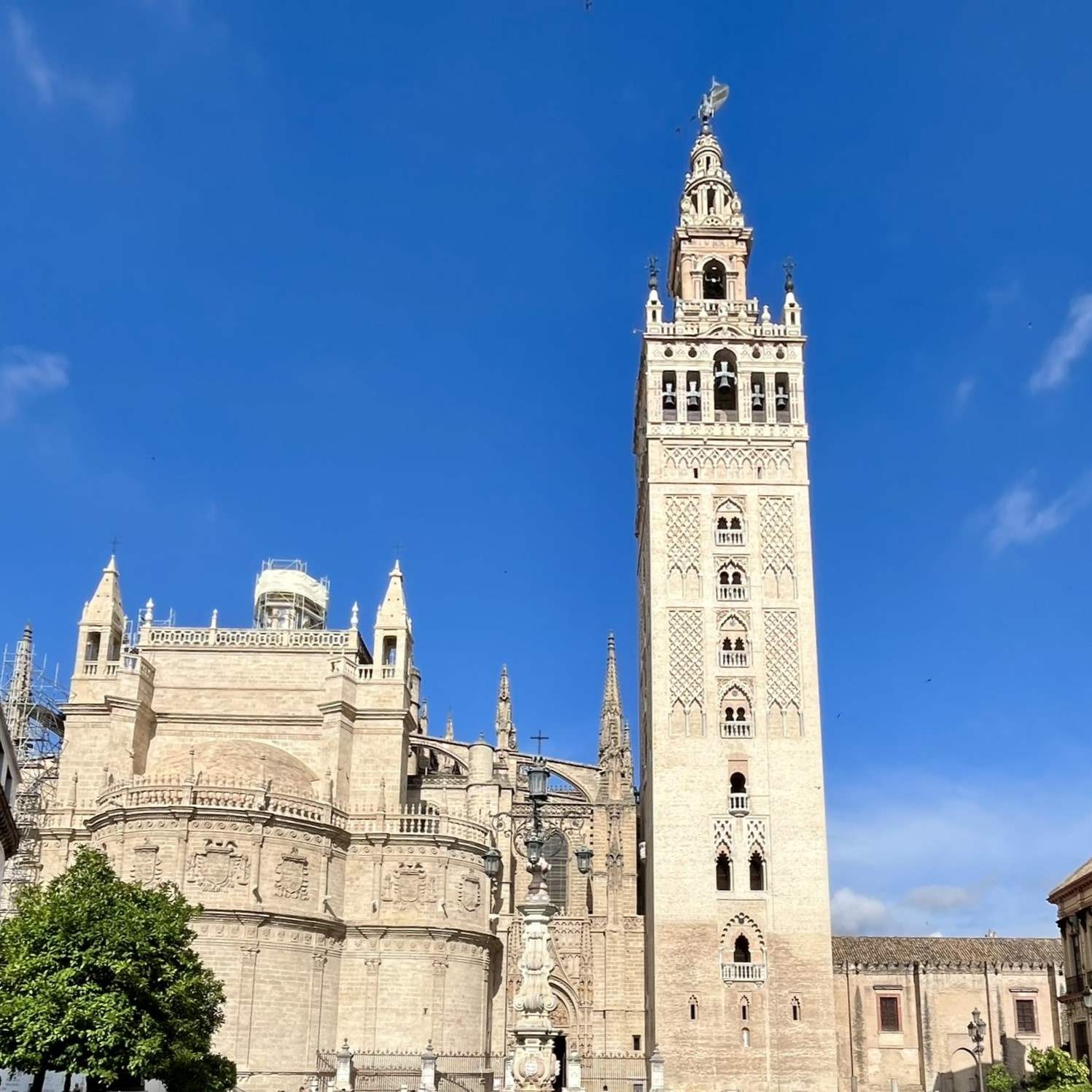
Seville Cathedral
Officially called the Cathedral of Saint Mary of the See, Seville Cathedral is one of the world’s great religious monuments. Although it still retains a few structures from the Muslim period, most of the cathedral was built in the 15th and 16th centuries.
History
In the 12th century, Seville became the capital of the Almohad Caliphate’s territories in the Iberian Peninsula. Work on a new great mosque to accommodate the growing population was begun in 1172, and its minaret – modelled on the minaret of the Koutoubia mosque in Marrakech – was completed in 1198.
After the Christian conquest of the city in 1248, the mosque was reconsecrated as the cathedral, and for the next 150 years the only significant alteration was the addition of a Royal Chapel. The chapel housed the tombs of Ferdinand III – who had taken the city for the Christians – and his son Alfonso X.
After the former mosque was badly damaged in an earthquake in 1356, the decision was taken in 1401 to build a new cathedral. The royal tombs were moved elsewhere, and most of the existing buildings were demolished, enabling work on the new cathedral to begin in 1433.
Although it was inaugurated in 1507, work continued throughout the 16th century, on elements such as the altarpiece, the new Royal Chapel and the Main Chapel. Not to mention the bell tower, where a Renaissance belfry was added to the Muslim minaret, topped with a giraldillo (weather vane) which gives the tower its name: La Giralda.
Architecture and art
The oldest parts of the building we can see today are the lower part of the Giralda and the orange tree courtyard, with the characteristic keyhole arches of the Muslim period.
The main body of the cathedral, including its nave and choir, were built in the medieval Gothic style, with its pointed arches and rib-vaulted ceilings. That is also reflected in the statues, gargoyles and grotesques that decorate the cathedral’s doorways and façade.
The ornately carved and gilded wooden altarpiece – claimed to be the largest in the world – was begun in the Gothic style, but as it took 80 years to complete, it also includes Renaissance elements. The Royal Chapel, chapter house and sacristy, which were later additions to the cathedral, are also in the Renaissance style.
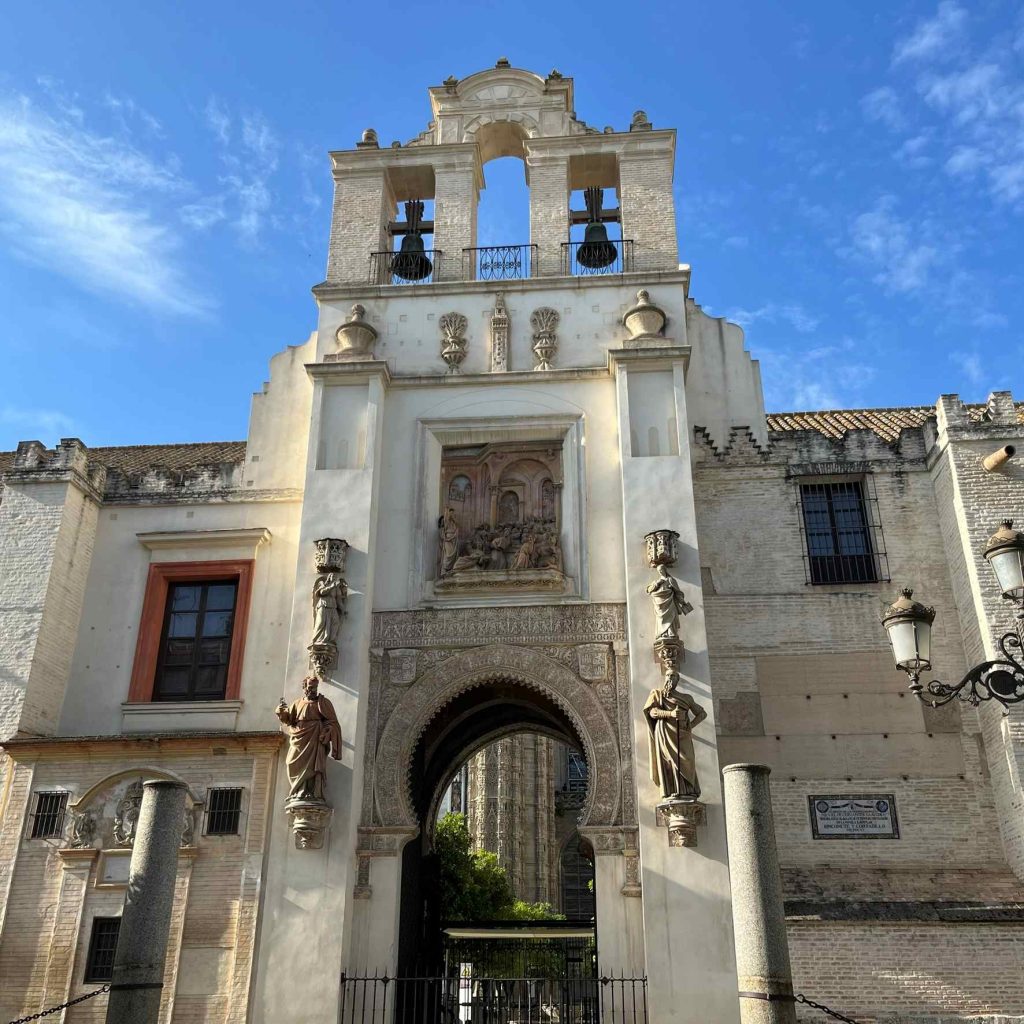
The Puerta del Pérdon (Door of Forgiveness), which provides access to the orange tree courtyard, retains the keyhole arch structure of the original mosque, but the stucco decoration dates from the Christian period.
As well as the building itself, the cathedral is a treasure trove of art, including a fine collection of Baroque paintings by the Sevillano artist Murillo, as well as works by Valdés Leal, Zurbarán and Gentileschi.


Practicalities
- The general entry ticket includes the cathedral, climbing the Giralda and also a visit to the church of El Salvador.
- To avoid long queues and to make sure you get a ticket, you should buy your ticket in advance online. You will be able to choose a specific time slot. Arrive a little before the allotted time – you may need to wait in line before being let in.
- If you pay a bit extra, you can add a physical audioguide or download one on your phone.
- On Sunday afternoons there are a limited number of free tickets for the cathedral and the Giralda, but you must book in advance on the official website.
- The cathdral also offers various specialist guided tours, including one that takes you up onto the rooftop. You can find full details on the official website (see below).
Official ticket website: https://catedraldesevilla.entradasdemuseos.com/
Questions and answers
Work on Seville Cathedral started in 1433. It was inaugurated in 1507 but work continued into the late 16th century.
The Giralda was originally the minaret of Seville’s main mosque, built in the 12th century. In the 16th century a Renaissance belfry was added to the minaret to create the Giralda.
Seville Cathedral houses the tombs of three Castilian kings: Ferdinand III, Alfonso X and Pedro I, as well as Christopher Columbus and his son Hernando.
Yes, it’s worth buying your ticket in advance for Seville Cathedral to avoid long queues and secure your preferred time slot.
Only buy tickets from Seville Cathedral’s official website: https://catedraldesevilla.entradasdemuseos.com/. Other vendors may add a significant commission to the ticket price.