
Mountains of Andalucía
Andalucía’s complex and highly mountainous geography is the result of its position at the southern edge of the Eurasian plate, where it collides against the African plate. The two main systems of mountain ranges are the Sierra Morena, along Andalucía’s northern border, and the Baetic System south of the Guadalquivir valley, which is really a continuation of the Rif mountains in Morocco. The Baetic System can in turn be divided into the Penibaetic, Subbaetic and Prebaetic systems, which run east-west one above the other. Within each system, there are numerous mountain ranges, each with their own peculiarities and attractions for visitors.
Particularly in the higher mountain ranges like the Sierra Nevada, the flora and fauna are unique, and there is incredible biodiversity across the region. You will probably notice lots of plants and animals that are totally unlike anything you will have seen elsewhere in Europe. This is because during the last glacial period – colloquially called the Ice Age – species retreated as far south as they could in Europe. When the climate grew warmer, they could only survive by taking refuge in the mountains.
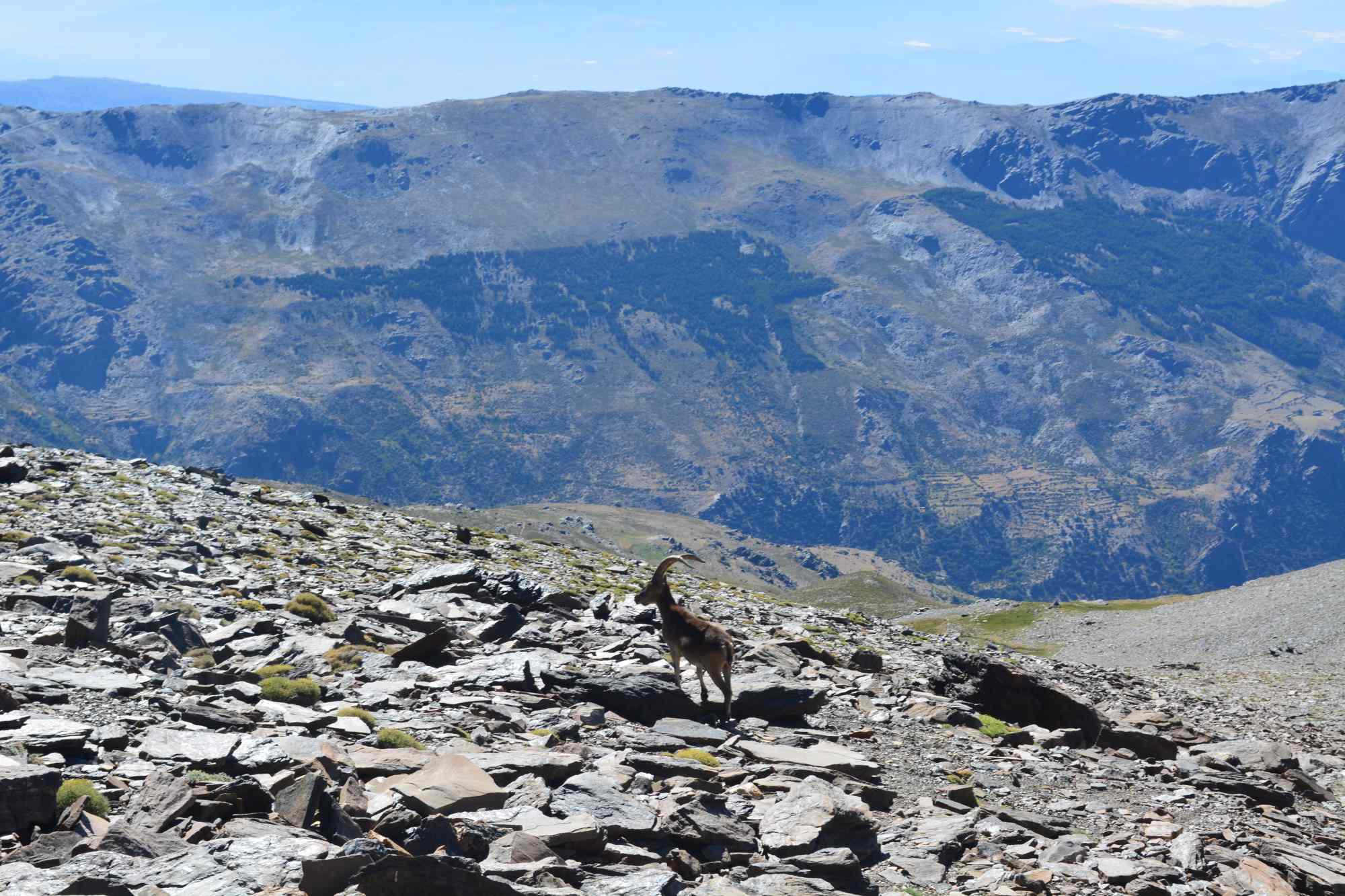
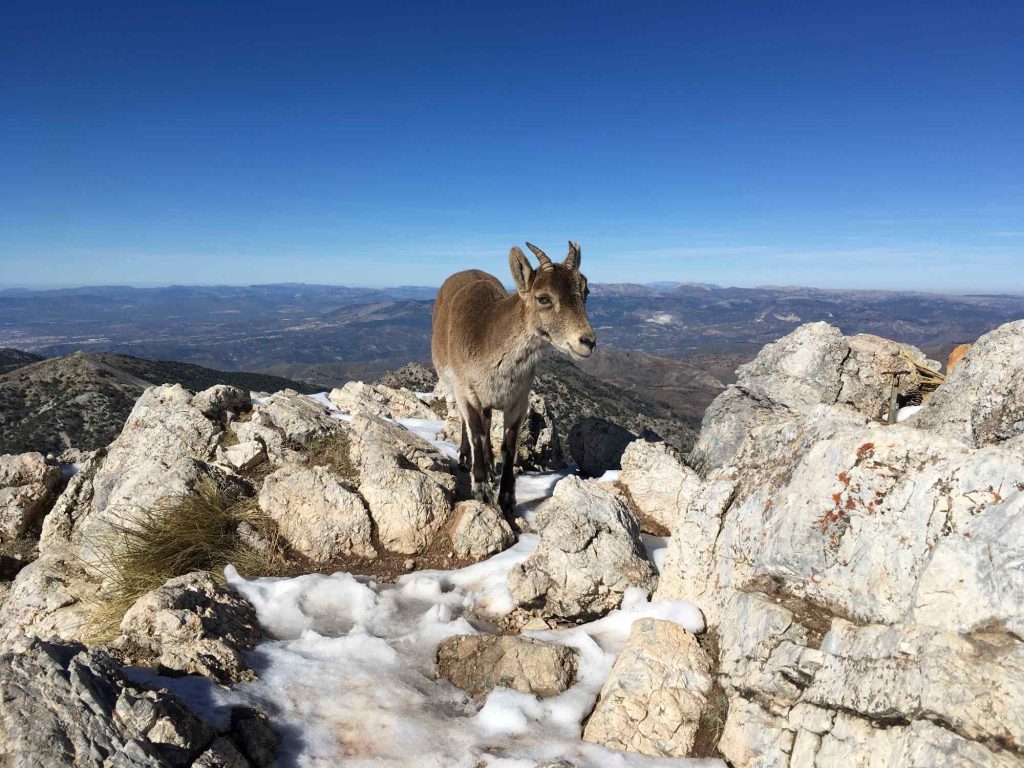
There is abundant wildlife in Andalucía’s mountains, but many species are very shy and almost impossible to catch sight of. That’s particularly true of mainly nocturnal species like the lynx, genet, wildcat, beech marten and wild boar. The animals you are most likely to see – if you go to the right areas – are ibex, lizards, deer and birds, including eagles, vultures and storks. And naturally there are a huge variety of insects, ranging from beautiful butterflies to pestering flies.
Sierra Nevada
The Sierra Nevada, which forms part of the Penibaetic System, is spread across two provinces – Granada and Almería – with the highest peaks being in the western part in Granada. The Sierra Nevada National Park covers 85,883 hectares, making it the biggest national park in Spain. A further 89,966 hectares are designated natural park, and it has also been recognised as a biosphere reserve by UNESCO. Sierra Nevada means “snow-capped mountains”, and the high peaks used to have a blanket of snow year-round, although now that’s only true from around November-June.
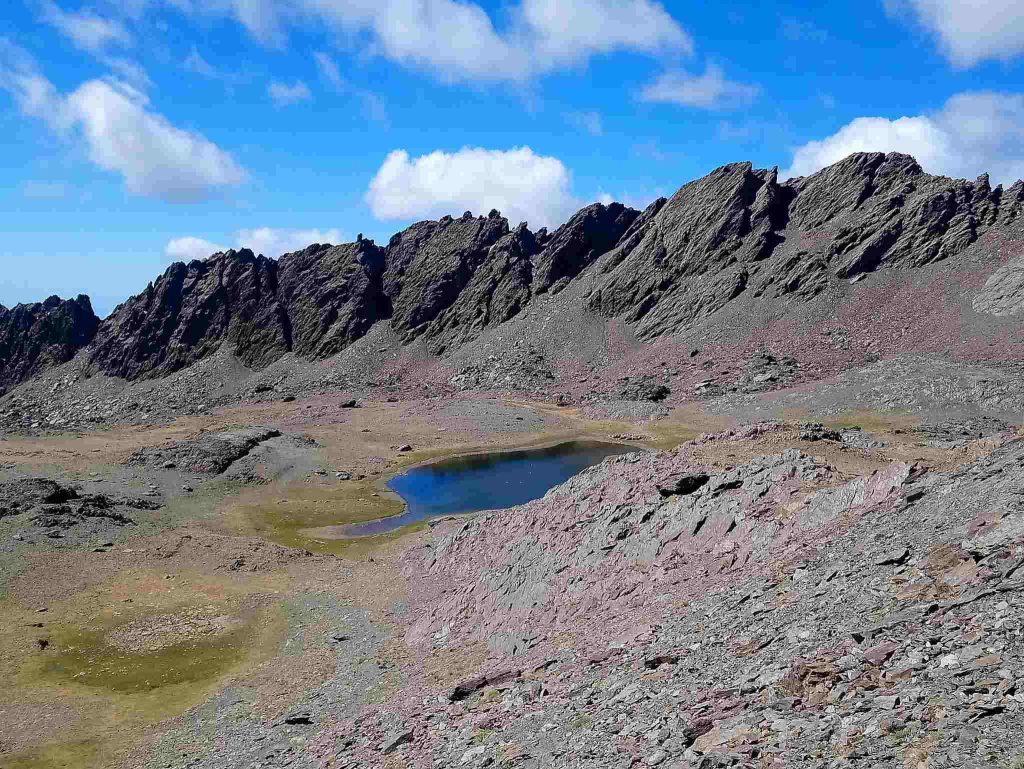
In the high peaks, metamorphic rocks like mica-schist, quartzite and marble dominate, whereas lower down you have limestone, dolomite and marble, as well as formations made of materials eroded from the higher peaks.
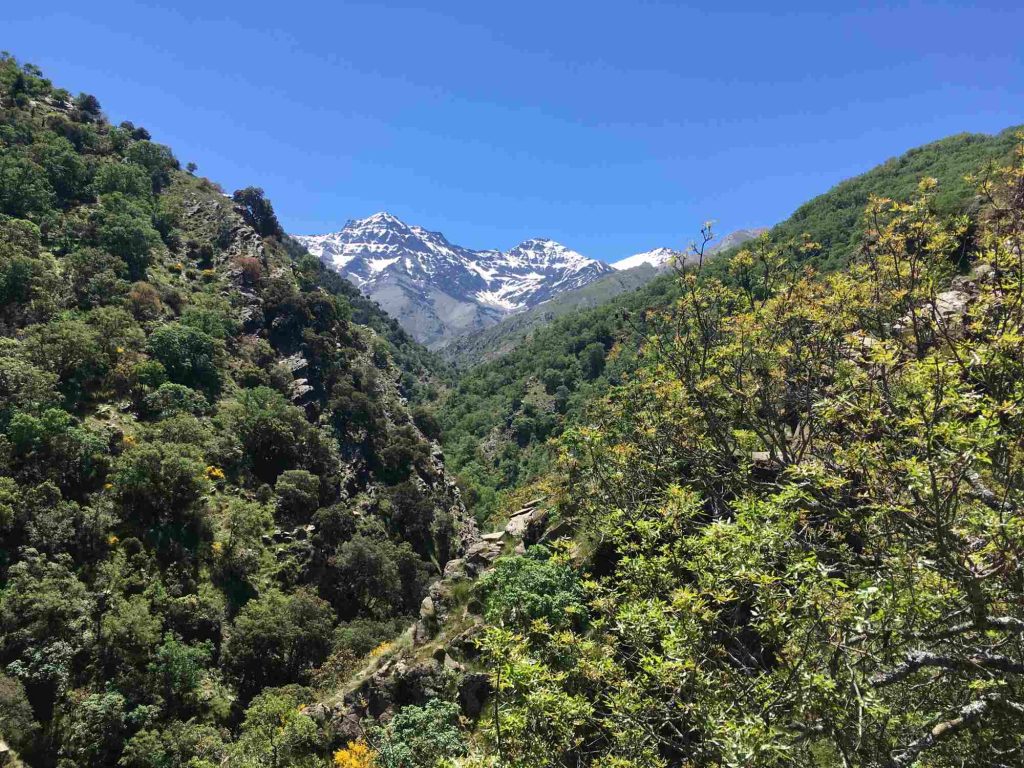
The highest peaks are Mulhacén (3,479 metres above sea level, making it the tallest mountain in mainland Spain), Veleta (3,396 m) and Alcazaba (3,369 m). At these high altitudes there can be significant snow cover from November to May, and the north side of Veleta is home to the Sierra Nevada ski station, which hosted the Alpine World Ski Championships in 1996.
There is an incredible range of scenery on offer. As you climb up, lush river valleys and deciduous trees like poplars, oaks and chestnuts gradually give way to pine forests, and then shrubland. Finally, you reach a barren high mountain landscape with spectacular views over the surrounding countryside. On a clear day, you can even see right across the Mediterranean to Morocco.
The Sierra Nevada is home to a very wide variety of animal species, but the ones you are most likely to encounter are ibex, lizards, butterflies and birds, including eagles and vultures.
Alpujarra
The Alpujarra region, which occupies the southern foothills of the Sierra Nevada down towards the Mediterranean, is famous for its quaint villages that retain their Berber-inspired street layout and architecture.
The Sierra de la Contraviesa is a long ridge that that runs all the way along the Alpujarra, parallel to the peaks of the Sierra Nevada but around two thousand metres lower. The ridge has some fabulous vantage points with 360 degree views of the Sierra Nevada, Alpujarra, Sierra de Gádor and shimmering Mediterranean below.
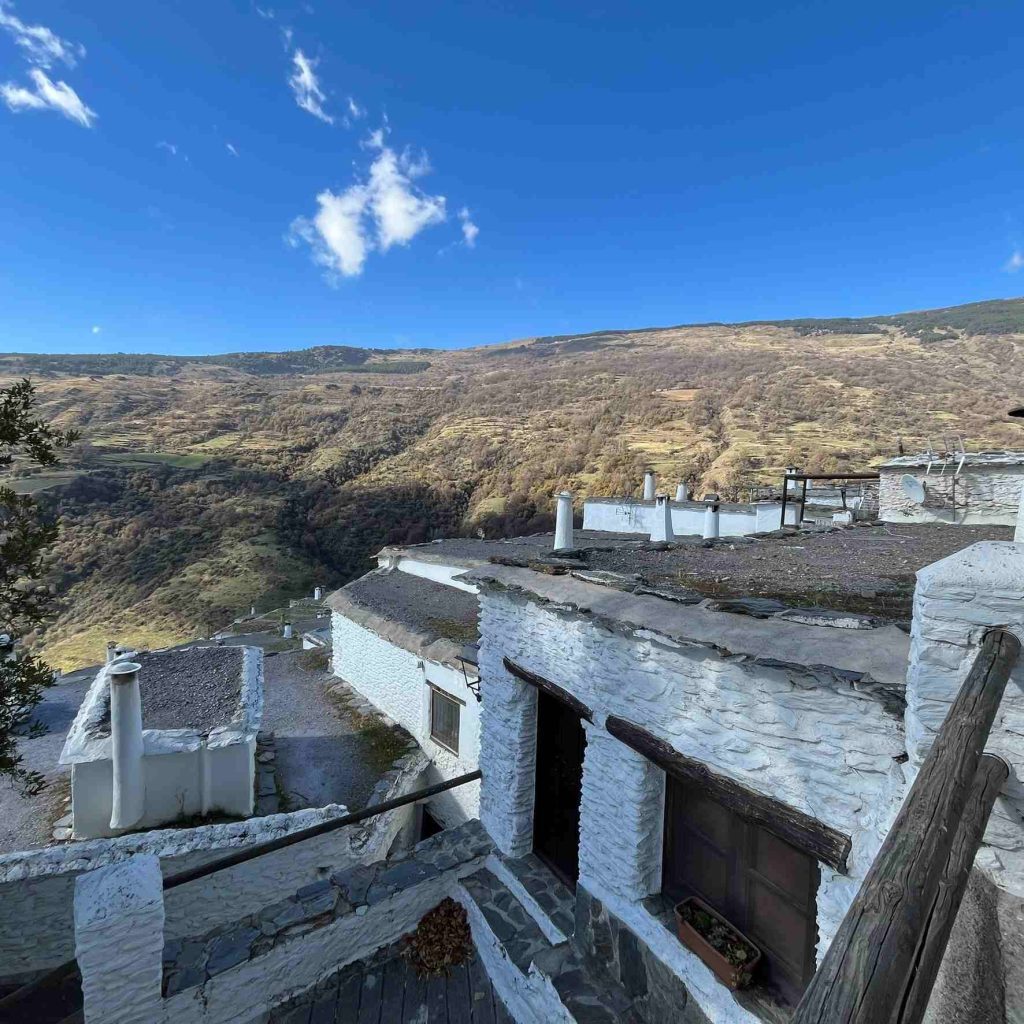
On our sister website Trek Sierra Nevada, we have a wide range of self-guided hikes throughout the Sierra Nevada region, and including Sierra de Huétor and Sierras de Tejeda, Almijara y Alhama. You can download a free walk description pdf and/or GPS track for each hike. We also have VoiceMap audio tours of the villages of Pampaneira and Capileira in the Alpujarra.
Sierra de Huétor
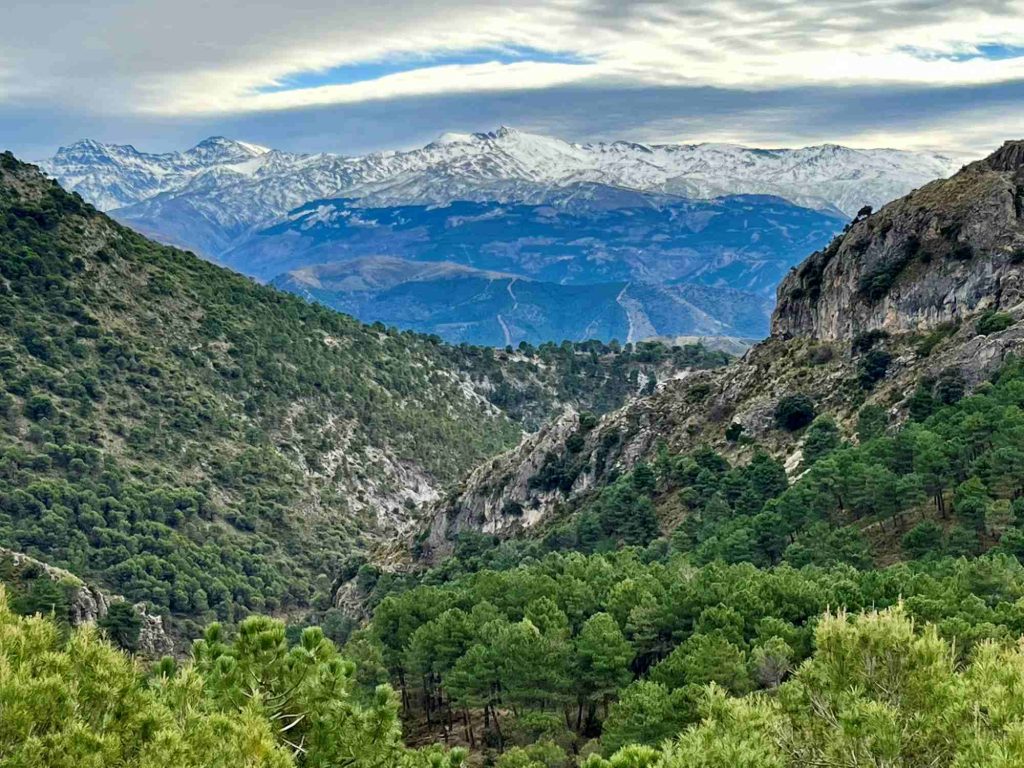
Just north of the Sierra Nevada lies the Sierra de Huétor, a small limestone range which provides great views of the high peaks to its south. The valleys are forested with holm oak, pine, poplar and Portuguese oak, while the more exposed areas are typical Mediterranean shrubland.
Sierras de Cazorla, Segura y de la Villas
These three limestone mountain ranges form a single natural park in the northeast of Jaén province. It is popular with Spanish people, but fewer foreign visitors make it here, not least because of its distance from the main international airports. Together, they constitute the biggest protected area in Spain, covering a total of 214,000 hectares.
The Sierra de Cazorla harbours the source of the River Guadalquivir, which flows west to the Atlantic. The Sierra de Segura is where the River Segura rises, before making its way down in the other direction to the Mediterranean in Murcia.
The terrain is steep and rugged, with deep valleys alternating with high ridges. The sides of the valleys are forested with pine and oak, which gives way to shrubland at higher altitudes. The highest peak is the 1,848 m Pico Gilillo, near the source of the Guadalquivir at the southern end of the park.
There are some great hikes in the natural park, as well as beautiful limestone pools where people come to cool off in summer. You’re quite likely to see ibex, fallow deer and red deer, as well as lots of birdlife, including eagles.

Sierra de Castril
The Sierra de Castril is the name given to the mountains adjoining the Sierra de Cazorla, Segura y de la Villas to the southeast, in the province of Granada. It takes its name from the very pretty village of Castril, which is overlooked by the ruins of a medieval castle. Below the village, there is a narrow gorge with a wooden walkway attached to the rock face over the Castril River.
Sierra Mágina
The Sierra Mágina is a beautiful limestone range in Jaén province, with interesting karst formations. The tallest peak is the 2,164 metre-high Pico Mágina, which offers 360 degree views of the surrounding countryside, including the Sierra Nevada to the south.
The mixed vegetation includes holm oak, Palestine oak, pine, broom, juniper, lentisk and typical Mediterranean shrubland. There are lots of birds, ranging from chaffinches to golden eagles, and you sometimes see rabbits and hares.
Serranía de Ronda and Sierra de las Nieves
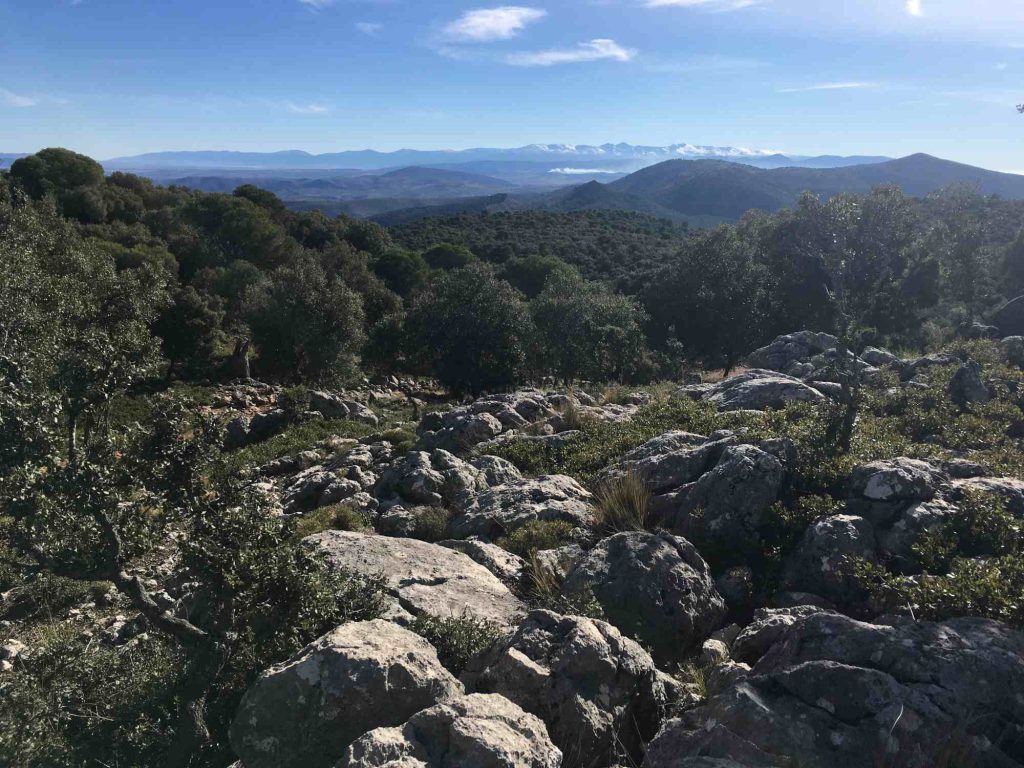
The Serranía de Ronda, which translates as the Ronda highlands, lies at the western end of the Penibaetic System, in the province of Málaga. The highest part in the east is known as the Sierra de las Nieves, which in 2021 became Spain’s newest national park. The very highest peak is La Torrecilla, which rises to 1,918 m above sea level.
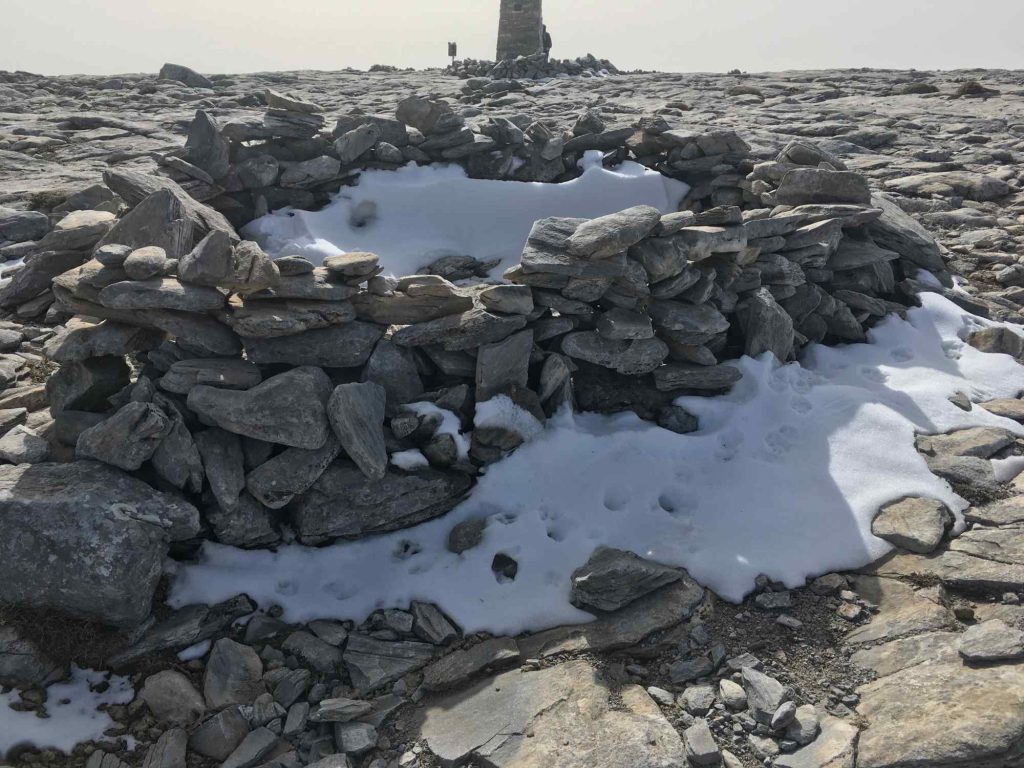
Sierra de las Nieves means “mountains of the snows”, which refers to the fact that a small amount of snow used to be preserved there all through the summer in ice pits. People from the surrounding villages would collect it and use it to preserve food in the days before refrigerators. The Sierra Nevada also served this purpose for Granada, incidentally.
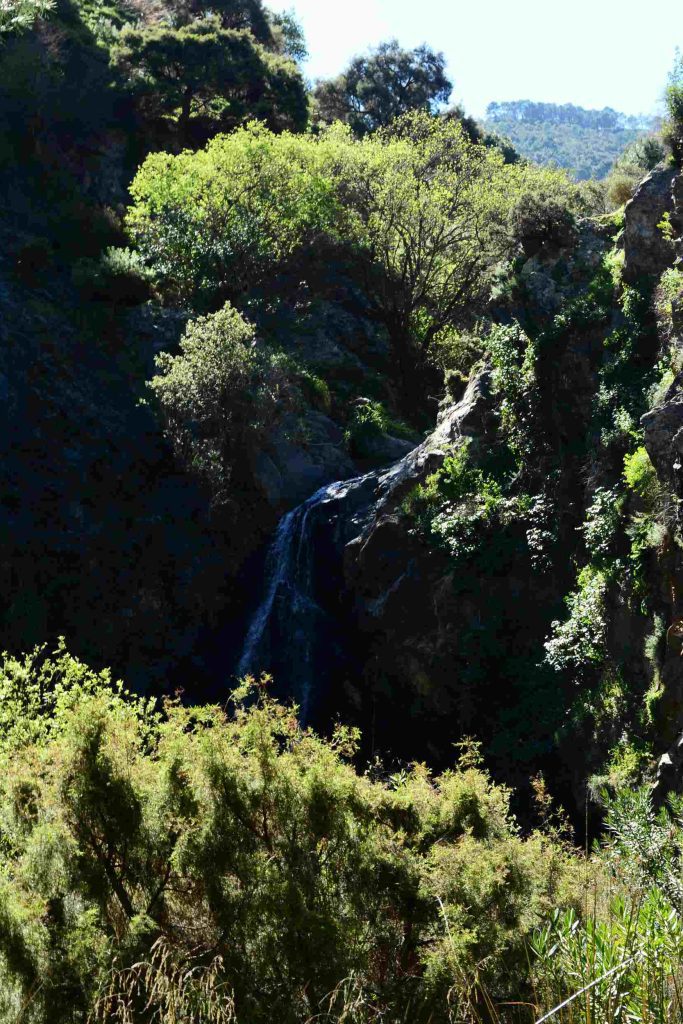
The relatively high levels of precipitation mean the pinsapo, or Spanish fir, grows here. In spite of its name, in Spain it is only found in certain parts of the provinces of Cádiz and Málaga, and it is more common in North Africa.
As well as ibex, the park is home to mouflon (a wild sheep), fallow deer and roe deer. You’re also likely to see many birds, including eagles and vultures, but the carnivores on the ground, like wildcats and genets, are rarely seen.
Sierra de Grazalema
Adjacent to the Serranía de Ronda in the province of Cádiz is the Sierra de Grazalema, which forms part of the Subbaetic System. It has the wettest climate in Andalucía, and one of the wettest in the whole of Spain, with Grazalema itself having an annual average of 2,200 mm. On a clear day, you get fantastic views of the surrounding area from the peak of El Torreón, which stands 1,648 metres above sea level.
The high rainfall means that you get a lusher mix of vegetation than in other parts of Andalucía, including pinsapo (Spanish fir), willows, ferns, strawberry trees, carobs, cork oaks, poplars, holm oaks and ash trees.
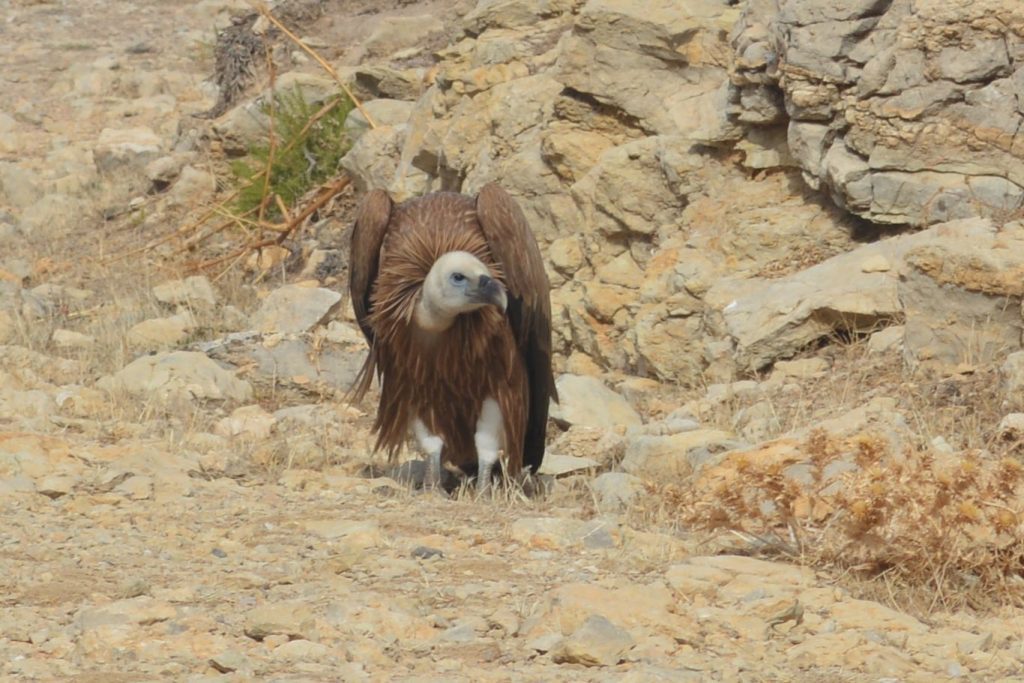
The Sierra de Grazalema is a fantastic place to see birds of prey, and particularly the huge Griffon vulture, which can have a wingspan of up to 260 cm. You may also see ibex, fallow deer, red deer and hoopoes.
The Sierra de Grazalema and surrounding area is home to many picturesque “pueblos blancos” – white villages – including Grazalema, Zahara de la Sierra, El Bosque, Benaocaz and Setenil de las Bodegas. A fellow VoiceMap producer, Clive Muir, has an audio tour of Grazalema, where he has lived for many years.
Sierras de Tejeda, Almijara y Alhama
This natural park, composed of three ranges in the Penibaetic System, straddles the border between the provinces of Granada and Málaga.
The name Tejeda means “yew grove”, because yews were once common here, but now there is only one specimen left. Instead, the heavily eroded limestone and marble bedrock supports forests of Aleppo and black pine. At higher altitudes, you also find Pyrenean oaks and Spanish maples.
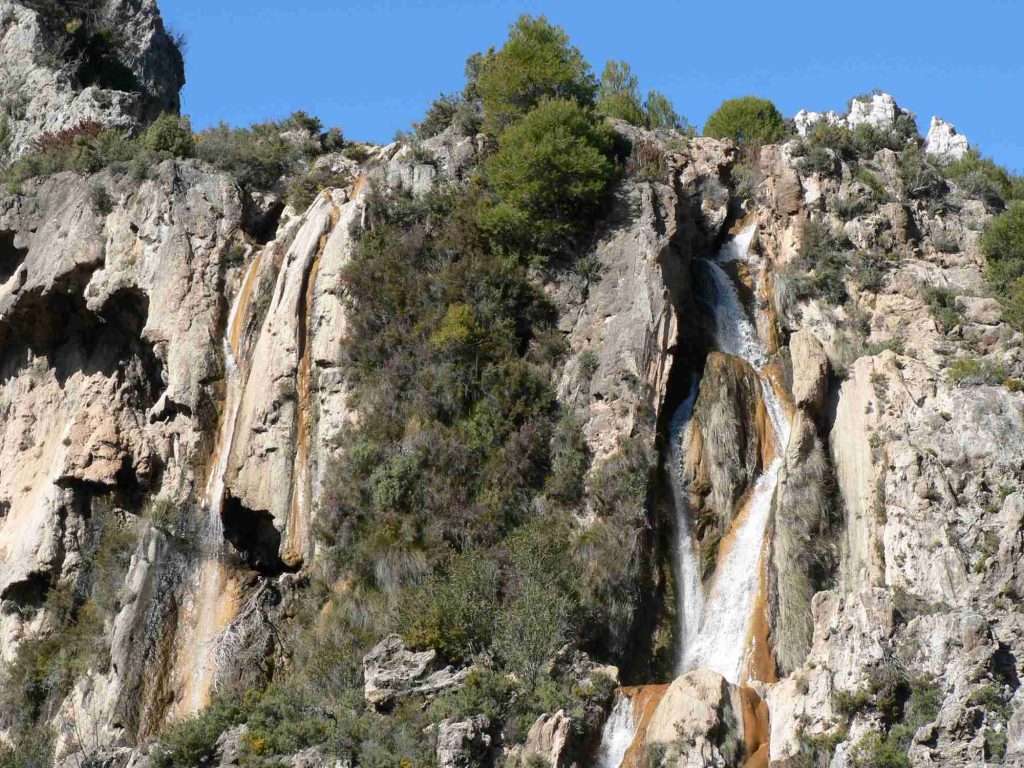
The terrain is steep and rugged, with long ridges interspersed with narrow valleys and gorges, including the one formed by the Rio Verde, famous for its dramatic waterfalls and crystal-clear rock pools. In summer, it is popular both with bathers and for canyoning. There is also an unusual rock formation consisting of petrified trees, where minerals in the water have replaced the organic materials.
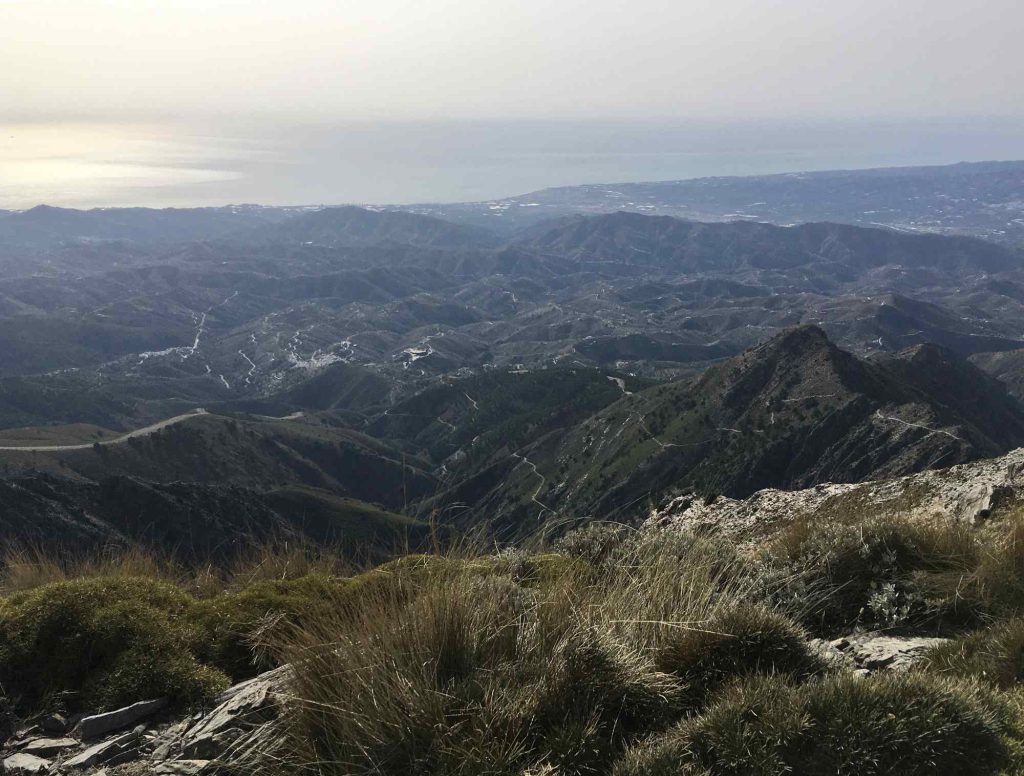
The highest peak in the park is La Maroma (2,069 m), also referred to as Pico de la Tejeda, which offers great views down to the Mediterranean coastline, as well as across to the Sierra de las Nieves.
In the mountains, there are many white villages that retain vestiges of their medieval Muslim heritage. The foothills down towards the coast are wine country, where moscatel grapes are grown to produce sweet Malagan wine.
Sierras Subbéticas
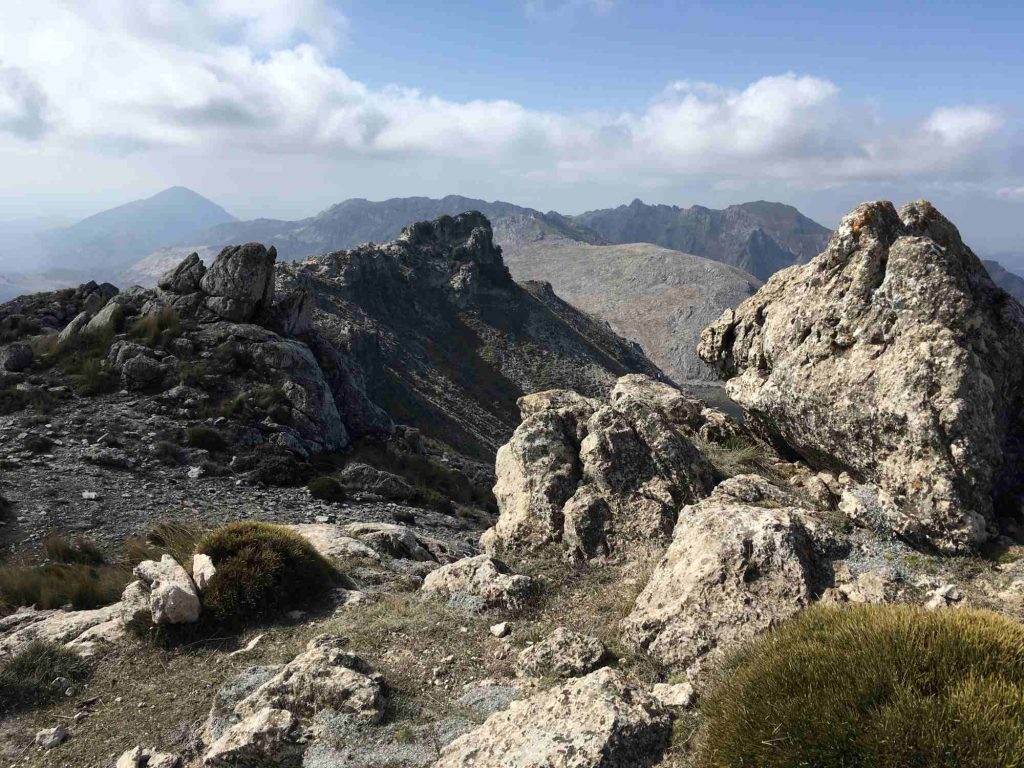
As you can guess from the name, the Sierras Subbéticas natural park in the south of Córdoba province forms part of the Subbaetic System. It has been recognised as a Global Geopark for its beautiful limestone landscapes with abundant ammonite fossils, sinkholes, canyons and caves.
La Tiñosa, in the southeastern part of the park, is the highest peak in the province of Córdoba. Although it is only 1,568 m high, it offers commanding views over the surrounding countryside.
Sierra Morena
Stretching 400 km east from the Portuguese border, through the provinces of Huelva, Seville, Córdoba and Jaén, the Sierra Morena is the most extensive system of mountain ranges in Andalucía. These ancient rolling hills are perhaps less dramatic than some of the other mountain ranges in Andalucía, but there are many idyllic protected areas. The highest peak is the 1,333 metre-high La Bañuela in the province of Ciudad Real, but the tallest one in Andalucía is Pico Estrella, at 1,298 metres.
Once covered in Mediterranean forest, significant parts of the Sierra Morena are now dedicated to agriculture, but the poor soil means that in general it cannot be used to cultivate crops. Instead, there is the characteristic “dehesa” – pasture land for cattle, pigs, sheep and goats, consisting of meadows with scattered holm oaks and occasional thickets of shrubs and bushes.
Where the native forest remains, numerous species of oak thrive on the granite, quartzite and slate bedrock, including holm oak, cork oak, Palestine oak, Portuguese oak and Pyrenean oak.
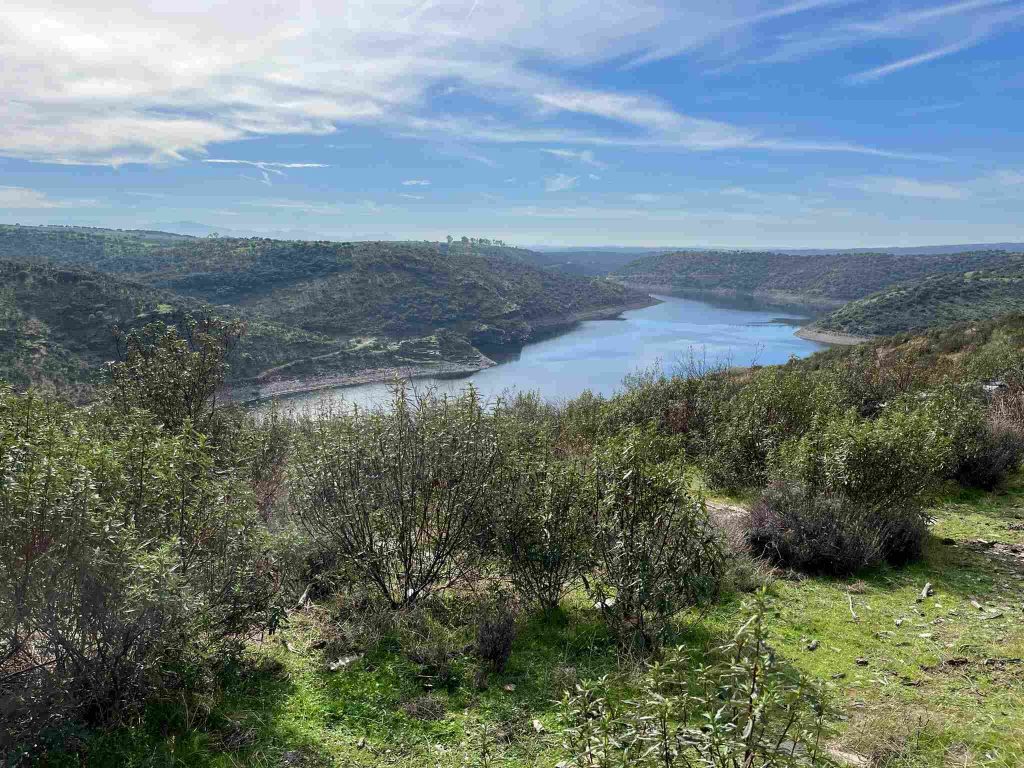
There are several mountain ranges and natural parks within the Sierra Morena, with the biggest one being the Sierra de Aracena y Picos de Aroche in the north of Huelva province. Its position at the western end of the Sierra Morena means that it receives most rainfall, and it is known for its lush vegetation and extensive chestnut groves.
Moving east, the next protected area is the Sierra Morena de Sevilla, which has some striking karst formations at Cerro del Hierro. Adjacent to it in Córdoba lies the Sierra de Hornachuelos, centred on the River Bebézar. Finally, in Jaén, you have the Sierra de Andujar and Despeñaperros natural parks, with the latter lying either side of the main pass through the mountains.
Although the Sierra Morena is home to the Iberian lynx, you’re very unlikely to see any, as they are shy, nocturnal and highly endangered. Smaller predators like weasels, polecats and martens are much more common, but also hard to spot. On the other hand, you’ll almost certainly see plenty of birds, including vultures and storks.
Sierra de Baza and Sierra de los Filabres
Although this is a single mountain range at the eastern end of the Penibaetic System, it has two names: Sierra de Baza, in Granada, and Sierra de los Filabres, in Almería. The highest peak is Santa Bárbara, at 2,269 metres.
Once upon a time, this part of Andalucía enjoyed a much more humid climate, and a few of the species that thrived then – like black and white poplar – still manage to cling on in so-called gallery forests along streams and rivers. This is the only place the Sierra Nevada Scots pine is found outside of the Sierra Nevada itself. Away from the river valleys, the vegetation is sparser, but almonds are grown throughout the region.
Sierra de Gádor
Southeast of the Sierra Nevada, in the province of Almería, lies the arid Sierra de Gádor. Its steep sides climb up to an undulating limestone plateau, with its highest point at Morrón de la Lagunilla, 2,247 metres above sea level.
All of the natural forest cover was cleared to provide fuel for the mining industry in the 19th century, but the shrubland that remains includes many endemic species, particularly broom and wild herbs. Attempts at reforestation mean there are pine forests on some of the steep slopes up to the plateau. There are great views of the Mediterranean and the nearby Sierra Nevada from the top.
Related articles
Related audio tours
Related itineraries

City and Mountains: Granada and Alpujarra
4-5 Nights

Guadalquivir River Valley
8 nights +
Useful links
Trek Sierra Nevada is our sister website. It has range of self-guided hikes throughout the Sierra Nevada region, and including Sierra de Huétor and Sierras de Tejeda, Almijara y Alhama.
Wildside Holidays has more information about all of the natural and national parks in Andalucía.
Questions and answers
The main systems of mountain ranges in Andalucía are the Sierra Morena in the north and the Baetic System in the south. The Baetic System includes the Sierra Nevada mountain range, which has the highest mountains in Andalucía.
The highest mountains in Andalucía are towards the western end of the Sierra Nevada mountain range, in the province of Granada.
The main mountain ranges in Málaga province are the Serranía de Ronda and the Sierra de las Nieves in the west, and the Sierra de Almijara and Sierra de Tejeda in the east. The highest mountain in Málaga is La Maroma, in the Sierra de Tejeda.
At 1,648 metres above sea level, El Torreón in the Sierra de Grazalema is the highest peak in the province of Cádiz.
Yes, there are several natural parks in the Sierra Morena: the Sierra de Aracena y Picos de Aroche in Huelva; the Sierra Morena de Sevilla; the Sierra de Hornachuelos in Córdoba; and the Sierra de Andujar and Despeñaperros in Jaén.