
Pre-Roman Andalucía
Andalucía has been inhabited by modern humans and their ancestors for over a million years, so there are a wealth of fascinating archaeological sites across the region. And fortunately for visitors, the dry climate of eastern Andalucia has kept some traces of bygone cultures – such as the Galera Mummy – amazingly intact. The many limestone caves are also a treasure trove of archaeological remains, including cave paintings.
Palaeolithic and Neolithic Andalucía
In 1982, archaeologists working at Orce in the province of Granada caused a sensation when they discovered a 1.6 million-year-old fragment of a human skull. The so-called “Hombre de Orce” (Orce Man) was the earliest human to have been found anywhere in Europe. However, there was always controversy about what had really been found, and most experts now think it is the bone of a donkey-like animal. In any case, new evidence – including a human tooth – has since shown that our ancestors probably did live near Orce around 1.3 million years ago. The First Settlers of Europe museum in Orce has some great displays about this period, when humans shared a much more humid climate with primitive wolves, elephants, hippopotamuses, sabre-toothed cats and giant deer. The collection includes impressive fossilized remains and reproductions of some of the animals.
Much more recently, Andalucia was one of the final refuges for the Neanderthals, who may have survived here until just 35,000 years ago. There is evidence the spectacular karst caves just above Nerja were visited by Neanderthals, and in the caves at Ardales they painted stalagmites red. Their remains were also found at Cueva de las Ventanas in Piñar, near Iznalloz.
Around 40,000 years ago, the first modern humans arrived in Andalucía and gradually squeezed out the Neanderthals. They too lived in caves, and at Nerja there are lots of red and black Palaeolithic cave paintings by modern humans depicting deer, horses, goats, fish and seals, as well as some people.
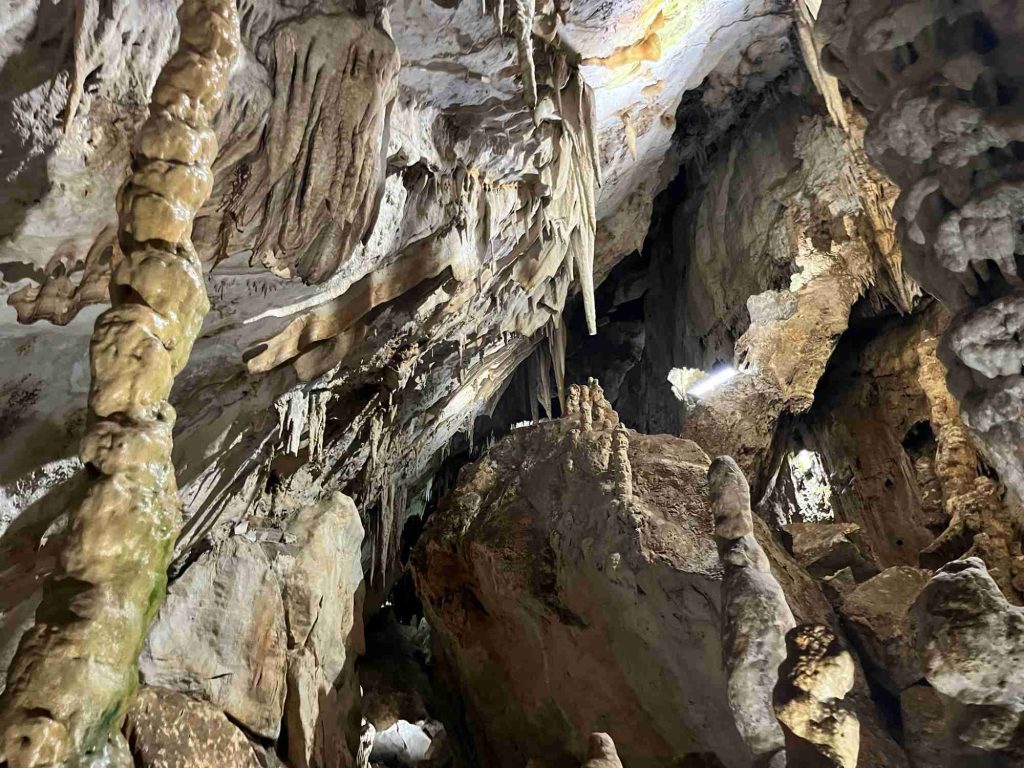
The 80-metre deep Cueva de los Murciélagos (Cave of the Bats) near Zuheros was occupied right back to the Neanderthal period, but the cave paintings there are much newer: from the early Neolithic period, when farming was just beginning to develop. It’s an impressive cave that’s well worth visiting – unless you suffer from claustrophobia or would struggle to negotiate the 700 uneven steps.
Only slightly more recent are the almost 6,000-year old Antequera dolmens, which have been inscribed as a UNESCO World Heritage Site thanks to their unique orientation. There’s a small but excellent visitor centre which explains how they may have been built and what their significance was to the megalithic culture that built them.
Copper and Bronze Ages
Los Millares in the province of Almería is a fortified hilltop settlement from the Copper Age (3,200–2,200 BC) which was the chief centre of power of another megalithic culture. They grew cereals, kept sheep, goats, cows and horses, as well as hunting wild boar and deer. This was a sophisticated culture who cut an aqueduct into the rock to supply their settlement with water.
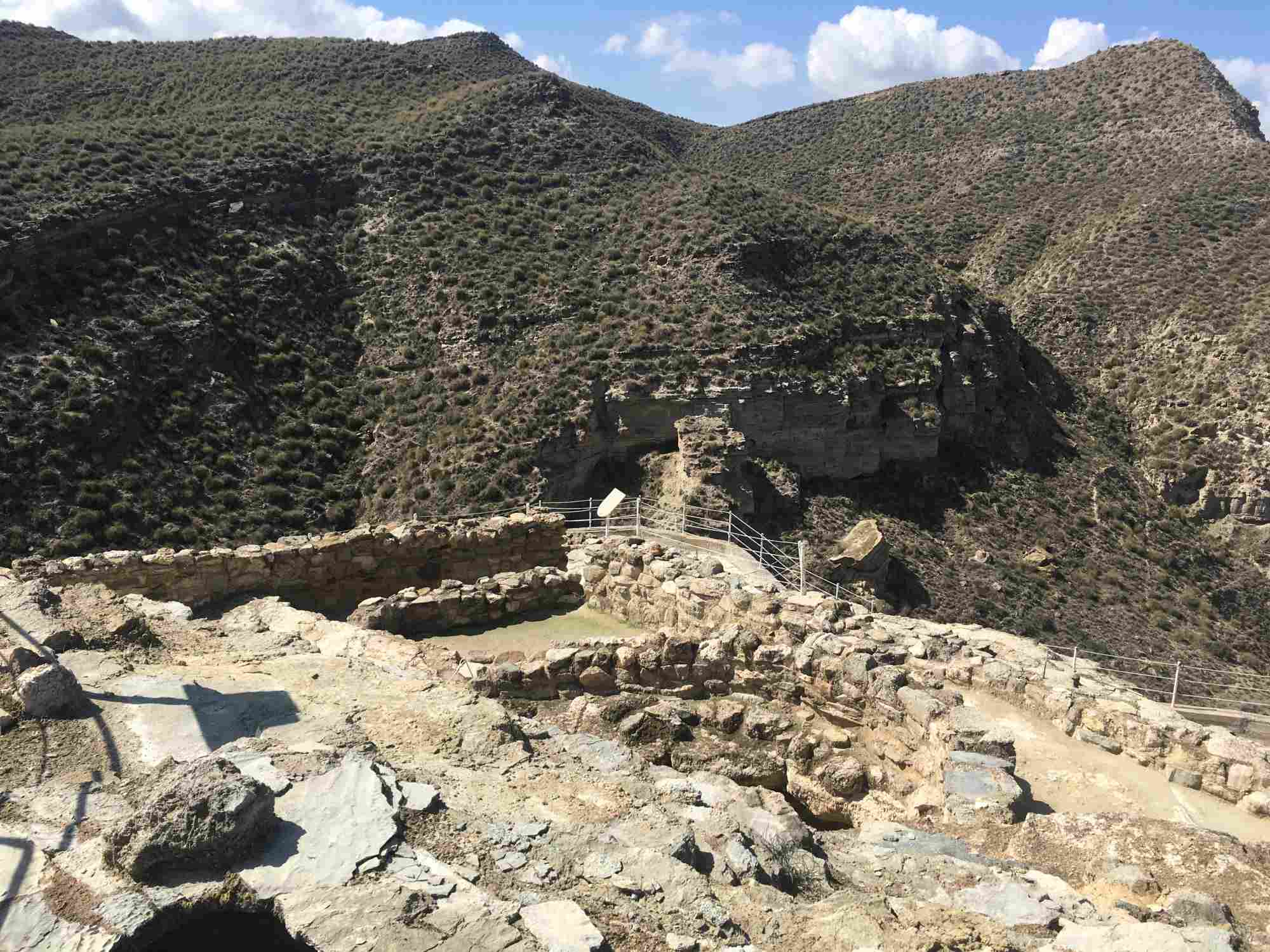
In Eastern Andalucia, the Los Millares people were followed by the more hierarchical Bronze Age Argaric culture. Castellón Alto, from the early part of the 2nd millennium BC, is a small, well-preserved Argaric settlement on a rocky outcrop overlooking a river valley near Galera. If you visit it, you can see the layout of the individual houses, as well as the millstones people used to grind cereals. The people primarily lived from mining and agriculture, and with the help of irrigation they were able to support a very large population.
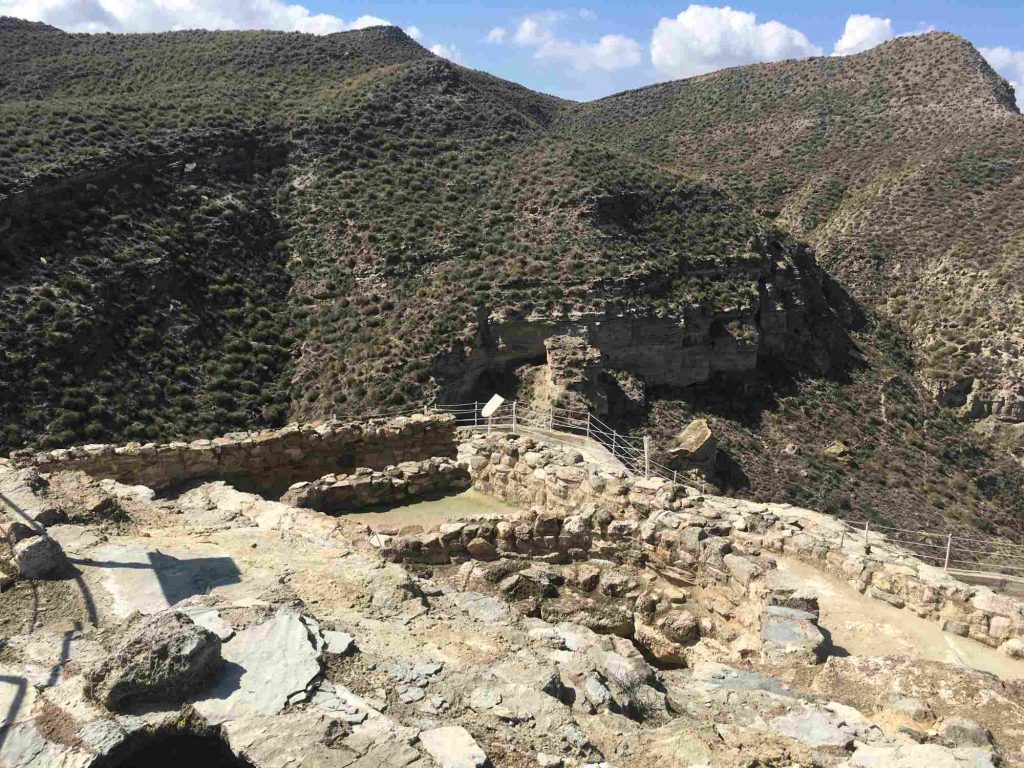
This is where the Galera Mummy was discovered in 2002, entombed in the wall of a house together with a small child. Amazingly, the man’s hair was still intact after 3,500 years, as the tomb had been completely sealed off from the atmosphere and the corpses had been naturally mummified. It is now housed in a nitrogen-filled glass case in the Galera Archaeological Museum.
The Museum of Almería provides a good introduction to both of these cultures, and many of the items found during the archaeological investigations are displayed there.
Tartessians, Phoenicians and Iberians
At the end of the 2nd millennium BC, the Tartessos civilization emerged in what is now southern Portugal and Spain. Tartessos is thought to be the result of indigenous people intermingling with the Phoenicians, who around this time had established colonies along the Mediterranean coast, including Gadir (Cádiz) and Malaka (Málaga) in the Iberian Peninsula, and Carthage in modern-day Tunisia.
It was the Phoenicians who brought innovations like writing and the potter’s wheel to Iberia, and they enabled Tartessos to trade with cities around the Mediterranean. Their influence is evident in the most spectacular find from Tartessos: the Treasure of El Carambolo, which was discovered at Camas just outside Seville and consists of 21 pieces of beautifully crafted gold jewellery. Unfortunately, it is so valuable that it is kept locked away in a vault, but copies are displayed in Seville City Hall and the National Archaeological Museum in Madrid.
![Treasure of El Carambolo [photo: Sergio Geijo (CC BY-SA 2.0)]](https://andalucia-bound.com/wp-content/uploads/carambolo-treasure.jpg)
Around 500 BC, Tartessos collapsed and was replaced by various peoples who are collectively referred to as “Iberian”. These include the Turdetani in the lower Guadalquivir valley and the Bastetani, whose most important settlement was Basti near modern Baza, strategically situated on several trade routes between the coast and the interior.
The Iberians continued to trade with the colonists, exchanging metals – particularly silver and copper – from their mines in the mountains of Andalucía with pottery, wine and ivory imported from across the Mediterranean. Around the same time as the collapse of Tartessos, Carthage emerged as a major power in its own right, independent of the Phoenician motherland. As well as conquering Sardinia, Corsica and the Balearic Islands, it took control of the former Phoenician colonies in Iberia.
The Iberians occupied fortified hilltop settlements known as oppida, some of which were the forerunners of major cities such as Córdoba and Granada. While we don’t know a huge amount about how they lived, partly because their writing system has never been deciphered, their art suggests that women participated in religious ceremonies on an equal footing with men.
An outstanding Iberian piece is the anthropomorphic urn known as the Dama de Baza (Lady of Baza), which was found in a tomb at Basti and probably held the ashes of an important warrior. The original is displayed in the National Archaeological Museum in Madrid, but there are replicas at the Basti interpretation centre and in Baza’s excellent archaeological museum, which has displays covering everything from a fossilised mastodon tusk to Iberian and Islamic pottery.
Iberian jewellery and sculpture provide further evidence that indigenous groups had been greatly influenced by the Phoenicians – in their craftsmanship, their religious practices and their burial rituals. To learn more about the Iberian peoples and their way of life, visit the Museo Íbero in Jaén or the Iberian settlement of Cerro de la Cruz at Almedinilla near Priego de Córdoba.
![Dama de Baza [photo: Santiago Relanzón (CC BY-SA 4.0)]](https://andalucia-bound.com/wp-content/uploads/dama-de-baza.jpg)

Questions and answers
Andalucía has a very long history of human settlement, and it was relatively densely populated as far back as Copper Age. The dry climate of eastern Andalucía has also helped to preserve prehistoric remains.
The cave at Nerja has red and black paintings from the Palaeolithic Age, depicting animals and people, but in order to protect them visitors are not allowed to go near them. So, the main reason to visit the cave is for its spectacular stalactites and stalagmites. You can see detailed digital reproductions of the cave paintings at the museum in Nerja.
Yes, the cave is spectacular and definitely worth visiting, but don’t go if you suffer from claustrophobia or would struggle with the 700 steps inside the cave, which in places are narrow, steep and slippery.
Los Millares is an important fortified hilltop settlement from the Copper Age (3,200–2,200 BC) in the province of Almería.
The tomb where the Galera Mummy was found had been completely sealed off from the atmosphere, which meant that the corpses inside it had been naturally mummified. As a result, the man’s hair is still intact after 3,500 years.
The Treasure of Carambolo consists of 21 pieces of beautifully crafted gold jewellery, created by the Tartessos culture in the 1st millennium BC. It was found at Camas, near Seville.
Cádiz was founded as a colony by the Phoenicians, who called it Gadir.
The Dama de Baza (Lady of Baza) is an Iberian anthropomorphic urn which was found in a tomb at Basti, near modern-day Baza. You can see a copy of it at the archaeological museum in Baza.