Roman Andalucía
Andalucía’s most famous monuments date from the period of Muslim rule during the Middle Ages and from the Christian period immediately afterwards, so it’s easy to forget quite how important the region was during the Roman Empire. In fact, it was one of the most Romanised provinces outside Italy, and two of the great Roman emperors – Trajan and Hadrian – were born in Itálica, near modern-day Seville.
Roman conquest of Hispania
Let’s start by going back to how Andalucía became part of the Roman Empire. In the mid-3rd century BC, Rome defeated Carthage in the First Punic War, which mainly took place around Sicily. Carthage already controlled the south coast of what is now Spain, from Gadir (Cádiz) to Carthago Nova (Cartagena), but after the war it expanded northwards in order to gain control of Iberia’s rich mineral resources.
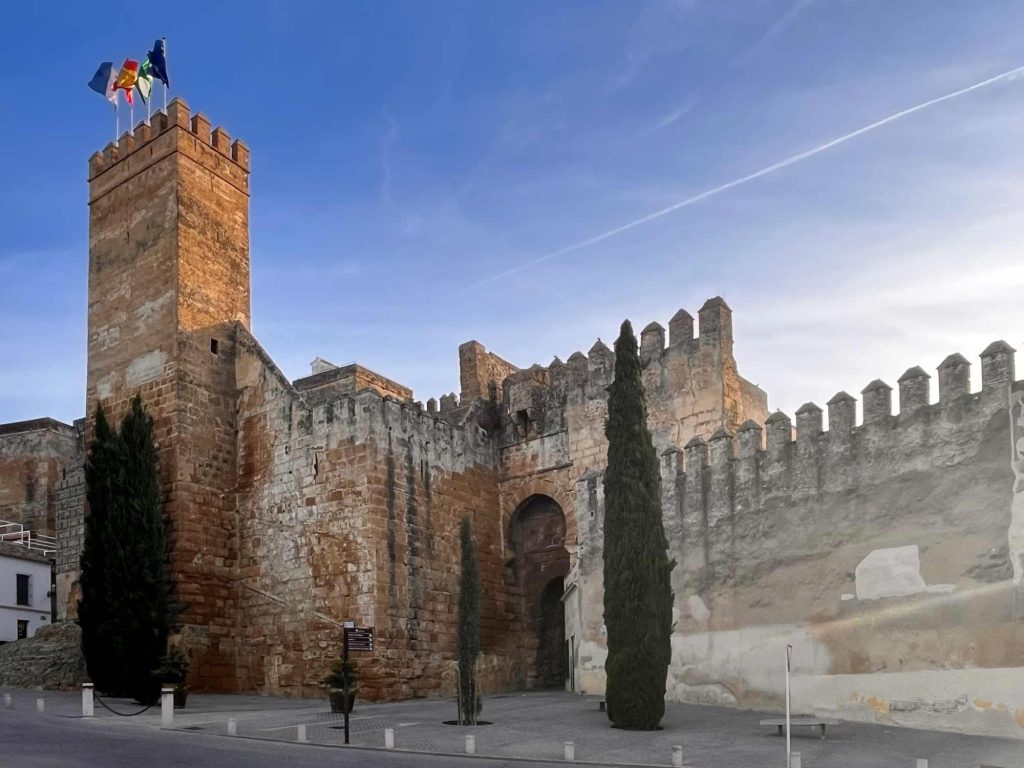
One of Carthage’s military bases was Carmona, where you can still see the impressive Carthaginian stonework in the Puerta de Sevilla fortress. After the Carthaginian general Hannibal besieged and captured the Roman ally Saguntum (Sagunto) in 219 BC, Rome declared war on Carthage. This was the catalyst for the Second Punic War, which is mostly famous for Hannibal and his elephants marching over the Alps and repeatedly defeating Roman armies in what is now Italy, without ever quite managing to win the war. However, the war was also fought in the Iberian Peninsula, where two Roman brothers called Scipio were more successful against Hannibal’s younger brother Hasdrubal. When both brothers were killed in battle after separating their forces, the son of the younger brother took their place. Known to posterity as Scipio Africanus, he was a brilliant general who managed to end the Carthaginian presence in Iberia in 206 BC.
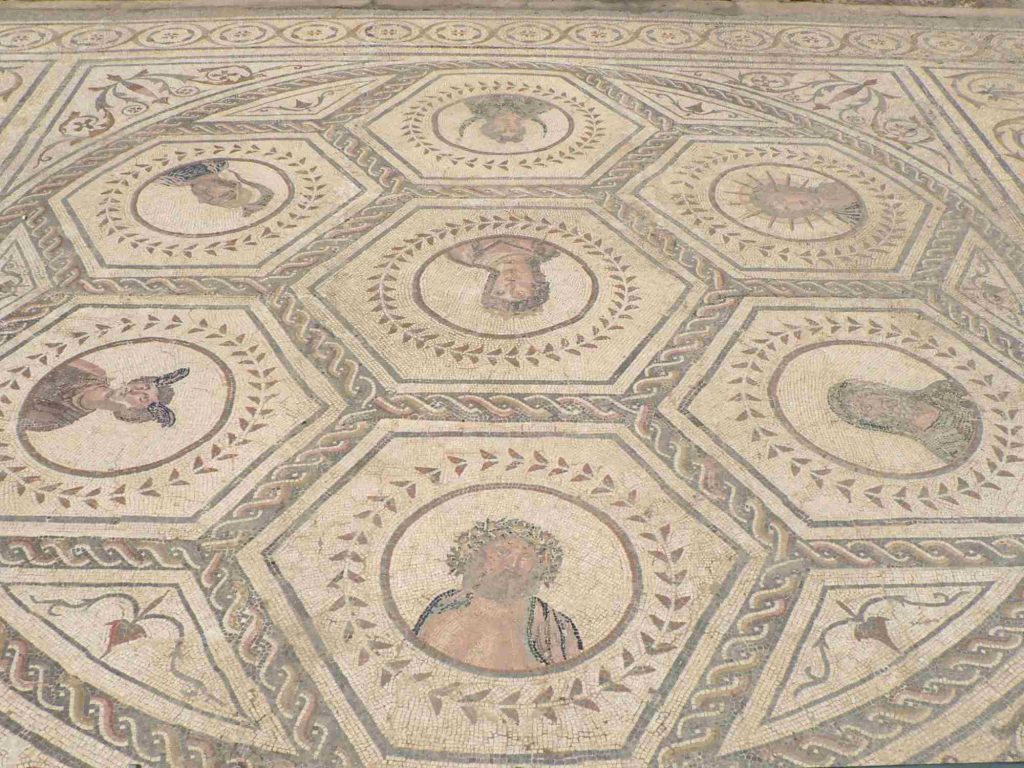
After his victory, Scipio founded Itálica, the first Roman settlement in Hispania, for the veterans of his army. It’s just north of Seville, and it’s worth visiting if you want to see the ruins of a fairly complete Roman town, including its huge, well-preserved amphitheatre and some fine mosaics.
Initially, Rome split its territory in the Iberian Peninsula – which it called Hispania – into two provinces: Hispania Citerior, with its capital at Carthago Nova, and Hispania Ulterior, with its capital at Corduba (Córdoba). Over the following 200 years, Rome very slowly conquered the rest of Hispania through a series of bloody wars – not to mention lots of skulduggery.
Baetica
Caesar’s Civil War (49-45 BC) saw significant fighting in Hispania, including the decisive Battle of Munda, which possibly took place somewhere near Osuna, although the exact site has never been identified. Corduba, which sided with Pompey, was besieged and then laid waste by Julius Caesar’s army, with most of the townspeople slaughtered. However, when Caesar Augustus reorganised Hispania into three provinces in 27 BC, he made Corduba the capital of the new province Baetica, named after the River Baetis – the Roman name for the River Guadalquivir.
This was the start of Baetica’s period of greatest splendour. There was a thriving trade with Rome and the rest of the Roman Empire, most of which went via the Baetis and round into the Mediterranean by sea. Baetica exported essential products like wheat, wine and above all olive oil, as well as the metals which had previously attracted the Phoenicians.
As the most Romanised of Hispania’s provinces, Baetica had many important Roman towns. These included the capitals of the four districts, or conventus, which the province was divided into: Corduba, Hispalis (Seville), Astigi (Écija) and Gades (Cádiz). In addition, Itálica, Urso (Osuna) and Tucci (Martos) all became coloniae, the highest rank of Roman town. They generally had the amenities you would expect of a major Roman settlement – a forum, temple, circus, theatre, amphitheatre, basilica and so on – and their inhabitants were considered Roman citizens.
Municipia, which were the rank below coloniae, were also governed according to Roman law, and they included Carmo (Carmona), Antikaria (Antequera), Baelo Claudia, Iliberris (Granada), Malaca (Málaga) and many others. The Via Augusta, the road which went parallel to the River Baetis, linked the main cities in Baetica and continued all the way to the Pyrenees.
Remains of Roman towns and cities
You would think that Andalucía is full of Roman ruins, but that isn’t really the case. Partly because many of the towns have been continuously inhabited since Roman times, which means people have repeatedly built on top of the older structures. The Roman ruins are therefore buried far below the surface of the modern towns. That is illustrated really well at the Bishop’s House archaeological site in Cádiz, where you can head underground to discover layers of ancient buildings superimposed on one another, including a Phoenician funerary monument and a Roman temple.
The best places to see Roman remains are towns that were abandoned, where nothing was built on top. These include Itálica, which I mentioned earlier, and Baelo Claudia, just north of Tarifa on the Atlantic coast. It was a centre of fishing, salting fish and making a fish paste call garum, which the Romans were crazy about and used to season all kinds of dishes. It’s a magical location overlooking the ocean next to a great beach called Bolonia, with a good interpretation centre. The Roman theatre at Acinipo just north of Ronda is also worth visiting. Cástulo in the province of Jaén was also a major Roman town, but unfortunately very little of the site has been excavated.
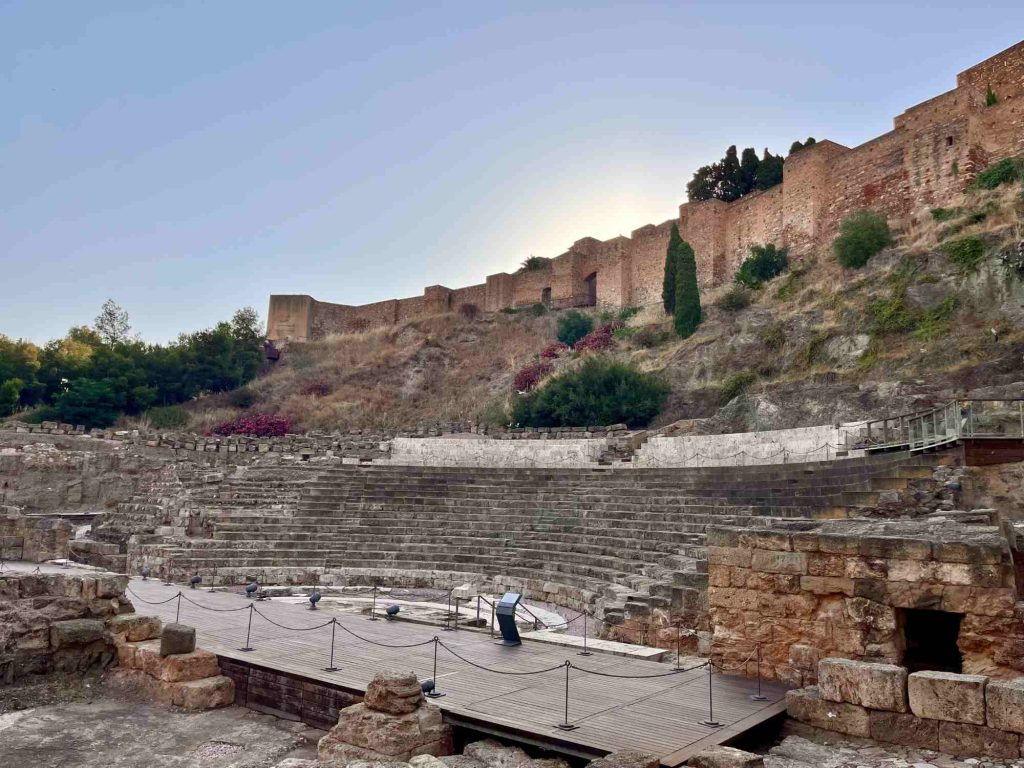
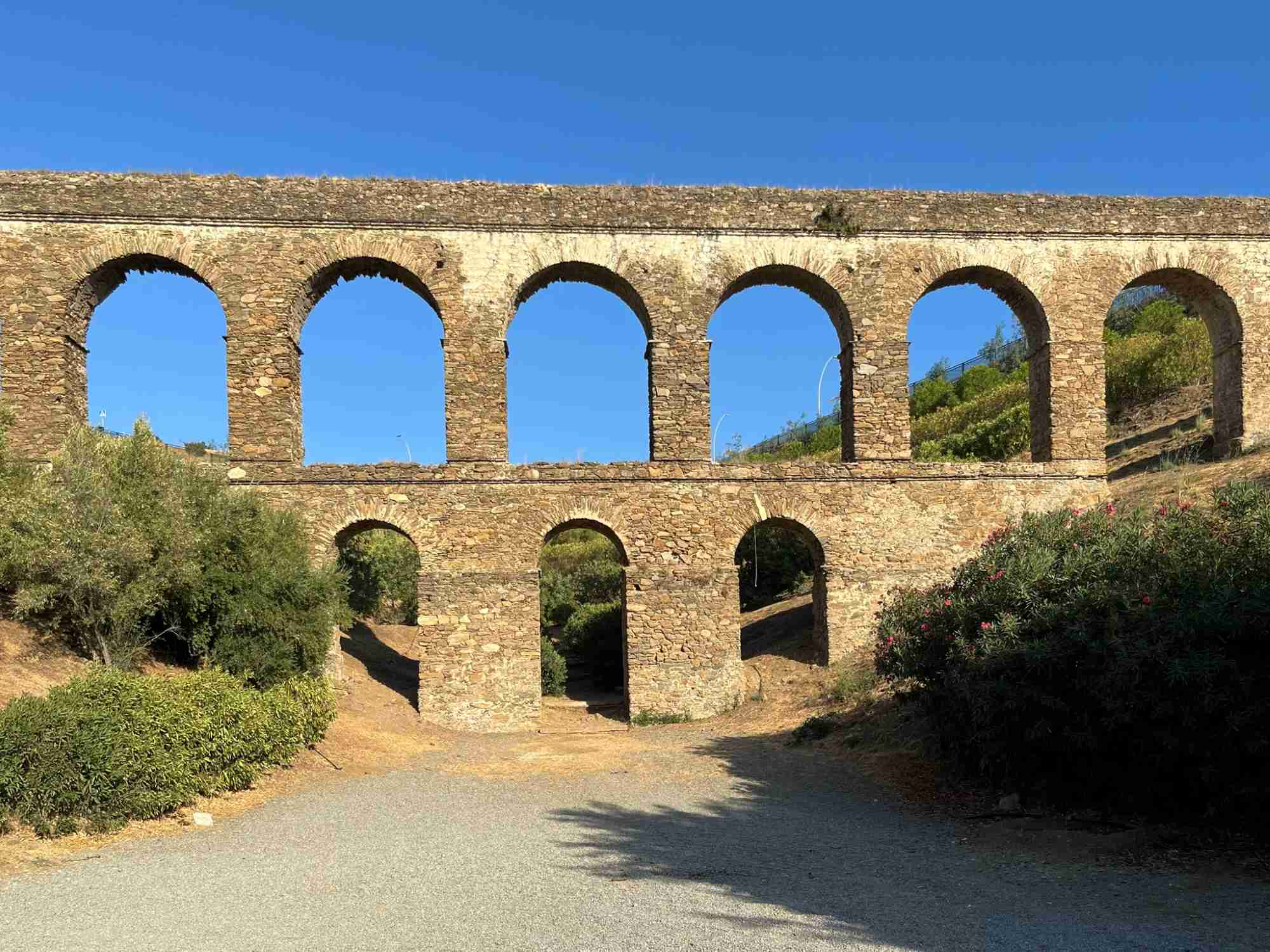
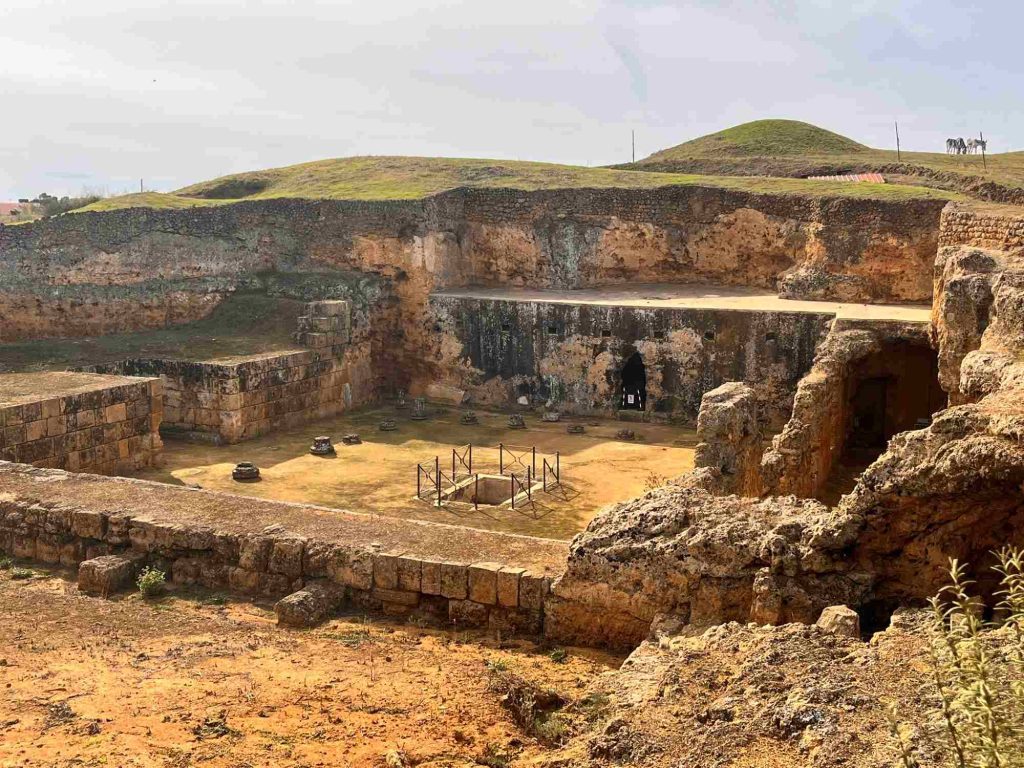
Of the remains that you can see in towns and cities, the theatre in Málaga is perhaps most impressive, together with the Roman temple in Córdoba. Córdoba also has a “Roman” bridge, but most of the current structure was built by the Muslims in the Middle Ages. Carmona’s necropolis, which has hundreds of tombs including the magnificent Tomb of Servilia, was the first Roman site to be excavated in Spain. Almuñecar has an impressive aqueduct, as well as a fish salting factory. Beyond that, there are scattered remains across the whole of Andalucía.
Roman villas
During the latter part of the Roman Empire, the political situation deteriorated, and rich citizens responded to the growing insecurity by expanding and reinforcing their private homes, rather than investing in public buildings. From this period, there are several grand Roman villas scattered around Andalucía, each of which would have sat at the heart of large agricultural estate called a latifundium, where much of the manual labour was done by slaves. A latifundium mainly grew cash crops, such as grapes and olives which were turned into wine and olive oil for export, and this model of large-scale agriculture has marked Spanish history ever since.
The easiest villa to visit is the Villa Romana Fuente Álamo near Puente Genil, which has a good site museum covering the Roman empire, Hispania and the site itself. There are some fine mosaics, including an ancient cartoon, and you get a good sense of the layout of a Roman villa.
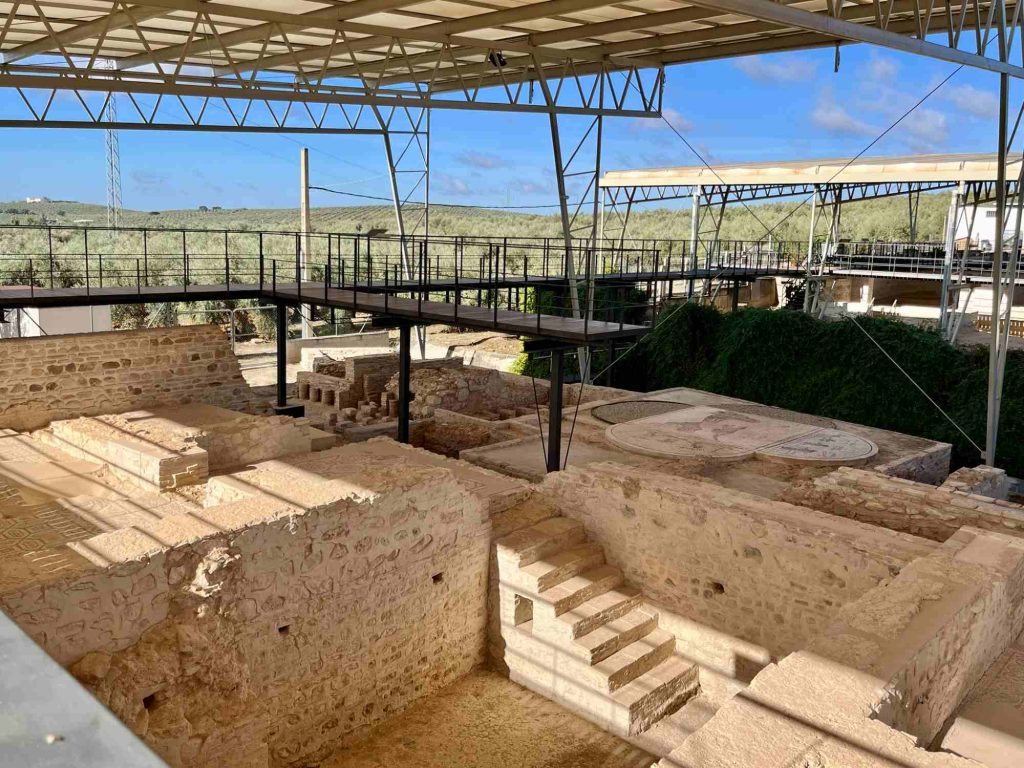
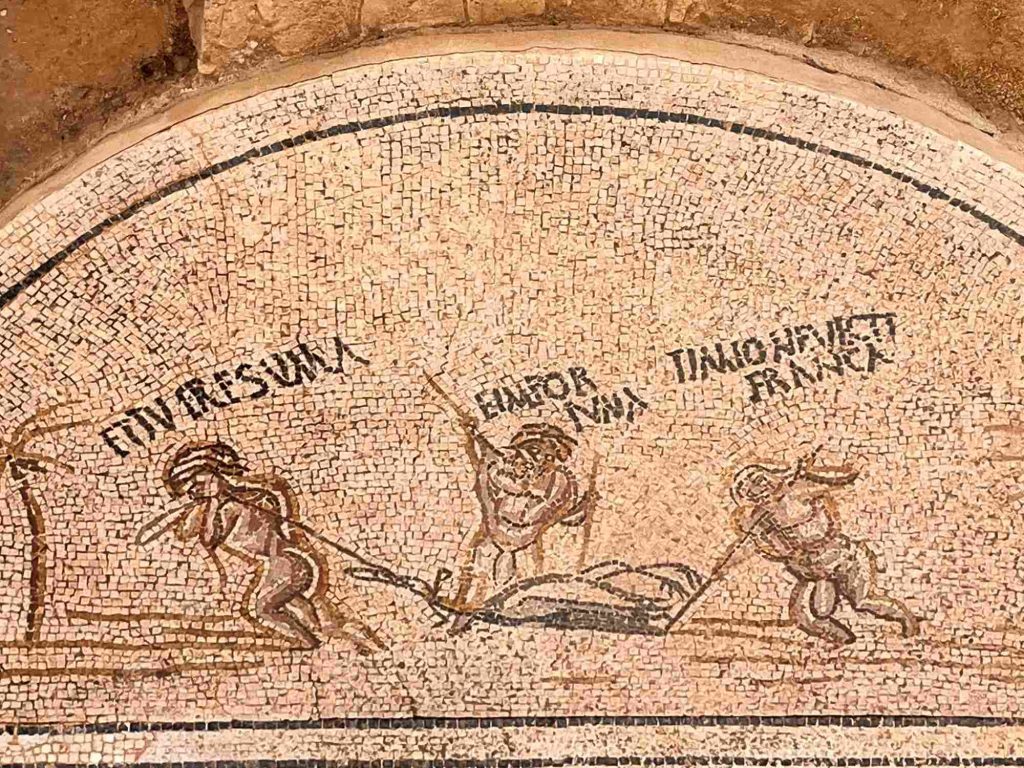
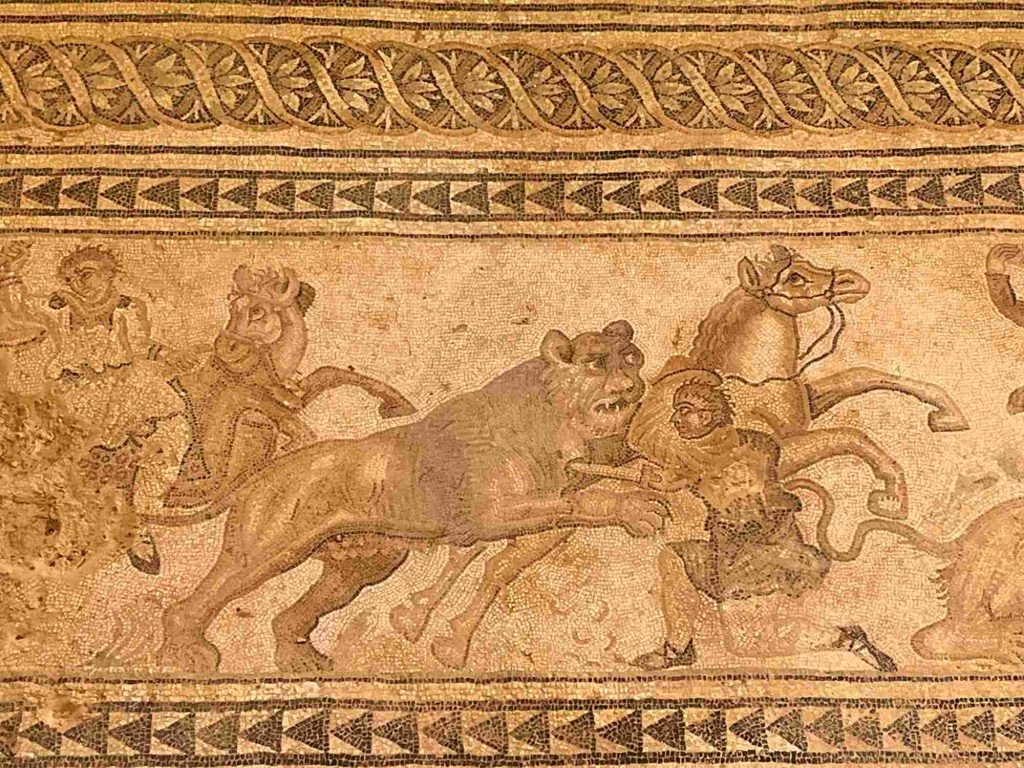
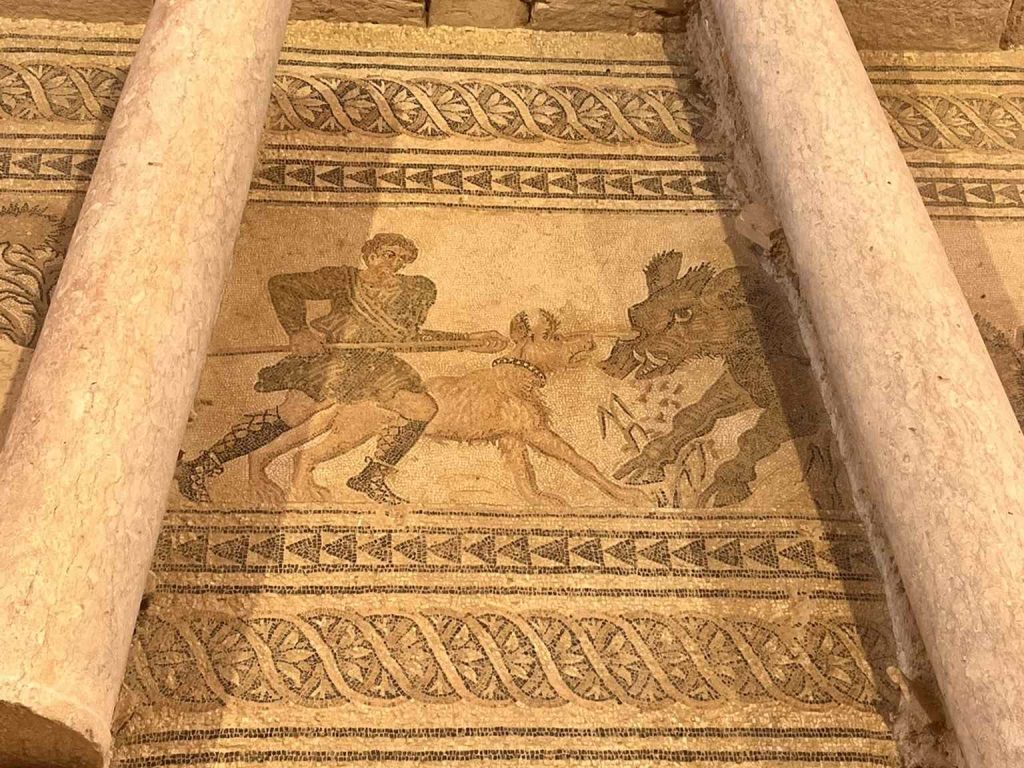
The Villa Salar just off the dual carriageway between Granada and Antequera has some incredibly detailed and vivid mosaics of hunting scenes, and the third great villa you can visit in Andalucía is El Ruedo in Almedinilla.
Museums
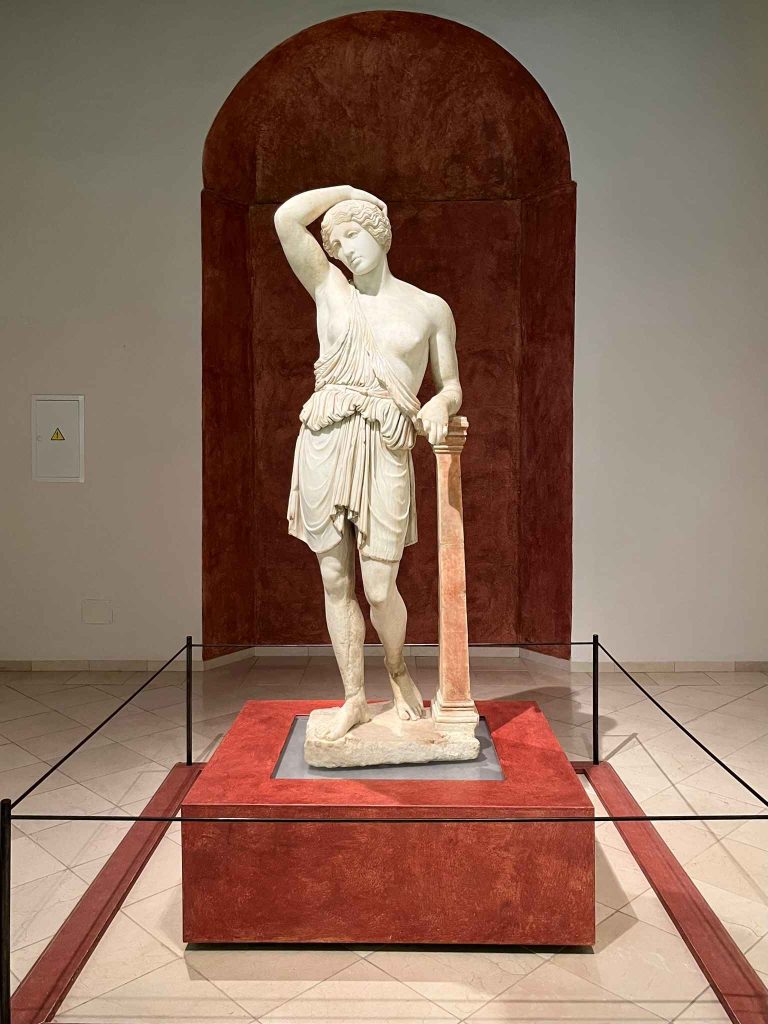
In addition to archaeological sites and monuments, you will find lots of Roman statues, columns, mosaics and pottery in Andalucía’s museums. The history museum in Écija is a personal favourite, for its magnificent sculpture of a wounded Amazon and impressive collection of large mosaics. Other than that, the finest collections are probably in Córdoba’s archaeological museum, the Museum of Málaga, the Museum of Cádiz, and the town museums in Antequera and Linares.
Famous Romans from Andalucía
As you would expect of a highly Romanised, populous province, Baetica produced some notable figures during the Roman Empire. Most obviously, Trajan and Hadrian, the two emperors born in Itálica who succeeded one another in the 2nd century AD. By his death in 117 AD, Trajan had expanded the Roman Empire to its greatest extent, while Hadrian focused on consolidating the empire. Famously, that included building Hadrian’s Wall across the north of England to defend the northernmost border of the Empire. On the banks of the River Guadalquivir in Seville, you can see a statue of Trajan carrying a cross between a wolf and a mythical beast called a draco.
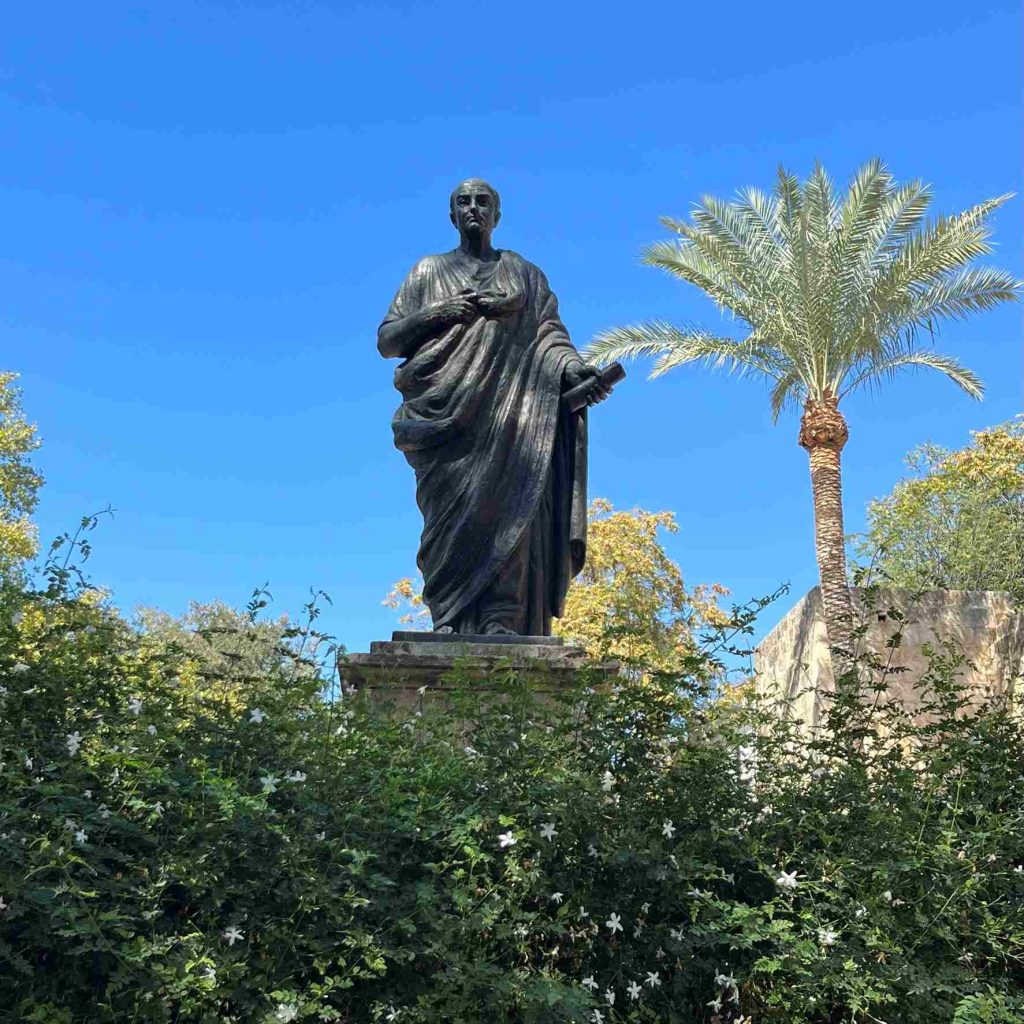
Another of Baetica’s famous sons was the writer, philosopher and politician Seneca, who was born into a wealthy family in Corduba in 4 BC. He moved to Rome as a child, where he became a magistrate under Caligula. When Claudius came to power, Seneca was accused of adultery with Caligula’s sister and exiled to Corsica. After eight years of exile, he was recalled to tutor Nero, and when his pupil became emperor, Seneca was his most trusted advisor. Seneca eventually retired from public life to concentrate on his writing, but in 65 AD Nero accused him of participating in a plot against his life and forced him to commit suicide. Seneca’s tragedies influenced major playwrights like Shakespeare and Racine, and he is also famous for his philosophical works.

Questions and answers
Trajan and Hadrian were both born in Itálica near modern-day Seville.
The Roman province of Baetica was roughly equivalent to modern Andalucía, although the eastern and northeastern parts of Andalucía belonged to Tarraconensis, and later Carthaginensis.
The Romans called the Guadalquivir the River Baetis.
The most important site is probably Itálica, as it constitutes a fairly complete Roman town, including a very large amphitheatre. However, there are many other interesting Roman sites, including the town of Baelo Claudia near Tarifa, three large Roman villas, remains of theatres in Málaga, Cádiz, Acinipo and Córdoba, a temple in Córdoba, a necropolis in Carmona and an aqueduct near Almuñecar.