
Festivals and public holidays
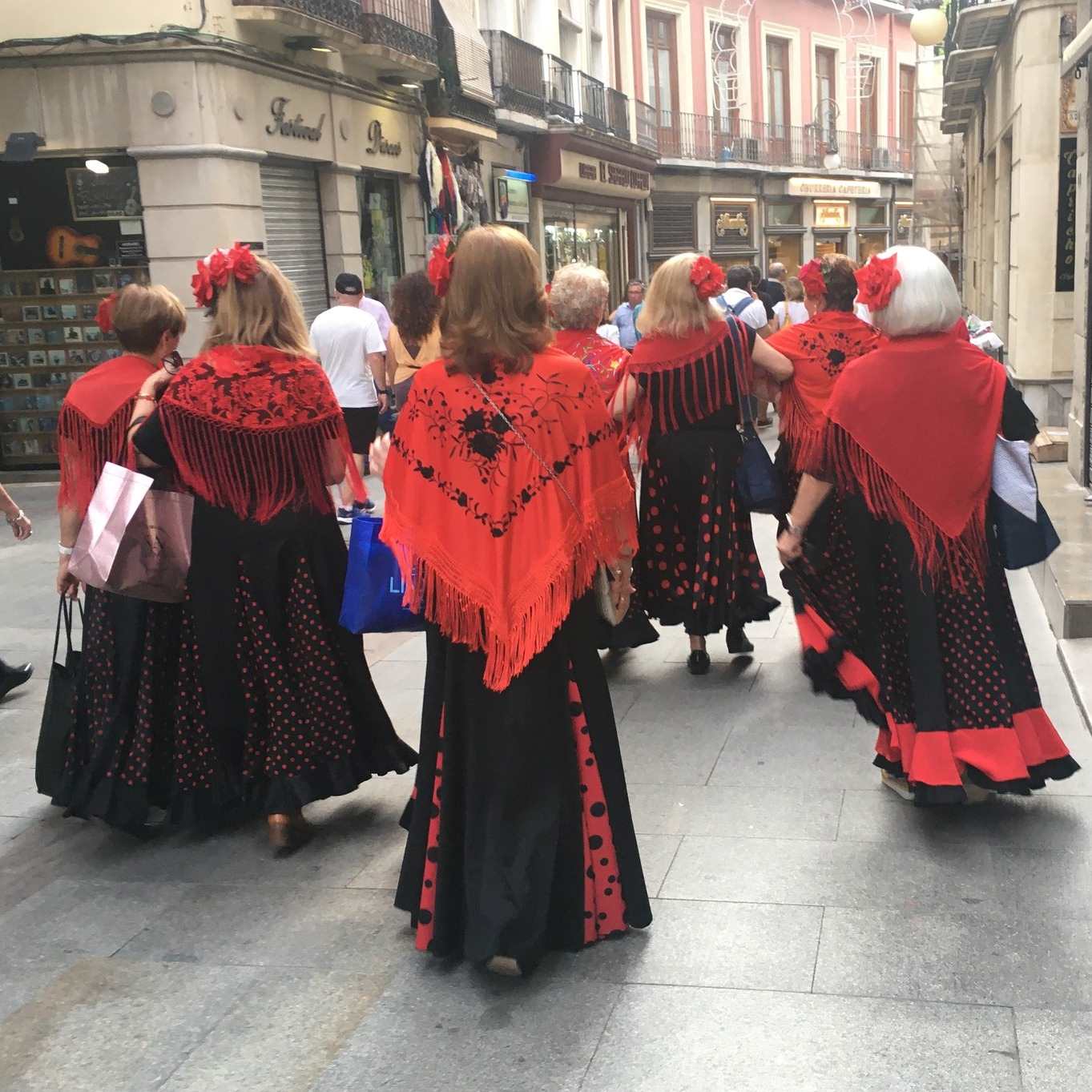
Spain and particularly Andalucía has a reputation for being fond of fiestas and for having a lot of public holidays. It doesn’t really have more public holidays than most other European countries, but there are a lot of fiestas, because each town and even village has its own ones.
Semana Santa (everywhere)
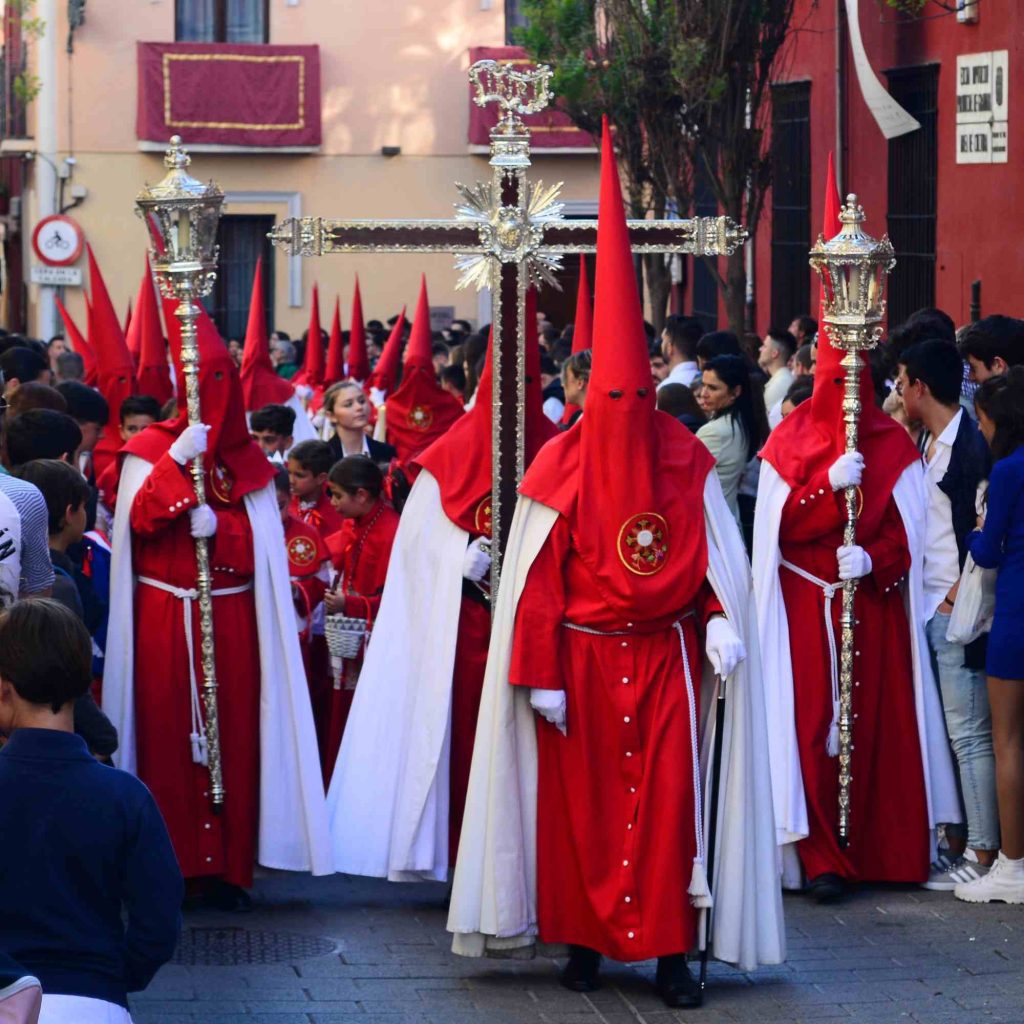
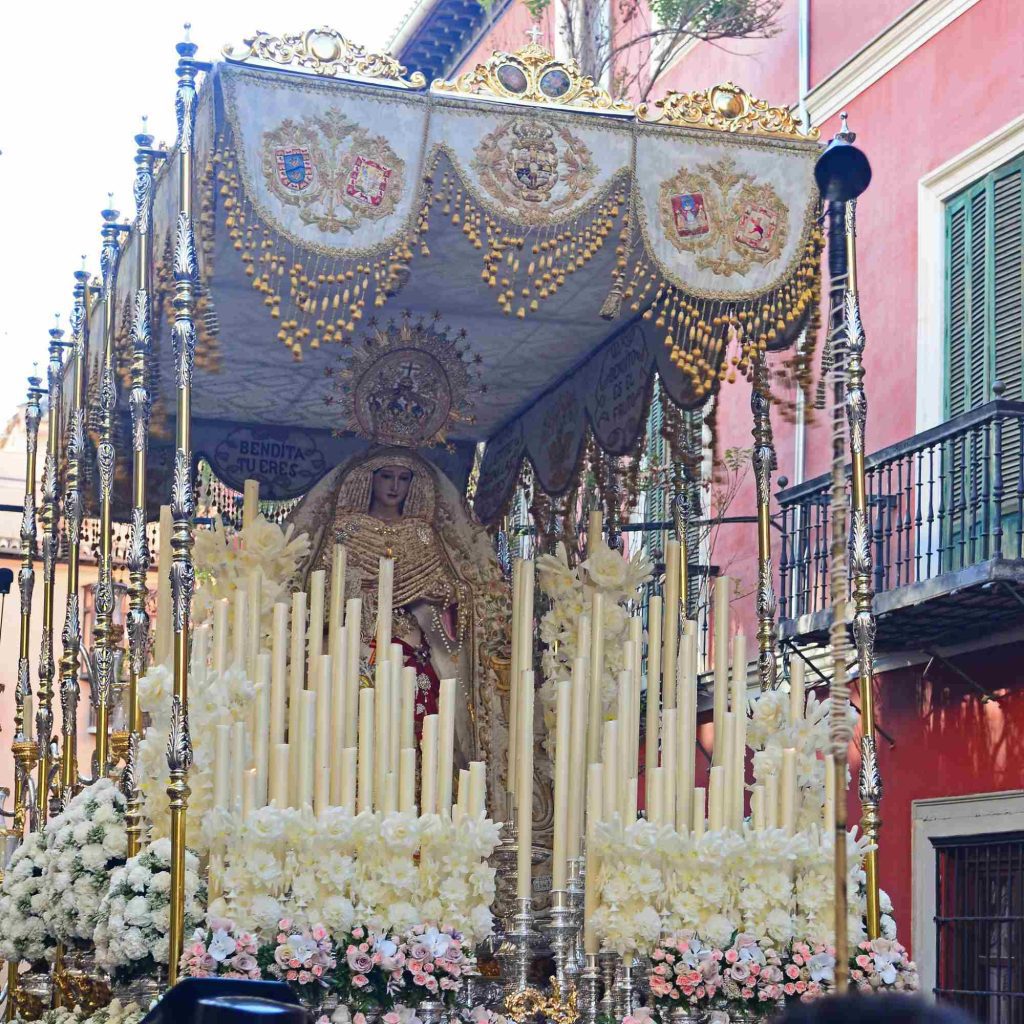
Semana Santa – Holy Week – is probably the most easily recognisable festival in Andalucía, with its processions of people wearing pointy hats and carrying huge floats with images of Christ and the Virgin Mary. Outside Spain, the Holy Week processions in Seville are most famous, but you’ll find them in cities and towns of all sizes across the region.
There’s obviously a strong religious element to the processions, and many ordinary people take part and are members of the brotherhoods that organise the processions. But they’re also a big cultural and social event, where people meet up to watch a procession or two, and then go for some beers and tapas.
The processions are a grand spectacle which is well worth seeing, but if you have limited time in Andalucía and you want to do a lot of sightseeing, bear in mind that they do make it harder to get around quickly, and some attractions may be closed on some days during Holy Week.
Carnaval de Cádiz
Cádiz has the biggest carnival celebrations in Andalucía, which take place over 10 days during February or the start of March. Carnival is a fun, colourful and fairly raucous celebration, with processions, music and dance.
Choirs, comparsas (groups of singers, musicians and dancers), chirigotas (groups that perform satirical folk songs) and cuartetos (“quartets”, but they can be 3-5 people!) compete for prizes, with the finalists putting on a grand show in a theatre.
Many other cities and towns in Andalucia also celebrate carnival, particularly in Cádiz province, but also elsewhere. Outside Cádiz, the biggest carnival celebrations take place in Málaga and Isla Cristina in the province of Huelva.
Feria de Abril (Seville)
A couple of weeks after Holy Week, Seville celebrates another big festival, but this time it’s the Feria de Abril – the April Fair. Confusingly, depending on the date of Easter, it’s quite often held at the start of May. The Feria de Abril was initially an agricultural fair, but these days it’s more about music, dancing and having fun.
It’s also an opportunity to see and be seen: people tend to dress up in their finest clothes, which means flamenco-style dresses for women and suits or the traditional traje corto for men. The main fairground is on the edge of the city centre near Parque de los Príncipes, but there are also lots of activities in the city centre. It can be great fun, but remember that Seville is heaving during Feria – even more than usual.
Many of the “casetas” at the fairground are private, by invitation only. The ones that open to the public are pricey and there can be very long queues, so it’s probably better to have some food in the city centre before heading out to the fairground to soak up the atmosphere.
Festival de los Patios Cordobeses
In May, Córdoba’s patios (courtyards) are even more beautiful and flower-filled than usual, as that is when they compete for prizes in the famous Patios festival. In 2012 the festival was added to UNESCO’s list of Intangible Cultural Heritage, which has really put it on the map. You can visit dozens of different patios, many in private houses, and there’s a leaflet with a map and suggested routes.
The patios are lovely and varied, and there’s a great atmosphere in the streets, but it does get very crowded, and there can be long queues for the most popular patios. If you can, visit some of the patios first thing in the morning to beat the crowds of day-trippers. Or go to a smaller town in Córdoba province, many of which have their own Patios festivals.
Romería de El Rocío
The Romería de El Rocío – or just El Rocío for short – is one of Andalucía’s most idiosyncratic festivals. We first became aware of it when we saw a procession of horse-drawn carriages and decorated caravans pulled by tractors making their way through Granada city centre. The people in the carriages and caravans were clearly enjoying themselves with plenty of good food and drink, but we had no idea what it was all about.
It turns out, they were pilgrims on their way to the village of El Rocío on the edge of the Doñana National Park by the mouth of the Guadalquivir. The pilgrimage, which dates right back to the 17th century, draws people from all over Andalucía who unite at El Rocío for Pentecost.
Feria de Málaga
Although not as famous as Seville’s Feria de Abril, the Feria de Málaga in August is another very big event. Again there’s a fairground on the edge of the city centre, as well as lots of music, dancing, eating and drinking in the city centre. If you can cope with the August heat, it’s a fun time to visit.
Local festivals
As well as the big festivals, all of Andalucía’s towns and villages have their own celebrations, including at least one in honour of their patron saints. There are also lots of festivals to celebrate local produce – from wine through asparagus to chestnuts – as well as cultural festivals of all kinds.
Cajar near Granada has a procession with a giant silkworm, to mark its historic role in the silk industry. Several villages in the Alpujarra have festivals in which they “bury the vixen” (once a real fox, but now a symbolic representation of one). And in Sanlúcar de Barrameda, at the mouth of the Guadalquivir, there is horse-racing on the beach each August.
One of the popular themes for local festivals is “Moors and Christians”. Once upon a time these festivals were all about the Christians defeating the Muslims and driving them out of the country, but these days the re-enactment of the battle between Moors and Christians is usually followed by some gesture of reconciliation.
Verdiales
Verdiales are a form of cultural expression associated with local festivals in the province of Málaga, including the Feria de Málaga. During performances, dancers carrying castanets adorned with colourful ribbons are accompanied by song, guitars, a violin, tambourines and cymbals. The performers wear folk costumes, and the music they play is a variation on the fandango, a type of Spanish folk music.
The roots of verdiales go back much further than flamenco – perhaps as long as 3,000 years. Over the millennia, verdiales have been influenced by the various peoples that have colonised, occupied and traded with Andalucía, including the Phoenicians, Carthaginians, Romans, Visigoths and Arabs.
Zambomba (Jerez de la Frontera)
A zambomba is a kind of friction drum whose skin is perforated by a stick which you move up and down to make a slightly strange buzzing sound. It gives its name to a festival celebrated in the run-up to Christmas, particularly in Jerez, but also other Andalucian towns like Antequera. During the zambombas, traditional carols are performed in the flamenco style out in the streets, and everyone joins in the singing and dancing. All of the music is accompanied by plenty of wine and traditional Christmas pastries.


Questions and answers
Semana Santa is Holy Week, the week from Palm Sunday to Easter Sunday. During Semana Santa, there are religious processions with floats bearing images of Jesus Christ and the Virgin Mary.
No, all cities and towns in Andalucía have religious processions during Holy Week, although the ones in Seville are most famous.
No! Semana Santa is Holy Week, which is celebrated with religious processions. The Feria de Abril is a local festival with lots of music, dance, eating and drinking, centred around a fairground on the edge of the city centre.
It depends on your priorities. The religious processions are a grand spectacle which is well worth seeing, but they do make it harder to get around quickly, and some attractions may be closed on some days.
The Festival de los Patios Cordobeses is a festival where flower-filled patios (courtyards) compete for prizes for have the most beautiful and original decoration.
The biggest carnival celebration is in the city of Cádiz, but other towns in Cádiz province also celebrate carnival, as does Málaga.
The best place to see a zambomba is Jerez de la Frontera, although other towns like Antequera also have zambombas.